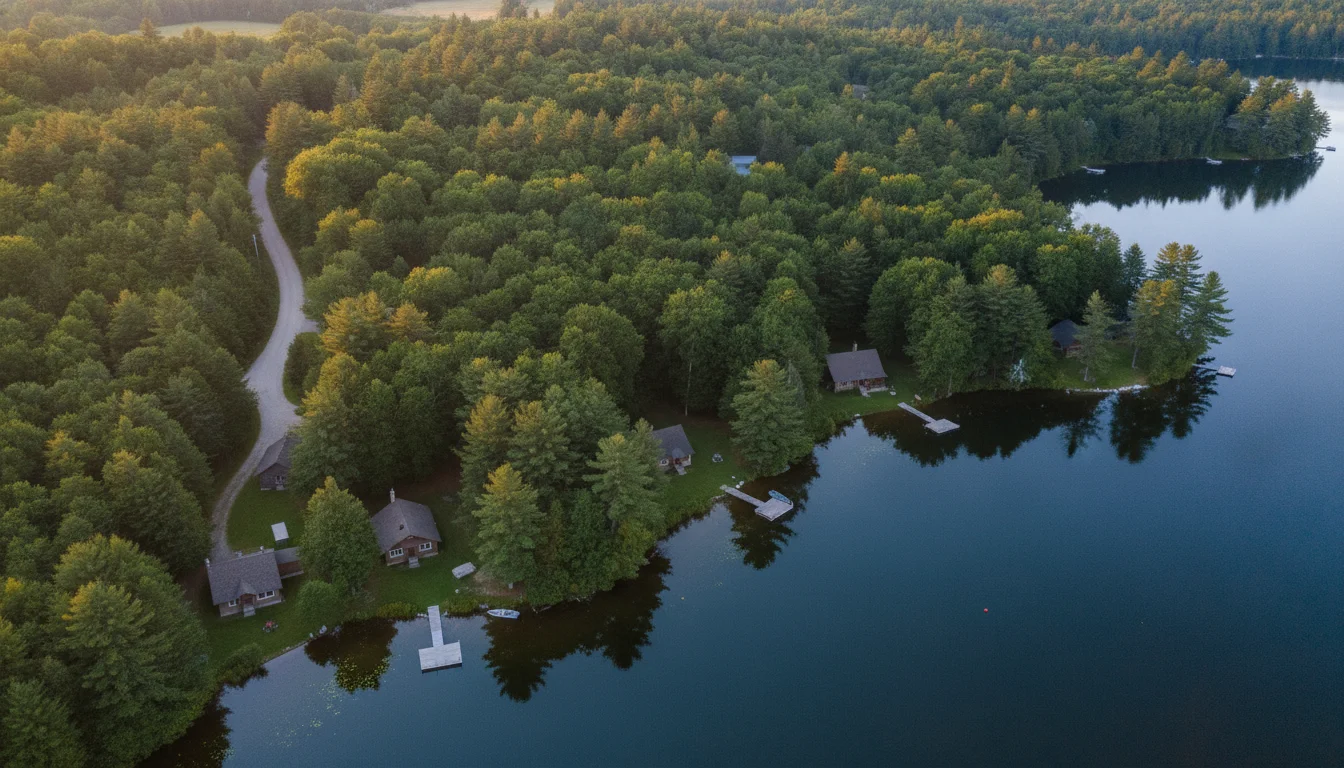
A homeowner in Fenelon Falls learned this one the hard way. She planted three beautiful weeping willows about 15 feet from her drain field. The yard looked incredible for about four years. Then the toilets started backing up. When our crew opened things up, we found a solid mass of roots filling the distribution pipes like hair in a shower drain. The repair cost her over $12,000.
Planting trees near a septic system is one of the most common mistakes property owners make across Kawartha Lakes. The trees look great above ground. Below ground, their roots are hunting for the moisture and nutrients your septic system provides. And they will find them.
Here’s what you need to know before you grab that shovel.
The Short Answer
Keep most trees at least 20 to 30 feet away from your septic tank and drain field. Large trees with aggressive root systems need 50 feet or more.
That’s the general rule. But the real answer depends on the species you’re planting, the type of septic system you have, and your soil conditions. We’ll break all of that down below.
The Ontario government sets regulations for septic systems across the province, and protecting your system from root damage is part of keeping it compliant and functional.
Why Tree Roots and Septic Don’t Mix
Tree roots grow toward three things: water, oxygen, and nutrients. Your septic system delivers all three.
Your drain field is basically an underground buffet for tree roots. Effluent seeps out through perforated pipes into gravel trenches, where it’s filtered through the soil. That warm, nutrient-rich moisture is exactly what roots are looking for.
Here’s what happens when roots find your system:
- They enter through pipe joints and cracks. Even a hairline opening is enough. Roots can squeeze through gaps as small as 1/16 of an inch.
- They grow inside the pipes. Once inside, they expand and multiply. A single root can become a thick mat that blocks the entire pipe.
- They crush pipes. Larger roots wrap around pipes and crack them as they grow in diameter year after year.
- They clog the drain field. Root masses in the gravel bed prevent proper drainage. Effluent backs up. You start seeing signs your system is failing.
The worst part? By the time you notice a problem, the damage is usually extensive. Root intrusion is rarely a quick fix.
Safe Distance Guide by Tree Type
How far to plant trees from your septic system depends on the species. Here’s a practical guide:
| Tree Type | Examples | Minimum Distance from Septic |
|---|---|---|
| Small trees (shallow roots) | Dogwood, Japanese Maple, Crabapple | 15-20 feet |
| Medium trees (moderate roots) | Birch, Cedar, Spruce | 25-30 feet |
| Large trees (deep/spreading roots) | Oak, Maple, Ash | 30-50 feet |
| Water-seeking trees (aggressive roots) | Willow, Poplar, Silver Maple, Elm | 50+ feet (or avoid entirely) |
The general rule of thumb: plant a tree at least as far away as its mature canopy will spread. If a tree’s canopy will reach 30 feet wide, plant it at least 30 feet from any part of your system.
When in doubt, go further. You can’t move a mature tree, but you can always add one later if you realize there’s room.
Trees and Plants That Are Safe Near Septic
You don’t need a bare, ugly yard around your septic system. Plenty of safe trees for septic areas exist. The key is choosing species with small, shallow, non-aggressive root systems.
Safe trees to plant (15-20 feet away):
- Dogwood
- Japanese Maple
- Eastern Redbud
- Crabapple
- Amur Maple
- Cherry (ornamental varieties)
Safe shrubs and ground covers (can be planted closer):
- Boxwood
- Holly
- Juniper (low-growing varieties)
- Daylilies
- Black-eyed Susans
- Ornamental grasses
- Wildflowers
Grass is actually the best cover for your drain field. It prevents erosion, absorbs moisture, and its shallow roots won’t cause problems. Many Bobcaygeon and Lindsay homeowners keep their drain field area as a well-maintained lawn, and that’s the smartest approach.
Looking for more tips on protecting your system? Read our full maintenance guide.
Trees to Never Plant Near Your System
Some trees are septic system destroyers. Their roots are aggressive, water-seeking, and will travel long distances to reach moisture. Keep these as far from your system as possible:
- Weeping Willow - The worst offender. Roots can spread 3 times the height of the tree. A 40-foot willow can send roots over 100 feet.
- Silver Maple - Fast-growing with incredibly invasive roots that crack foundations, pipes, and anything else in their path.
- Poplar/Aspen - Aggressive surface roots that spread far and wide.
- Elm - Deep, spreading root systems that actively seek water.
- Black Walnut - Invasive roots plus they release a chemical (juglone) that kills many other plants.
- Willow Oak - Despite the name, it’s the willow-like root behaviour that’s the problem.
- Birch - Moderate risk, but they’re heavy water drinkers with roots that spread wide.
If any of these trees are already on your property near the septic system, don’t panic yet. But do read the next section.
What If Trees Are Already Too Close?
A homeowner near Coboconk called us last spring because his drains were running slow. He’d bought the property five years earlier and never thought twice about the row of silver maples 20 feet from his drain field. The previous owner had planted them decades ago.
We found roots throughout the distribution box and into two of the four drain lines. Here’s what we recommended, and what we’d recommend if you’re in the same situation:
Step 1: Get a septic inspection. Before you do anything, find out if roots have already entered the system. A camera inspection of the lines will tell you exactly what’s going on. Learn about inspection costs in Ontario here.
Step 2: Consider root barriers. If the tree is valuable and not directly over the system, a professional can install a root barrier. This is a physical wall (usually heavy plastic or metal) buried vertically between the tree and your septic components. It redirects roots downward and away.
Step 3: Remove problem trees. Sometimes removal is the only real solution. Yes, it’s hard to cut down a beautiful mature tree. But it’s harder to replace a drain field. A mature tree removal costs $500 to $2,000. A drain field replacement costs $10,000 to $30,000 or more.
Step 4: Clear existing roots. If roots have entered the pipes, they need to be professionally removed. Mechanical cutting is the most common method. Chemical root killers (copper sulfate) are sometimes used but can harm the beneficial bacteria your septic system needs.
Step 5: Pump and inspect regularly. After dealing with a root issue, increase your pumping frequency for a few years. Roots that have been cut will try to grow back.
Having root problems or not sure if trees are too close? Call us at (705) 702-5526 for an inspection.
Landscaping Over Your Drain Field
Your drain field needs to breathe. The soil above it handles the final stage of wastewater treatment, and anything that interferes with that process can cause your system to fail.
What’s OK over your drain field:
- Grass (the best option)
- Shallow-rooted wildflowers
- Mulch in thin layers (2-3 inches max)
- Stepping stones for access (not solid paths)
What’s NOT OK over your drain field:
- Trees or large shrubs of any kind directly over the field
- Vegetable gardens (health risk from wastewater contact)
- Paving, concrete, or asphalt
- Heavy structures like sheds, decks, or pools
- Driving or parking vehicles on it
- Deep tilling or excavation
- Plastic sheeting or landscape fabric (blocks oxygen)
The biggest mistake we see across Kawartha Lakes properties is people building over their drain field because they don’t know exactly where it is. Before you do any landscaping, locate your system components. Your septic installer’s records, your municipality, or a local septic company can help you find them.
Frequently Asked Questions
Can tree roots break a concrete septic tank?
It’s uncommon but possible. Most concrete tanks are strong enough to resist root pressure. The real risk is at the inlet and outlet pipes where they connect to the tank. Roots enter through the gaps around these connections, not through the concrete walls themselves. Keeping trees at least 20 feet from the tank is still the safe play.
Will cutting down a tree near my septic stop root growth?
Not immediately. Roots from a recently cut tree can remain active for several years, especially if the stump isn’t removed. Grind the stump and treat the remaining root system. Even then, existing roots inside pipes will need to be mechanically removed. Dead roots can also leave channels that allow soil to enter the pipes.
Can I use root killer in my septic system?
Copper sulfate-based root killers are sometimes recommended, but use them with caution. They can kill the bacteria in your septic tank that break down waste. If you’re going to use a root treatment, have your tank pumped first and apply it directly to the distribution box or affected lines rather than flushing it down the toilet. Better yet, let a professional handle it.
How do I know if roots are already in my septic system?
Watch for these warning signs: slow drains throughout the house, gurgling sounds in the plumbing, wet or soggy spots over the drain field, sewage odors in the yard, or lush green patches of grass over the drain lines (roots pulling extra nutrients to the surface). If you notice any of these, your system may be failing and you should get an inspection right away.
Protect Your System Before It’s Too Late
Planting trees near a septic system doesn’t have to end in disaster. You just need to plan ahead. Choose the right species, respect the distance guidelines, and keep an eye on what’s growing near your system components.
If you’re in Kawartha Lakes, Lindsay, Bobcaygeon, Fenelon Falls, or Coboconk and you’re not sure whether your trees are too close, we can help. A quick inspection — or a look during your next septic pump-out in the Kawartha Lakes area — can save you thousands down the road.
Call Kawartha Septic at (705) 702-5526 to book an inspection or get advice on landscaping near your septic system.
If roots have already destroyed the bed, the next step is a diagnosis rather than a quote — see drain field repair and, where the system is genuinely finished, septic system replacement in Kawartha Lakes.