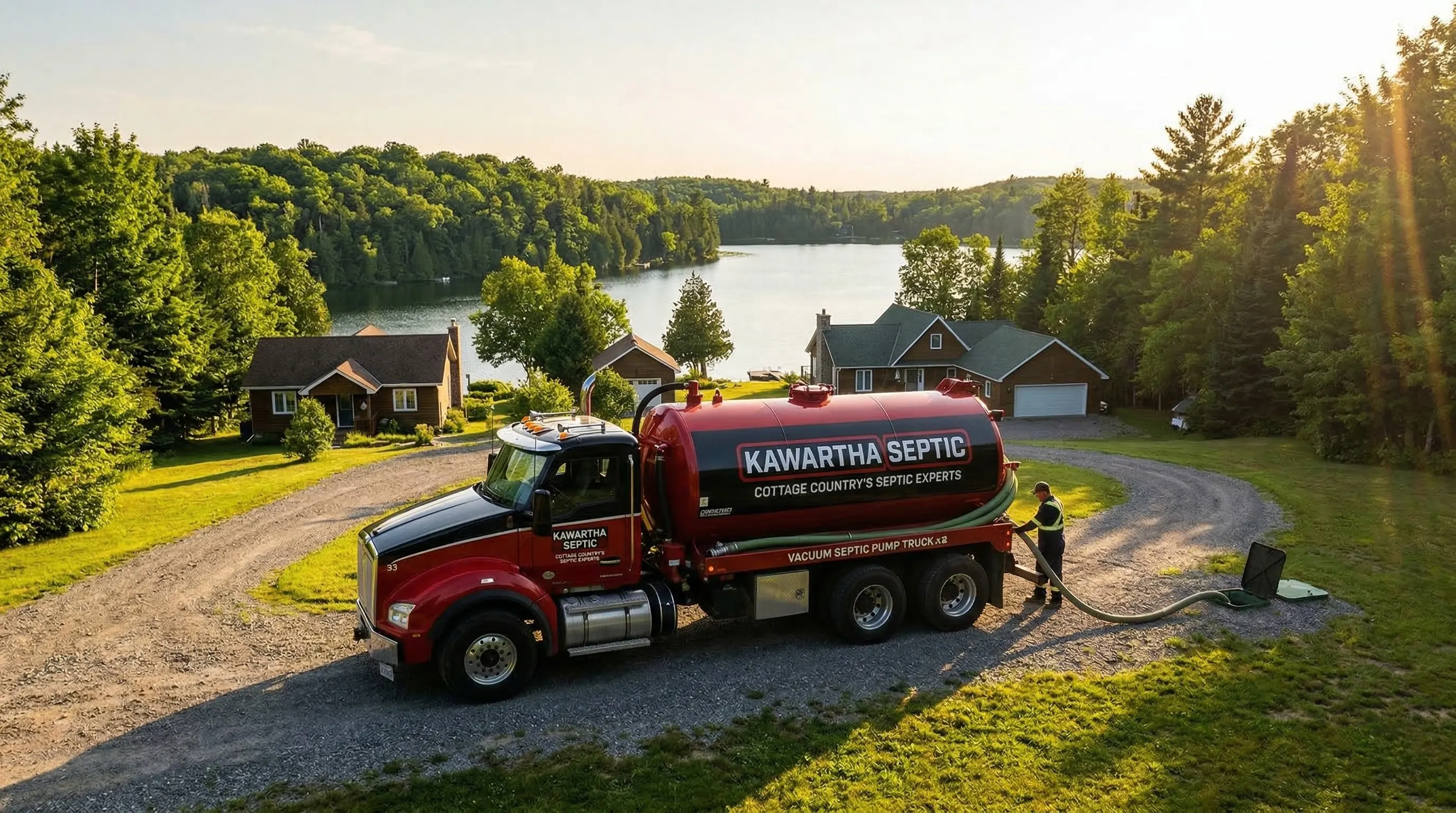
It’s Canada Day weekend. You’ve invited your brother’s family, your college buddy and his kids, a couple of neighbours from back in the city, and your parents. Twenty-two people are now sharing a three-bedroom cottage on Sturgeon Lake that was built for a family of four. Everyone’s having a blast. Two showers running before breakfast. The dishwasher cycling nonstop. Toilets flushing every ten minutes.
By Sunday morning, there’s a puddle of grey water in the yard and a smell you can’t ignore.
Your cottage party just overwhelmed your septic system. And you’re not the first person in Kawartha Lakes to make this mistake. We get more calls about septic system overload from guests during long weekends than at almost any other time of year.
The good news? A little planning goes a long way. This guide covers how to protect your cottage septic system when you’re hosting a crowd, so the only thing you have to worry about is whether you bought enough burgers.
Why Your Septic Can’t Handle a Crowd
Most cottage septic systems in Ontario were sized based on the number of bedrooms. A typical three-bedroom cottage has a 3,600-litre tank and a drain field designed to handle roughly 1,100 litres of wastewater per day. That’s enough for four people using water normally.
Now think about what happens when 15 or 20 people show up for a long weekend. The average person uses 200 to 300 litres per day between showers, toilet flushes, hand washing, and dishes. Twenty people easily generate 4,000 to 5,000 litres in a single day. That’s four to five times what your system was designed to process.
The tank itself might hold the volume temporarily, but the drain field can’t keep up. Effluent gets pushed out faster than the soil can absorb it. The result is soggy ground over the tile bed, sewage surfacing in the yard, or wastewater backing up into the cottage through the lowest drain.
It’s not just about the tank being full. It’s about flow rate. Even a recently pumped tank can fail if too much water moves through it too quickly, because solids don’t have time to settle. They get flushed into the drain field, clogging the pipes and soil. That kind of damage can take months to reverse. In severe cases, you’re looking at a full drain field replacement, which costs far more than a routine septic pumping.
How Many People Is Too Many?
There’s no single answer, because it depends on your tank size, the condition of your drain field, and how much water everyone uses. But here’s a rough guideline.
Take the number of bedrooms your cottage has and multiply by two. That’s your system’s comfortable daily capacity in people. A three-bedroom cottage handles about six people without stressing the septic.
You can push above that for a single day if everyone is careful with water. But a full weekend with double or triple the intended occupancy is where problems start.
If you’re hosting more than 10 people at a cottage with a standard residential septic system, you need a plan. And if you’re planning a wedding, reunion, or big milestone birthday at your cottage near Bobcaygeon or Fenelon Falls, you should be thinking about this weeks in advance.
Planning a big event at your cottage? Call us at (705) 242-0330 to get your system pumped beforehand. That one step prevents most overload problems.
8 Tips to Protect Your System During Events
These aren’t complicated. Most of them come down to reducing the volume of water going into your septic system over a short period.
1. Get Your Tank Pumped Before the Event
This is the single most effective thing you can do. Starting with an empty tank gives you maximum capacity to handle the extra load. Schedule a septic pumping at least a week before your event so you’re not scrambling at the last minute.
2. Space Out Water Use
Don’t let five people shower back to back in the morning. Spread showers throughout the day if possible. Run the dishwasher once in the evening instead of twice during dinner prep. The goal is to avoid dumping hundreds of litres into the system within a short window.
3. Use Paper Plates and Plastic Cups
Skipping the dishwasher for a weekend saves a huge amount of water. Each cycle uses 15 to 25 litres. If you’re running it three times a day for a crowd, that adds up fast. Disposable plates and cups for a couple of days might save your drain field.
4. Limit Shower Times
Ask guests to keep showers under five minutes. A 10-minute shower uses roughly 80 litres. Multiply that by 15 guests and you’ve just sent 1,200 litres through your system before anyone even eats breakfast.
5. Only Flush Toilet Paper
Put a small sign in the bathroom. No wipes, no feminine products, no paper towels. This matters even more when the system is under stress, because anything that doesn’t break down quickly adds to the solids load and increases the chance of a backup.
6. Don’t Do Laundry
Save the towels and sheets for after the guests leave. A single load of laundry uses 60 to 80 litres. Four or five loads over a weekend adds 300 to 400 litres on top of an already heavy flow.
7. Direct Outdoor Activities Away from the Drain Field
Don’t set up the volleyball net or parking area over your tile bed. Foot traffic compacts the soil, and heavy vehicles can crush the pipes underneath. If you’re not sure where your drain field is, look for the area where the grass grows greener and thicker. Keep people off it.
8. Watch for Warning Signs
Keep an eye on your drains throughout the weekend. If you notice slow draining, gurgling sounds, or a bad smell outside, your system is struggling. Stop water use and give it a few hours to catch up. Our guide on signs your septic system is failing covers every warning signal you should know.
The Portable Toilet Option
If you’re hosting more than 15 to 20 people, especially for a full weekend, seriously consider renting a portable toilet. Yes, they’re not glamorous. But they completely remove the extra toilet flush volume from your septic equation.
A family in Lindsay called us two summers ago, the Monday after a 50th birthday party at their cottage. Twenty-five guests over three days. No portable toilet. By Saturday night the toilets were barely flushing, and by Sunday morning there was standing water above the drain field. The repair bill came to more than $8,000. A portable toilet rental would have been around $200.
You can rent them from most event rental companies in the Kawartha Lakes area. Place it in a spot that’s easy to access but away from your food and gathering areas. Your septic system (and your wallet) will thank you.
Signs You’ve Overloaded Your System
Sometimes you don’t realize the damage until after everyone leaves. Here’s what to watch for in the days following a big cottage weekend.
Slow drains. If the sinks and tubs are draining slowly, the tank or drain field is struggling to keep up. This is usually the first sign.
Gurgling pipes. When air gets trapped in the plumbing because the system can’t accept water fast enough, you’ll hear gurgling sounds when you flush or run the tap.
Sewage smell in the yard. If you can smell sewage near the drain field or around the tank access point, the system is overloaded. The soil can’t process the effluent, and it’s surfacing.
Wet or spongy ground over the drain field. Walk over your tile bed area. If it feels soft or there’s standing water, your drain field is saturated.
Sewage backup inside the cottage. This is the worst case. Wastewater coming up through a basement drain or the lowest fixture means the system has nowhere left to send the water. Stop all water use immediately.
If you notice any of these, check our full guide on what to look for with a failing system and give us a call.
What to Do After a Big Weekend
Even if everything seemed fine during the event, your septic system just handled a heavy load. A few steps will help it recover.
Reduce water use for the next few days. Give the drain field time to dry out and the tank time to settle. If you’re heading back to the city, even better. The system gets a rest.
Skip laundry for a day or two. Do those loads of sheets and towels at home, or wait before running the washing machine at the cottage.
Schedule a pumping if you didn’t do one before the event. Getting the tank pumped clears out excess solids before they migrate into the drain field. Our septic maintenance guide covers the full routine.
Watch for delayed symptoms. A drain field pushed to its limit during the weekend might not show problems until days later. Keep an eye on drains and yard conditions for the next week.
A couple who owns a cottage outside Coboconk had us out last August after hosting a family reunion. About 30 people over Saturday and Sunday. Everything seemed fine at the time. But four days later, the cottage-sitter noticed the shower wouldn’t drain and there was a strong odour in the yard. The drain field had been overwhelmed, and it took two weeks of rest and a full pump-out before the system recovered.
Had a big weekend at the cottage? Book a post-event pump-out or call us at (705) 242-0330. We service the entire Kawartha Lakes region.
FAQ
Can one big weekend actually damage my septic system permanently?
It depends on the severity. A single heavy-use weekend usually won’t cause permanent damage if the system was in good shape beforehand. But if your tank was already overdue for pumping or your drain field was marginal, the extra load can push things past the point of recovery. Repeated overloads are what cause the most long-term damage.
How far in advance should I get my tank pumped before an event?
Aim for at least one to two weeks before. This gives the system a fresh start and lets you confirm everything is working properly. If you wait until the day before and there’s a scheduling conflict, you’re stuck. The Ontario Onsite Wastewater Association has resources on maintaining your system between service appointments.
Is it safe to use the cottage right after a big event if everything seems normal?
Yes, but reduce your water use for the next few days. Even if there are no visible signs of overload, the drain field has been working overtime. Lighter usage gives the soil time to dry out and recover.
How much does it cost to fix a septic system overloaded by too many guests?
A simple pump-out runs between $300 and $600 in the Kawartha Lakes area. If the drain field has been damaged by excess water or solids, you could be looking at $5,000 to $20,000 or more for repairs or replacement. That’s why prevention is always cheaper. See our full septic pumping cost breakdown for details.
Don’t Let a Great Weekend Become an Expensive Monday
Your cottage is meant for making memories, not septic emergencies. A little planning keeps the wastewater where it belongs and your guests blissfully unaware that there’s a 3,600-litre tank buried in the yard doing the hard work.
Get the tank pumped before the event. Reduce water use during it. Watch for warning signs after. And if you’re hosting a serious crowd, rent a portable toilet. These small steps protect a system that costs tens of thousands of dollars to replace.
We help cottage owners across Kawartha Lakes protect their septic systems every season. Whether you need a pre-event pump-out or a post-party inspection, we’re a phone call away.
Call (705) 242-0330 or book online to schedule your service.