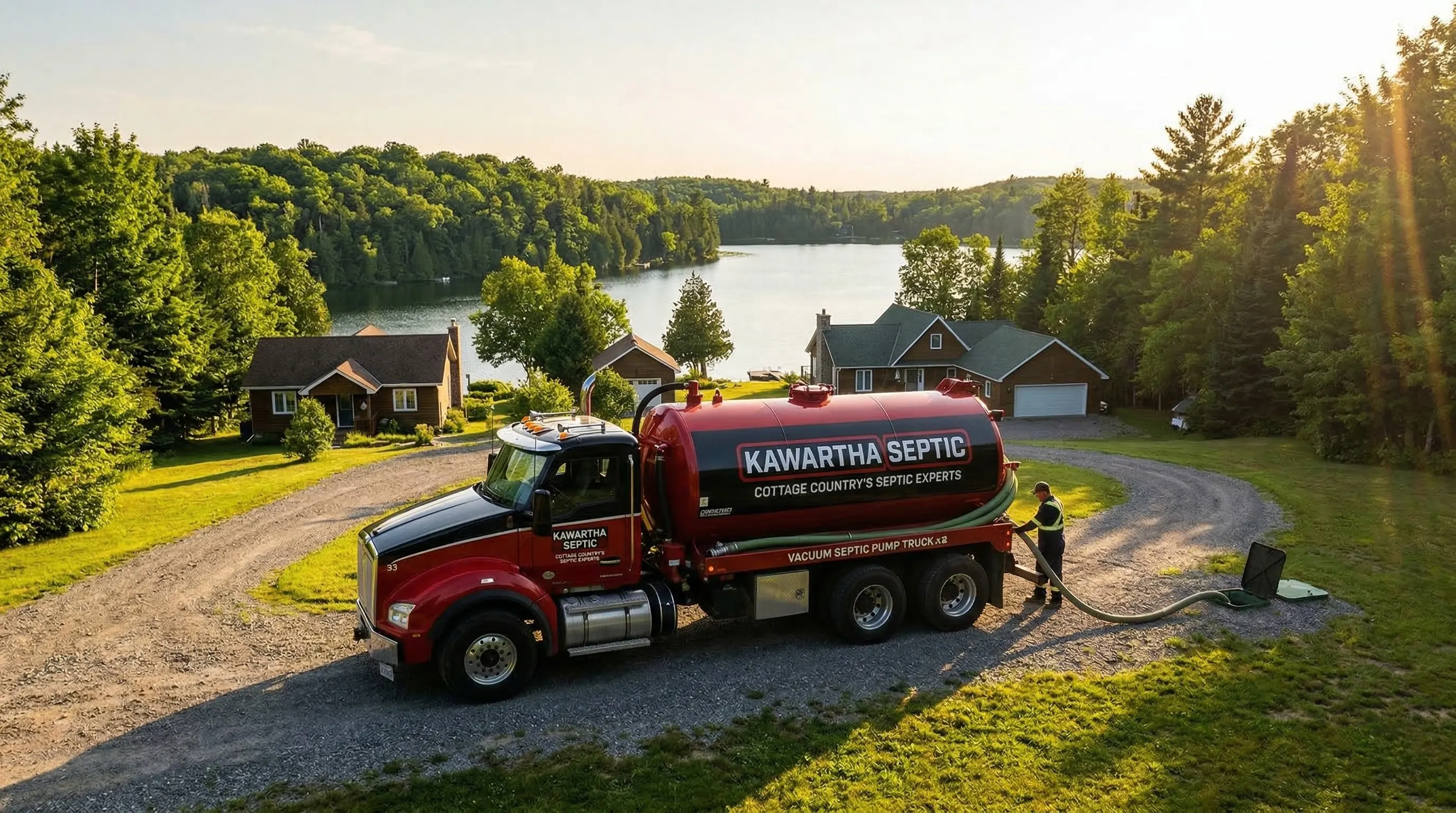
A couple from Oshawa bought a three-season cottage on Balsam Lake a few years back. They’d owned a home in the suburbs for 20 years. The septic system there ran like clockwork. Never a single issue. So when they got the cottage, they treated the septic system the same way: ignore it until something breaks.
By August of their first summer, they had sewage surfacing in the yard after a weekend with eight guests. The system wasn’t broken. It was a perfectly functional cottage septic system. But it didn’t work the way their home system did, and nobody told them that.
This is one of the most common cottage septic problems we see across Kawartha Lakes. People assume a septic system is a septic system. It’s not. The cottage septic system differences are real, and understanding them can save you thousands in repairs and a lot of ruined weekends.
Have questions about your cottage septic system? Book a service call or call (705) 242-0330.
The Core Difference: Usage Patterns
The biggest gap between a cottage septic vs home septic system isn’t the hardware. Most cottage systems use the same basic components: a tank, a drain field, and the soil that does the final treatment. The difference is how they get used.
A year-round home puts a steady, predictable load on the system every single day. Two to four people generating wastewater in consistent amounts. The bacteria inside the tank stay active and healthy because they’re constantly being fed. The drain field absorbs effluent at a regular pace. Everything stays in balance.
A seasonal septic system doesn’t get that luxury. Your cottage might sit empty for five or six months over winter. No wastewater going in. No food for bacteria. The biological colony that breaks down solids shrinks or goes dormant. Then in May, you show up with the whole family. Suddenly the system goes from zero to full capacity in a single afternoon. Sometimes beyond full capacity.
This feast-or-famine cycle is at the heart of every cottage septic system difference. And it affects everything: bacterial health, drain field performance, freeze risk, and how you should approach septic tank maintenance.
How seasonal use affects septic systems comes down to one idea. Your cottage septic doesn’t get the consistent conditions it was designed for. You have to manage around that reality.
Side-by-Side Comparison
Here’s a direct look at how cottage and year-round septic systems compare across the factors that matter most.
| Factor | Year-Round Home | Seasonal Cottage |
|---|---|---|
| Usage pattern | Consistent daily load | Dormant months, then heavy spikes |
| Bacterial health | Stable, continuously fed colony | Colony dies back during off-season |
| Peak load risk | Low, unless water usage changes significantly | High, especially holiday weekends with guests |
| Freeze risk | Low, warm wastewater flowing regularly | High, no warm water entering system in winter |
| Drain field stress | Even, gradual absorption | Surges after periods of zero use |
| Pumping frequency | Every 3 to 5 years for a typical family | Every 2 to 3 years due to usage spikes |
| Winterization needed | No | Yes, if not heated or visited regularly |
| Spring startup check | Not typically needed | Essential every year |
| System sizing concerns | Sized for household occupants | Often undersized for peak guest counts |
| Maintenance complexity | Straightforward | Requires seasonal awareness |
The pattern is clear. A cottage septic system requires more attention in less time, and the consequences of neglect show up faster because the system doesn’t have months of steady use to recover.
5 Cottage-Specific Septic Challenges
These are the problems that don’t usually affect year-round homes. If you own a cottage in Bobcaygeon, Fenelon Falls, Lindsay, or Coboconk, you should know about all five.
1. Guest Overload on Weekends
This is the number-one cottage septic problem. Your system was sized for a certain number of bedrooms, which translates to a daily flow rate. When you pack in extended family and friends for a long weekend, you can blow past that flow rate in a single day. Extra showers, extra toilet flushes, extra laundry, and extra dishes all hit the system at once.
A home septic system rarely deals with this because occupancy stays consistent. At the cottage, your Saturday water usage might be four times your Tuesday usage. That kind of spike pushes solids into the drain field before the tank has time to separate them properly.
2. Bacterial Die-Off During Dormancy
The bacteria in your septic tank are what make the whole system work. They break down solids, reduce sludge volume, and keep the effluent clean enough for the drain field to handle. When a system sits unused for months, that bacterial population crashes. It doesn’t disappear completely, but it gets weak.
When you open the cottage in spring, the system needs time to rebuild. It can take two to four weeks of regular use before the biology recovers fully. During that period, the tank isn’t breaking down solids as efficiently. The Federation of Ontario Cottagers’ Associations recommends gradual startup for this exact reason.
3. Freeze and Frost Heave Risk
A year-round home keeps warm water moving through the pipes and tank all winter. That flow prevents freezing. A cottage system that sits empty through a Kawartha Lakes winter has no such protection.
Frozen pipes between the cottage and the tank. Frost heave shifting the tank or distribution box. Ice forming in vent stacks. These are all real risks for a seasonal septic system. Proper winterization is the only way to prevent them. Year-round homeowners don’t even think about this. Cottage owners can’t afford not to.
4. Undersized Systems for Actual Use
Many older cottages in the Kawarthas were built as modest summer getaways. Two bedrooms, one bathroom. The septic system was sized to match. But then the family grew, the cottage became the gathering spot for every holiday, and suddenly 12 people are sharing a system designed for four.
Year-round homes generally get upgraded when occupancy changes. Renovations trigger permits, and permits trigger system reviews. Cottages often skip that process. Add a bunkie, convert the sleeping porch, invite the neighbours for dinner. Nobody calls the building department. Nobody upsizes the tank.
5. Neglect Between Visits
Out of sight, out of mind. When you live somewhere year-round, you notice the slow drain, the gurgling toilet, the faint smell near the tank. You catch problems early because you’re there every day.
Cottage owners are only on-site a fraction of the year. A small problem that starts in June can become a major failure by September. Root intrusion, a slowly settling D-box, or a drain field that’s getting a bit sluggish. These all progress between visits. By the time you notice, the repair bill is a lot bigger.
Maintenance Differences
Cottage septic maintenance requires a different approach than maintaining a home system. Here’s how to adjust.
Pumping schedule. A year-round home with four occupants typically needs pumping every 3 to 5 years. A cottage system should be pumped every 2 to 3 years, and sometimes more often if you get heavy guest traffic. The shorter interval accounts for the bacterial die-off that slows solids breakdown and the usage spikes that push the system harder. Check our detailed guide on how often to pump your septic tank for specifics based on tank size.
Spring inspection. Every cottage needs a proper inspection at opening. Walk the drain field. Check the tank lid. Inspect the distribution box. Test the alarm if you have one. Run fixtures one at a time. We published a full spring cottage opening septic checklist that covers every step.
Fall shutdown. Year-round homes don’t need winterization. Cottages do. If you’re closing for the season, the system needs to be prepared for months of dormancy and freezing temperatures. Skipping this step is how people end up with cracked pipes and shifted tanks in April.
Water conservation during peaks. At home, you don’t normally think about spacing out laundry loads or shortening showers. At the cottage, you should. Spreading water use across the day gives the tank time to separate solids and the drain field time to absorb. It’s one of the simplest forms of cottage septic maintenance, and it works.
Annual professional check. For year-round systems, a professional inspection every few years is usually enough. For cottage systems, an annual check is worth it. Catching problems before they compound over a dormant winter is much cheaper than dealing with a failure in the spring.
Wondering if your cottage system needs attention? Book an inspection or call (705) 242-0330.
Converting a Cottage to Year-Round Use
A lot of people in the Kawarthas are making this switch. Remote work made it possible, and rising home prices made it appealing. But converting a seasonal cottage to a year-round home means your septic system needs to handle a very different workload.
A retired teacher we work with had a three-season cottage outside Fenelon Falls for 15 years. She decided to retire there full-time. The cottage had a 3,600-litre tank and a basic drain field that worked fine for summer weekends. Within six months of living there year-round, she noticed soggy ground over the drain field in late fall and slow drains through the house.
The system wasn’t failing. It was undersized for continuous daily use. A system that works perfectly for 80 days of cottage use per year can be completely overwhelmed by 365 days of full-time occupancy.
Here’s what you need to consider before making the switch:
Get a professional assessment. Have your system inspected and evaluated for year-round capacity. Tank size, drain field condition, and soil absorption rates all matter.
Check your permit. Your septic permit may specify seasonal use only. Converting to year-round may require a new permit and potentially a system upgrade. The City of Kawartha Lakes Building and Septic Department handles these reviews.
Plan for winter. A year-round home keeps the system warm through regular use, but you still need to insulate exposed pipes and ensure your system can handle the water table changes that come with spring thaw. This is different from seasonal winterization because the system stays active.
Budget for upgrades. If your tank or drain field needs to be upsized, plan for that cost before you move in. It’s cheaper to upgrade on your timeline than after a failure forces your hand. Our guide on buying a cottage with a septic system covers what to look for in terms of system sizing.
Adjust your habits gradually. Don’t go from weekend use to running a dishwasher, washing machine, and multiple showers every day without giving the system time to adjust. Ramp up usage over the first few weeks.
Frequently Asked Questions
Is a cottage septic system the same as a home septic system?
The components are usually the same. A tank, drain field, and soil treatment area. But the usage pattern is completely different. A cottage system deals with long dormancy, usage spikes, freeze risk, and bacterial die-off that a year-round system never faces. Those operational differences mean cottage systems need more frequent pumping, seasonal preparation, and careful water management during peak use.
How does seasonal use affect a septic system?
Seasonal use creates two main problems. First, the bacteria that break down waste die back during months of inactivity, so the system is less effective when you return. Second, the shift from zero usage to heavy usage creates hydraulic surges that can push solids into the drain field. Both of these shorten the life of the system if you don’t account for them with proper maintenance.
Do cottage septic systems need to be pumped more often?
Yes. Most cottage systems should be pumped every 2 to 3 years, compared to 3 to 5 years for a year-round home. The combination of reduced bacterial activity and concentrated usage means solids build up faster relative to the amount of treatment happening in the tank. If your cottage gets heavy guest traffic, annual pumping may be appropriate.
Can I convert my cottage septic system to handle year-round use?
It depends on the system. Some cottage systems have enough capacity for year-round use. Many don’t. You’ll need a professional assessment of your tank size, drain field condition, and soil suitability. If the system is undersized, you may need a new tank, a larger drain field, or both. You’ll also need to check with the municipality about permits, since your original permit may specify seasonal use only.
Take Care of Your Cottage System
The cottage septic system differences aren’t dramatic. Nobody needs a PhD to understand them. But ignoring them is how people end up with backed-up toilets on a holiday weekend and a $15,000 repair bill in September.
If you own a cottage in Kawartha Lakes, the basics are simple. Pump more often. Inspect every spring. Winterize every fall. Watch your water use when guests are around. And get a professional to look at the system at least once a year.
Your cottage septic system can last decades if you treat it like what it is: a seasonal system with seasonal needs.
Need help with your cottage septic system? Book online or call (705) 242-0330. We serve Lindsay, Bobcaygeon, Fenelon Falls, Coboconk, and all of Kawartha Lakes.