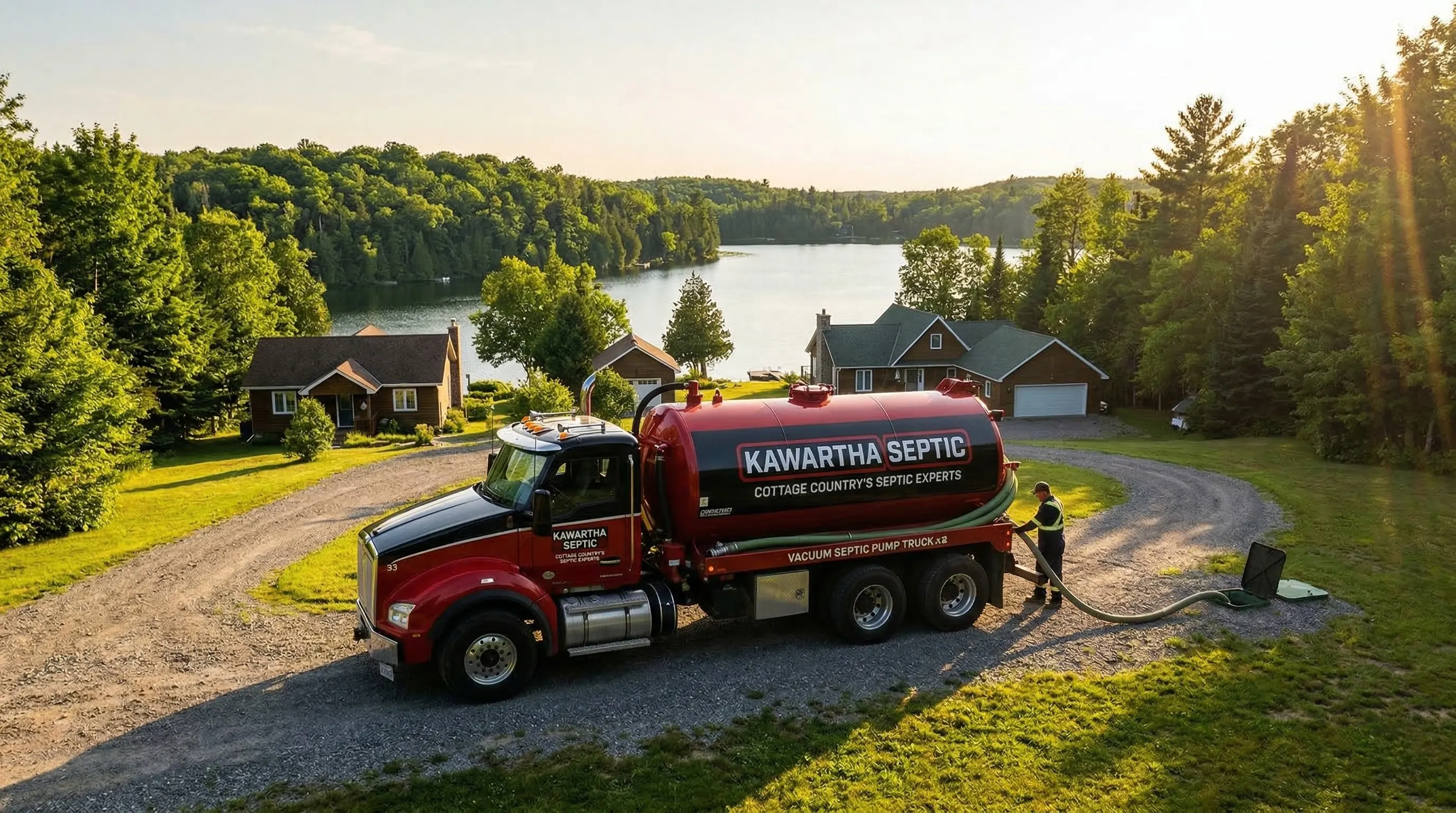
Victoria Day weekend. You pull into the driveway, unload the cooler, and start opening windows. The place smells a bit musty, but that’s normal. You turn on the water, flush the toilet, and head out to the dock. An hour later, your partner calls you in. There’s water pooling in the yard beside the tank. A sewage smell is drifting across the deck. Your long weekend just turned into an emergency service call.
We see it every May across Kawartha Lakes. Cottage owners skip the septic check, fire up the plumbing, and discover that winter did more damage than expected. A proper spring cottage opening septic checklist takes 30 minutes and can save you thousands in repairs.
This guide covers everything you need to check before your cottage septic system handles its first flush of the season. If you followed our septic winterization guide last fall, you’re already ahead. If you didn’t, this checklist is even more important.
Need a spring inspection before you open up? Book now or call (705) 806-0800.
Before You Turn the Water On
The biggest mistake we see with opening cottage septic systems is turning the water on first. Before a single tap runs, walk the property and check for visible problems. Five minutes outside can tell you a lot.
Walk the Drain Field
Start at the drain field (tile bed). Walk the full area slowly and look for:
- Soggy or unusually soft ground. Frost heave can shift pipes and create low spots where effluent collects instead of draining.
- Sunken patches. Settlement over the tank or distribution box suggests structural movement.
- New standing water. If it hasn’t rained recently, standing water over the drain field is a red flag.
- Strong odour. A healthy system shouldn’t produce a noticeable smell at the surface.
Check the Tank Area
Find your tank lid and risers. Look for:
- Shifted or cracked lids. Frost heave can move concrete lids enough to break the seal. This lets groundwater in and allows gases to escape.
- Erosion around the tank. Spring melt can wash away soil that insulates and protects the tank.
- Animal damage. Rodents and other animals sometimes burrow near the warm-ish tank area in winter. Burrows near the tank or pipes can compromise the system.
If everything looks normal on the surface, you’re ready to move to the full checklist.
The 10-Step Spring Septic Checklist
Print this list and bring it to the cottage. Work through it in order before you start using the plumbing at full capacity.
1. Inspect the tank lid and risers visually. Open the riser cap if accessible and look inside with a flashlight. Check the water level. If it’s higher than normal (above the outlet pipe), something is blocking flow downstream. If it’s bone dry, there may be a crack allowing drainage.
2. Check for frost heave damage on exposed pipes. Look at any visible plumbing connections between the cottage and the tank. Cracks, separations at joints, and misaligned pipes are all signs of freeze-thaw movement.
3. Inspect the distribution box. If your system has a D-box between the tank and the drain field, check that it’s level and undamaged. A shifted D-box sends effluent unevenly to the drain field, which overloads some lines and starves others.
4. Clear vegetation from access points. Trim back any brush, roots, or debris that grew over or near the tank lid, risers, or cleanouts over the winter. You need clear access for inspections and future pump-outs.
5. Check the effluent filter. Many newer systems have a filter on the outlet baffle. If yours does, pull it out and rinse it with a garden hose. A clogged filter causes slow drainage and backups into the cottage. If you’re not sure whether you have one, ask during your next service call.
6. Turn on the water supply slowly. Don’t blast the taps open. Turn the main supply on and let pressure build gradually. Then run one fixture at a time.
7. Run each fixture individually and listen. Flush each toilet. Run each sink and shower. Listen for gurgling, slow drains, or unusual sounds. These are signs your septic system may be failing or that a blockage formed over winter.
8. Check the basement and crawl space. After running water for 15 to 20 minutes, go check below. Look for any leaks, drips, or moisture around drain pipes. A cracked pipe from freezing might not show itself until water pressure returns.
9. Monitor the drain field again. After running water for 30 minutes, walk the drain field a second time. If wet spots or odours have appeared that weren’t there before, the system isn’t processing effluent properly.
10. Test the septic alarm (if equipped). If your system has a pump chamber with a high-level alarm, verify it works. Most alarms have a test button. A dead alarm battery won’t warn you when it matters.
Complete this spring cottage opening septic checklist before guests arrive, before the hot tub gets filled, and before anyone does laundry. Catching a problem now is always cheaper than dealing with one at 10 pm on a Saturday.
Signs of Winter Damage to Watch For
Even if your checklist goes smoothly on day one, keep watching during your first few weeks. Winter damage doesn’t always show up right away.
Slow drains throughout the cottage. If every fixture drains slowly, the issue is downstream, not in individual drain lines. This often points to a collapsed pipe between the tank and the drain field.
Sewage odour near the tank or drain field. A working system doesn’t smell at the surface. Odour means effluent is reaching ground level.
Gurgling sounds when flushing. Air getting pulled into the system typically means a vent issue or blockage. In spring, this can result from ice that hasn’t fully thawed inside a vent stack.
Bright green grass over the drain field. Grass that’s noticeably greener over the tile bed suggests effluent is rising closer to the surface than it should.
Backups after moderate water use. If the system handles one flush but backs up after a shower and a load of laundry, capacity is compromised. Reduce usage and call for a spring septic inspection before it gets worse.
Tom and Linda have owned their Cameron Lake cottage since 2014. Last spring, everything seemed fine for the first weekend. By the second weekend, with their grown kids visiting, toilets started gurgling and the shower drained slowly. A technician found that frost heave had separated a pipe joint between the tank and the D-box. The repair was straightforward once diagnosed, but it wouldn’t have been caught without paying attention to those early signs.
Should You Pump Before or After Opening?
This is one of the most common questions we get from cottage owners in spring. The answer depends on your situation.
Pump Before Opening If:
- You didn’t pump before closing last fall
- The tank was more than half full at your last service
- You’re hosting a big group for opening weekend
- Your system is older or hasn’t been inspected in over a year
Pump After the First Month If:
- You pumped in the fall as part of your winterization routine
- Opening weekend is just you and your partner
- You plan to ease into regular usage gradually
If you’re not sure, call and describe your situation. We can usually tell you whether pre-opening pumping makes sense based on your tank size, last service date, and how many people will be using the cottage. For more on timing and costs, check our guides on how often to pump your septic tank and septic pumping costs in Ontario.
First Weekend Tips: Protecting Your System from Guest Overload
Opening weekend is the hardest your septic system will work all year. After months of dormancy, it goes from zero to full capacity in hours. Six adults, hot showers, laundry, a dishwasher running after every meal. Here’s how to keep your cottage septic spring startup from becoming a disaster:
Spread out water use. Don’t run the dishwasher, washing machine, and shower at the same time. Space out high-volume activities to give the drain field time to absorb effluent between surges.
Limit laundry on day one. Running four loads on arrival day sends hundreds of litres into a cold, sluggish system. Do one load per day for the first few days.
Brief your guests. Let people know it’s a septic system, not municipal sewer. Nothing but toilet paper goes in the toilet. Post a polite sign if that’s easier than the conversation.
Keep showers short. Ten-minute showers from six people add up fast. Ask guests to keep it under five minutes for the first few days while the system wakes up.
Donna’s family opens their Balsam Lake cottage every Victoria Day weekend. Two years ago, everyone arrived Friday night. By Saturday afternoon, after showers, laundry, and a full dishwasher cycle, the basement floor drain started backing up. The system couldn’t handle the surge after sitting empty all winter. Now they open a week early with just two people, run the system lightly for a few days, and invite the crew up the following weekend. No problems since.
Opening up a cottage in Bobcaygeon, Fenelon Falls, Lindsay, or Coboconk? Book a spring inspection before the May rush.
When to Call a Professional
Your spring cottage opening septic checklist handles the basics. But some issues need a professional diagnosis. Call a septic service provider if you notice any of the following:
- Sewage backup into the cottage. Don’t try to fix this yourself. Stop using water and call immediately.
- Significant standing water over the tank or drain field. This could indicate a structural failure, a collapsed pipe, or a completely saturated drain field.
- A tank that’s overflowing or abnormally full. If the level is above the outlet, something downstream is blocked or failed.
- Any visible damage to the tank, lid, or risers. Cracks in concrete, gaps in seals, or shifted components need professional assessment.
- Persistent odour that doesn’t resolve after a few days of normal use. Sometimes a system just needs to “wake up.” But if the smell persists beyond the first week, there’s likely a real problem.
A spring septic inspection costs a fraction of an emergency repair. It’s especially worth it if your system is more than 20 years old or if you don’t know the service history.
The Ontario government and the Federation of Ontario Cottagers’ Associations (FOCA) both provide helpful resources for seasonal property owners managing septic systems.
Mike bought a Sturgeon Lake cottage in 2024 without a septic inspection. The listing said the system was “in working order.” His first spring, the yard smelled faintly of sewage after running the shower. An inspection revealed the drain field had been failing for at least two years, masked by additives from the previous owners. The fix was a full tile bed replacement. An inspection during the purchase would have caught it.
For general year-round guidance, our septic tank maintenance tips apply to cottages and full-time homes alike.
FAQ
How long does it take for a cottage septic system to start working again in spring?
Bacteria in the tank slow down significantly over winter but they don’t die. Once warm wastewater enters the tank, biological activity ramps up over a few days to a couple of weeks. You can help the process by starting with light use and gradually increasing water volume over the first week or two.
Can a septic system freeze solid over winter?
It’s uncommon for the tank itself to freeze solid because the mass of liquid and soil insulation prevents it. But pipes between the cottage and the tank, vent stacks, and shallow drain field lines can freeze. This is more likely in systems that weren’t properly winterized or that sit on properties with thin soil cover and high bedrock.
Should I add bacteria or additives to my septic tank in spring?
Generally, no. A properly functioning septic system generates the bacteria it needs from the waste you put into it. The Ontario government does not recommend septic additives, and some can actually harm your drain field. If your system needs a bacterial boost, regular use will take care of it within a week or two.
What if I didn’t winterize my septic system last fall?
Run through this spring cottage opening septic checklist carefully and take it slow. Systems that weren’t winterized are more likely to have frost damage, cracked pipes, or shifted components. Consider booking a professional spring septic inspection before using the system heavily. Prevention is always cheaper than repair.
How much does a spring septic inspection cost in the Kawartha Lakes area?
Costs vary depending on the system and what’s involved. A basic visual inspection during a pump-out is often included. A more thorough inspection with camera work or dye testing costs more. Call us at (705) 806-0800 for a quote.
Don’t Let a Skipped Checklist Ruin Opening Weekend
Your cottage is supposed to be where you relax, not where you deal with sewage emergencies. Walk the yard. Check the tank. Run the water slowly. Watch for warning signs. And if anything seems off, call before it gets worse.
The 30 minutes you spend on your cottage septic spring startup saves hours of cleanup and thousands in repairs. The owners who check first enjoy their weekends. The ones who skip it call us in a panic.
Opening the cottage this spring? Book a spring inspection or call (705) 806-0800. We service Kawartha Lakes, Lindsay, Bobcaygeon, Fenelon Falls, Coboconk, and all surrounding areas.