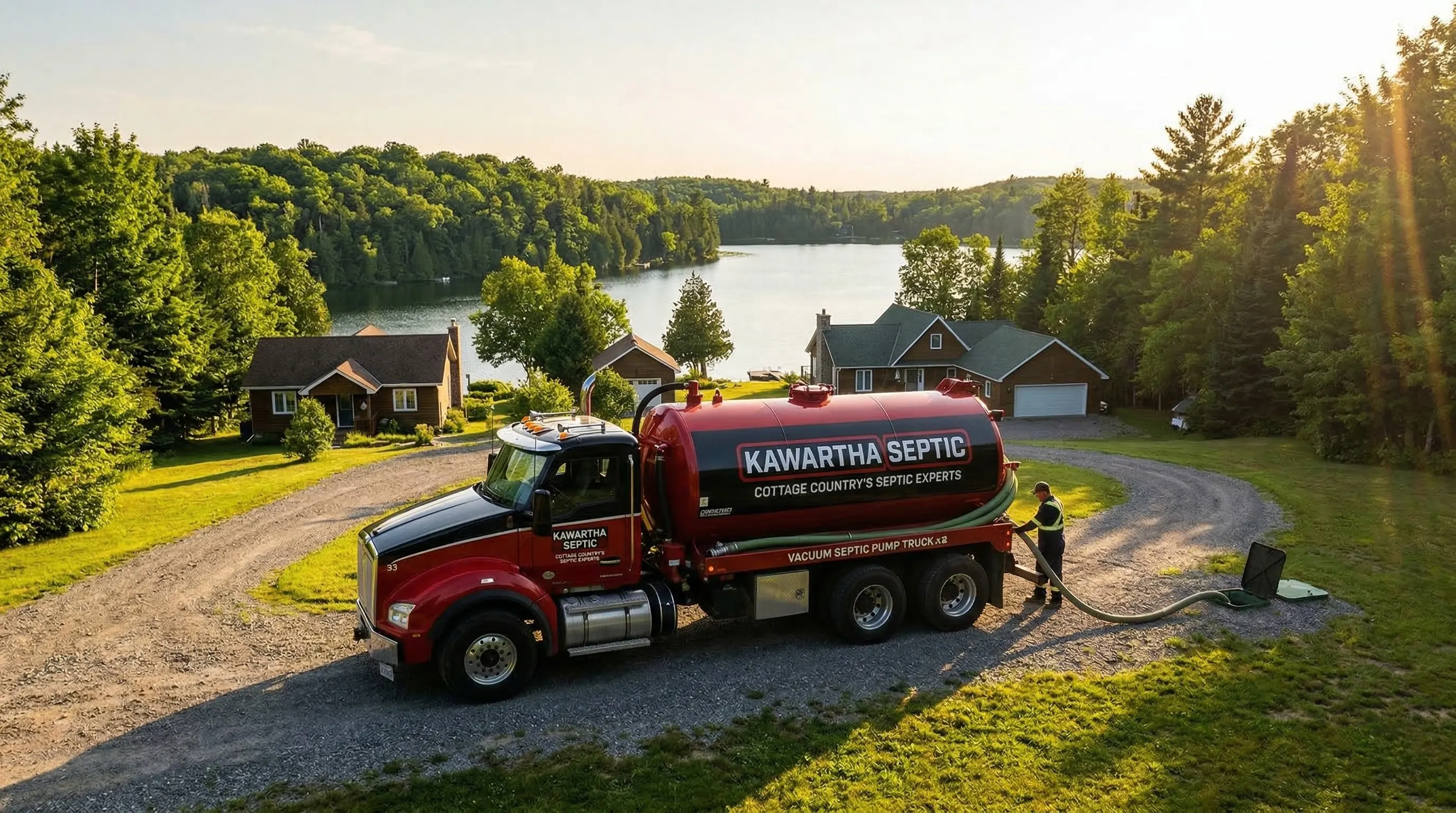
Last Thanksgiving, Paul drove up to his Balsam Lake cottage to close it for the season. He shut off the water, drained the pipes, locked the door, and left. He didn’t touch the septic system. When he opened the cottage the following May, the toilet wouldn’t flush and a foul smell was coming from the backyard. Frost heave had shifted the tank lid over the winter, letting groundwater flood the system. The spring repair cost $1,800.
Thirty minutes of septic winterization in October would have prevented that entirely.
If you own a seasonal cottage in Ontario, your septic system needs attention before you lock up for winter. The freeze-thaw cycle in the Kawarthas can crack pipes, shift tanks, and damage components that were fine in September. Proper septic system winterization for your cottage in Ontario protects your investment through the coldest months and makes sure everything works when you return in spring.
This guide covers the complete cottage septic winter preparation process: what to do with the tank, the pipes, the drain field, and what to check when you open back up.
Need a fall pump-out before closing? Book now or call (705) 806-0800.
Why Cottage Septic Systems Are Vulnerable in Winter
A year-round home sends warm wastewater through the septic system daily. That constant flow, combined with the biological heat generated by bacteria breaking down waste, keeps the system above freezing even in January. A cottage doesn’t get that protection.
No Heat, No Activity
When you close for the season, the system goes dormant. No warm water entering the tank. No biological activity generating heat. The bacteria colony slows and eventually goes semi-dormant. The tank, pipes, and drain field are on their own against months of freezing temperatures.
Frost Depth in the Kawarthas
Frost in the Kawartha Lakes region can penetrate 4 to 5 feet below the surface in a typical winter. That’s deep enough to reach septic pipes, tank lids, and shallow drain fields, especially on properties with thin soil over bedrock. Cottages near Coboconk and Shadow Lake, at the northern edge of Kawartha Lakes, tend to experience deeper frost than properties closer to Lindsay or Fenelon Falls.
Freeze-Thaw Cycles
It’s not just the cold that causes damage. It’s the repeated freezing and thawing, particularly in November and March. Water that seeps into cracks around tank lids, pipe joints, or riser connections expands when it freezes. Over multiple cycles, small gaps become big problems.
Step-by-Step: How to Winterize Your Cottage Septic System
Here’s the complete process to close your cottage septic system for winter. Do this in October or early November, before the ground freezes.
Step 1: Get the Tank Pumped
This is the most important step. Pump the septic tank before winter. Starting the cold months with a nearly empty tank gives you three advantages:
- Less liquid means less risk of freezing issues inside the tank
- You clear out the sludge buildup from a busy summer season
- The system is ready to go when you open in spring with no backlog
Don’t pump the tank completely dry. Leave a small amount of liquid (a few inches) to maintain the bacterial colony. The bacteria go dormant in cold temperatures but they don’t die. They’ll reactivate when warm wastewater returns in spring.
This is also a good time to combine the pump-out with an inspection. The technician can check the baffles, tank walls, and lid condition while the tank is accessible. For more on pumping timing, see our guide on how often to pump your septic tank.
Book a fall pump-out before the October rush. Call (705) 806-0800.
Step 2: Shut Off the Water Supply
After the pump-out, turn off the water supply to the cottage. This prevents leaks from trickling into the septic tank all winter. Even a slow drip from a faucet or a toilet with a bad flapper valve can send enough water into the system to cause problems.
If your cottage has a well with a pressure tank, shut off the pump and drain the pressure tank according to the manufacturer’s instructions.
Step 3: Drain All Plumbing Fixtures
Open all faucets and flush all toilets to drain the lines. Drain the hot water tank. Blow out the lines with compressed air if you have access to a compressor, which is the most thorough approach.
Don’t forget these commonly missed spots:
- Dishwasher supply and drain lines
- Washing machine hoses
- Outdoor shower plumbing
- Basement floor drain traps
- Ice maker supply line
For drain traps (sinks, showers, floor drains), pour RV antifreeze into each one. This prevents the water in the trap from freezing and cracking the fixture, and it keeps sewer gas from entering the cottage. Use non-toxic, propylene glycol-based antifreeze only. Never use automotive antifreeze near a septic system.
Step 4: Add Antifreeze to the Septic Lines
Pour approximately one litre of RV antifreeze into each toilet bowl after flushing. This protects the toilet’s internal trap and the pipe connection to the septic system. Pour a cup of antifreeze into each sink and shower drain as well.
Important: Use only RV/marine antifreeze (propylene glycol). It’s non-toxic and septic-safe. Automotive antifreeze (ethylene glycol) is toxic and will kill the bacteria in your septic tank.
Step 5: Insulate Exposed Components for Septic System Freeze Protection
If your septic system has above-ground risers, insulated lids help prevent frost from penetrating the tank. You can also place straw bales or rigid foam insulation over the tank area and riser caps for additional protection.
For properties in northern Kawartha Lakes, particularly around Coboconk, Balsam Lake, and Shadow Lake where frost goes deepest, this extra insulation can make a real difference.
Don’t insulate with plastic sheeting alone. Plastic traps moisture, which freezes and makes things worse. Use breathable insulating materials.
Step 6: Protect the Drain Field
The drain field needs some attention too:
- Don’t mow the grass short over the drain field before winter. Longer grass acts as natural insulation and traps snow, which also insulates.
- Don’t compact the soil. Avoid driving or parking anything over the drain field during fall closing.
- Clear any debris like fallen leaves or branches from the field area. Wet, matted leaves can channel water in ways that create localized freezing.
- Mark the field boundaries if you’re not sure where they are. This prevents snow removal crews or other winter visitors from accidentally driving over the area.
Step 7: Document What You Did
Write down the date of the pump-out, any issues the technician noted, and what winterization steps you completed. Keep this with your cottage maintenance file. When you open in spring, you’ll know exactly what to check and what state the system was in when you left.
Common Winterization Mistakes
Even experienced cottage owners make these errors. Avoid them.
Pumping the Tank Completely Dry
A completely empty tank is more vulnerable to shifting from frost heave because it has no weight holding it in place. The small amount of liquid left after a standard pump-out provides enough weight and maintains the bacterial colony.
Using Automotive Antifreeze
Automotive antifreeze is toxic to the bacteria in your septic tank and illegal to discharge into a private sewage system. Always use non-toxic RV/marine antifreeze. It costs a few dollars more per jug and saves you from killing your system’s biology.
Forgetting the Drain Traps
Every drain trap in the cottage holds a small amount of water. If that water freezes, it can crack the trap, the fixture, or the pipe connection. A splash of RV antifreeze in each trap takes 10 minutes and prevents hundreds of dollars in plumbing repairs.
Leaving the Water On “Just in Case”
Some cottage owners leave the water supply on with the heat set to minimum, thinking it will prevent freezing. If the power goes out during a winter storm (common in rural Kawartha Lakes), the heat stops, pipes freeze, and a slow leak can flood the cottage and overwhelm the septic system simultaneously.
Jennifer and Mark left their Cameron Lake cottage near Fenelon Falls with the water on and the heat set to 10 degrees one November. A January ice storm knocked out power for three days. When they visited in February, pipes had burst in the bathroom, water had been running for weeks, and the septic tank was overflowing. The plumbing repair cost $2,200. The septic emergency pump-out and field assessment cost another $900. Shutting off the water in October would have prevented all of it.
Opening Your Cottage Septic System in Spring
Closing is half the equation. Here’s what to do when you return.
Before You Turn On the Water
- Inspect the tank area visually. Look for shifted lids, cracked risers, or signs of frost heave around the tank.
- Check the drain field. Walk the area and look for wet spots, sunken areas, or unusual depressions that could indicate pipe damage.
- Check the plumbing vents. Ice or debris can block roof vents over the winter, causing pressure issues in the system.
First Day Back
- Turn on the water supply slowly. Don’t run everything at once.
- Flush each toilet once and run each faucet for a minute to clear the antifreeze and refill the drain traps.
- Watch for slow drains. If drains are sluggish on the first day, the system may have an issue that developed over winter.
- Check the basement. Look for any signs of water damage or sewage backup that may have occurred while you were away.
First Week
Monitor the system closely during the first week of use. The bacteria in the tank need time to reactivate after months of dormancy. Avoid heavy water use for the first few days. Don’t do five loads of laundry on opening weekend.
If you notice persistent slow drains, odour, or wet ground over the drain field, schedule an inspection. These could be signs of winter damage that needs attention before the problem gets worse. See our guide on signs your septic system is failing for a full breakdown of what to watch for.
Cottage Closing Checklist: Septic System Winterization
Print this and keep it with your cottage closing supplies:
- Pump the septic tank (leave a few inches of liquid)
- Shut off water supply and drain pressure tank
- Drain all plumbing lines (blow out with compressed air if possible)
- Flush all toilets and pour RV antifreeze into each bowl
- Pour RV antifreeze into every sink, shower, and floor drain trap
- Drain hot water tank, dishwasher, and washing machine
- Insulate risers and tank lids with straw or foam
- Leave grass long over drain field
- Mark drain field boundaries if not already marked
- Document everything (pump-out date, technician notes, winterization date)
Cottage Septic Winterization FAQ
When should I winterize my cottage septic system? October to early November in the Kawarthas, before the ground freezes. Don’t wait until Thanksgiving weekend if you can avoid it. Septic companies get busy in October, so book your fall pump-out early.
Can I winterize the septic system myself or do I need a professional? You can handle most of the winterization steps yourself: shutting off water, draining lines, adding antifreeze, and insulating components. The one step that requires a professional is the tank pump-out. Combine the pump-out with a quick inspection, and you’ve covered everything.
What if I visit the cottage occasionally in winter? If you make occasional winter visits (a few weekends), you don’t need to fully winterize. But keep the heat at a minimum of 10 degrees, fix any dripping faucets, and avoid heavy water use during short visits. The system can handle light, intermittent use as long as it doesn’t freeze.
How much does fall septic winterization cost? The pump-out is the main expense: $300 to $600 depending on tank size and access. RV antifreeze runs about $5 to $10 per jug, and you’ll need 3 to 5 jugs for a typical cottage. Insulation materials are minimal. Total cost: roughly $350 to $700. For detailed pricing, see our septic pumping cost guide.
Should I add a septic tank heater or heat tape? In most cases, no. A properly winterized system doesn’t need supplemental heat. Heat tape on pipes can help if you have a specific history of freezing in a known trouble spot, but it requires a reliable power supply all winter. For most Kawartha Lakes cottages, draining and antifreeze is sufficient and more reliable.
Close Right, Open Easy
Septic system winterization for your Ontario cottage isn’t complicated. It’s one of those tasks that takes minimal effort but prevents major damage. It takes an afternoon and costs a few hundred dollars. The alternative, discovering frozen pipes, a shifted tank, or a saturated drain field in May, costs thousands and can ruin the start of your season.
Pump the tank in October. Drain the lines. Add antifreeze. Insulate what’s exposed. That’s it.
Book your fall pump-out online or call (705) 806-0800 today. We serve cottages across Kawartha Lakes, including Bobcaygeon, Fenelon Falls, and Coboconk.
For year-round septic care, check our complete septic tank maintenance tips guide.