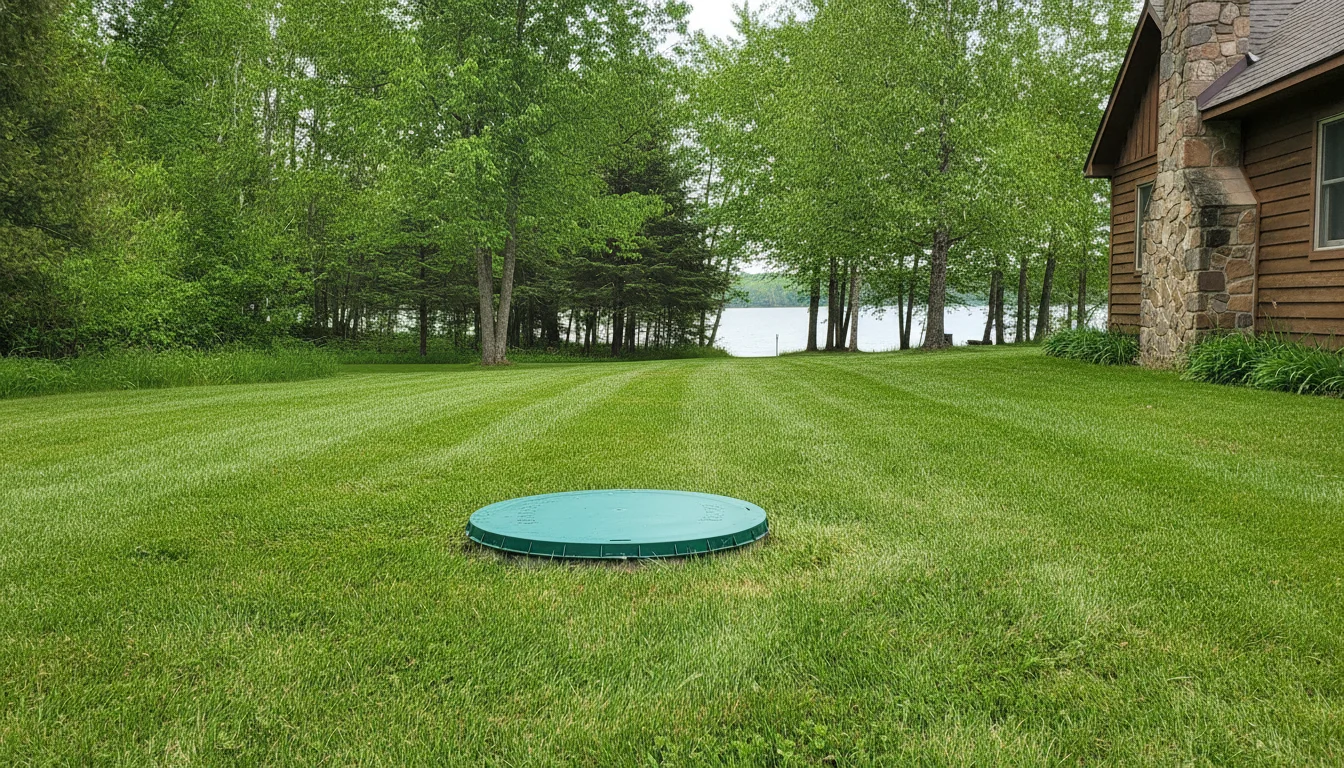
A cottage in Bobcaygeon goes on the market in late spring at $725,000. The listing photos are perfect. The dock is good. The roof is recent. Three offers come in within two weeks, the seller picks the highest one with the cleanest conditions, and the deal goes firm subject to a buyer’s home inspection.
Two weeks later, the home inspector pulls the tank lid. The sludge is at 80% of tank capacity, the leaching bed is showing surface staining over the access path, and the original septic permit is missing. The buyer’s lawyer asks for a proper septic inspection. The septic inspector confirms the bed is at end-of-life. Replacement estimate: $38,000.
The deal that was sold at $725,000 is now being renegotiated. By the time it closes (or falls apart), the seller has lost $25,000 to $50,000 in price, gained two months of delays, and learned that septic problems kill cottage sales more reliably than almost anything else on the property.
Here’s what specifically happens when a failing septic surfaces during a cottage sale, why the cottage market reacts more sharply than the suburban-home market, and what cottage sellers can do — starting with a pre-sale septic inspection before the listing goes live.
The Quick Answer: How Cottage Septic Issues Kill Sales
| Stage | What happens with a hidden septic problem |
|---|---|
| Listing prep | Seller doesn’t disclose because they don’t know themselves |
| First showings | Cottage shows beautifully; problem is invisible |
| Offer accepted | Conditional on inspection |
| Buyer’s inspection | Septic flag triggers a deeper investigation |
| Septic inspection | Failure confirmed; replacement cost estimated |
| Renegotiation | Buyer demands $30K–$50K reduction or remediation |
| Closing | Either price drops, deal dies, or seller funds remediation |
The pattern: septic problems are surfaced during the sale, when both parties are most exposed. Sellers find out at the same time as buyers, and the buyer has all the leverage.
Why Cottage Sales Are More Vulnerable Than Suburban Sales
Cottage sales react more sharply to septic issues than suburban-home sales for five reasons:
1. Cottage buyers expect to spend less, not more
Cottages are discretionary purchases. Buyers walking into a $700K cottage already feel the stretch. Adding a $40K septic surprise at closing isn’t a minor adjustment, it’s the difference between buying and walking. Suburban buyers in the same price range are usually buying primary residences and have more capacity to absorb surprises.
2. Cottage market windows are narrow
Most cottage activity happens between April and October. A deal that falls apart in July often can’t be replaced before the season ends, meaning the seller carries the property through winter. That carrying cost (insurance, taxes, heat, snow removal) plus the deferred sale tilts negotiation power even harder toward the buyer.
3. Lakefront buyers are well-informed
Cottage buyers have done research. They know septic costs are real and replacement is expensive. They’ve heard the stories. When the inspection flags issues, they don’t panic, they renegotiate, and they renegotiate hard.
4. Septic problems amplify other concerns
A buyer who finds a septic issue suddenly looks harder at the well, the dock, the roof, the wiring. One concern becomes three. Cottage buyers in this mood often walk entirely.
5. Replacement costs are higher on lakefront lots
A $25,000 conventional septic on a suburban lot turns into a $45,000 raised bed or mound system, or a $60,000+ tertiary unit, on a cottage lakefront with tight setbacks. The number that gets quoted in renegotiation is bigger than what most sellers expect.
The Specific Failure Modes That Surface at Sale
In rough order of frequency:
Old system with no recent maintenance records
The seller “always” used the cottage but pumped maybe twice in 25 years. Buyer’s inspector finds heavy sludge and aging components. Even if the system technically still works, the lack of records makes the buyer (and their lawyer) treat it as a near-replacement liability.
Visible bed surfacing or saturation
Effluent on the surface, suspiciously lush grass over the bed, or soggy ground over the leaching field. This is leaching bed failure and it’s hard to miss during inspection. Replacement is the realistic outcome.
Class 3 cesspool grandfathered for years
Most cottage buyers won’t accept a cesspool, even one that “still functions.” Lawyers usually require remediation as a condition of closing.
Unpermitted modifications
A bunkie quietly plumbed into the main tank decades ago. A bathroom added without paperwork. The seller may not even know about these, they inherited the cottage from parents who never updated permits. Buyer’s lawyer finds the discrepancy and treats it as a future liability.
Setback violations from newer construction
A pool, deck, or addition built by the seller (or the previous owner) sits inside the OBC setback from the leaching bed. The pool wasn’t a problem until the buyer’s lawyer noticed it. Now it is.
Shared system with no documentation
The cottage shares a septic with a neighbour or a sibling’s adjacent cottage. Verbal arrangement only. No registered easement. Buyer’s mortgage company refuses to lend. (See our shared septic systems for buyers guide for the full picture.)
Capacity inadequacy
The original system was sized for a 2-bedroom cottage. The current cottage has 4 bedrooms because the previous owner finished the basement. The system has been operating beyond capacity for a decade and is showing its age.
What Buyers Do When Septic Issues Surface
Three predictable moves, in order:
1. Demand a price reduction
Most common opening move. The amount is typically 1.5x the estimated replacement cost, buyers anticipate the project will cost more than the estimate suggests. A $35K replacement estimate often turns into a $50K price reduction demand.
2. Demand seller-funded remediation before closing
Slower than a price reduction but sometimes preferred by buyers who don’t want to manage the project themselves. The seller funds the work; closing waits until completion. Adds 2-4 months to the timeline and often more cost than the seller anticipates.
3. Walk away
The deal-killing scenario. Most often happens when:
- Multiple issues surface together (septic + well + foundation)
- The replacement cost approaches the cottage’s value-add over the lot
- The buyer was already at the edge of their financing capacity
- The market has alternative listings
Once a buyer walks because of septic, the seller has to relist with a known issue. The next round of buyers prices that issue in.
The Pre-Listing Workflow That Prevents This
Three to six months before listing, do this:
1. Get a septic inspection
Cost: $200–$500. The single highest-leverage thing you can do. Documents condition, identifies any issues, gives you time to address them before they become buyer leverage.
2. Pump the tank if it’s been more than 2-3 years
Cost: $400–$700. Cleans out accumulated solids, lets the inspector see the tank clearly, removes one easy source of buyer concern.
3. Locate and organize all paperwork
- Original septic permit
- Design drawings
- Past pumping records
- Any service or repair history
- Easement documents if shared
The seller who hands a buyer’s lawyer a clean documentation package signals “this property has been managed properly”, even when the system itself has minor issues.
4. Address easy fixes
- Effluent filter cleaning
- Tank lid replacement
- Riser repair
- Alarm replacement
- Distribution box service
Most of these are $200-$1,500 fixes that prevent a buyer’s inspector from cataloguing them as concerns.
5. Address bigger issues with eyes open
If the inspection reveals real problems (failing bed, undersized system, cesspool), you have three options:
- Fix it before listing, costs more upfront, but the cottage sells at full price
- Disclose and price accordingly, listing price reflects the known issue, buyers come in already accounting for it
- Sell as-is with full disclosure, accept that the buyer pool will be smaller and offers will reflect remediation cost
Each of these is better than the “discovered during inspection” scenario, where the seller has the least control.
Cottage-Specific Tactics
A few cottage-specific things that don’t apply as much to suburban sales:
Time the listing
Listing in early May gives you the longest selling window. Issues that surface have time to be addressed. Issues discovered in August that require remediation often push closing into the off-season, disastrous for cottage values.
Use the disclosure to your advantage
Lakefront buyers respect honest sellers. A disclosure package that includes “The system is from 1992, we pumped it in 2024, here are the records, the inspector identified the bed as showing early signs of wear and we’ve factored remediation into the asking price” sells better than a property with vague answers.
Apply for cost-share funding
If you’re going to fund remediation pre-sale, check whether your shoreline or watershed qualifies for Conservation Authority cost-share funding. 25%–50% reimbursement on qualifying projects is real money.
Get a current pump record on file
Even if no work is needed, pumping the tank within 6 months of listing creates a documented service record on the date matters. Cheap, effective signal.
Brief your realtor
Make sure your listing agent understands the septic situation and can answer buyer questions confidently. Realtors who can’t answer septic questions during showings inadvertently raise concerns. Realtors who say “the system was inspected three months ago, here are the records” close more deals.
When Remediation Pre-Sale Is the Right Call
The math usually favors fixing major problems pre-listing if:
- Replacement cost is under 10% of cottage value
- The market is hot (deals are competitive)
- You’re in a regulated/sensitive lake watershed
- Buyer financing is likely to be marginal
- You can’t carry the property through winter if the deal falls through
The math usually favors disclosing and pricing accordingly if:
- Replacement cost approaches 20%+ of value
- Cash is tight and you can’t fund the work upfront
- The cottage has other significant issues that need addressing anyway
- Buyer pool is patient (less competitive market)
A cottage owner near Coboconk listed his lakefront in 2022 with a known Class 3 cesspool. Asking price was $620,000, market value with conventional septic estimated at $665,000. He listed at $620K with full disclosure. Three offers within a month, all at or near asking, all with the buyer planning to install a new septic. Total time on market: 22 days. The discount versus replacement cost was approximately equal, but the deal closed quickly and cleanly. No surprises, no renegotiation, no inspector drama.
That’s the cleanly-disclosed scenario. It works.
Closing-Day Surprises and Holdbacks
If the deal somehow gets to closing without the septic being fully resolved, the lawyers may agree on a holdback:
- Buyer’s lawyer holds back funds (typically 1.5x estimated cost) in trust at closing
- Seller gets remaining proceeds
- Held funds get released to buyer for actual remediation costs
- Any remainder back to the seller after work is completed
Holdbacks aren’t ideal but they save deals that would otherwise die. The amount is negotiable. The terms (which contractor, what timeline, what happens if costs come in lower) need to be precise.
Real Estate Appraisal and Septic
Property appraisers vary in how they account for septic condition:
- Conservative appraisers may discount aggressively if no recent inspection record exists
- Volume-driven appraisers sometimes underweight septic in residential cottage markets
- Appraisers familiar with the area know the typical replacement cost ranges and adjust meaningfully
A clean septic inspection report and recent pump record reduce appraisal uncertainty. Worth getting before you list.
Septic Sale FAQ
Can I sell a cottage “as-is” without fixing the septic? Yes, but you must disclose what you know. “As-is” means the buyer accepts the property in its known condition, not that the seller doesn’t have to disclose.
Will my realtor flag septic issues to buyers automatically? Realtors have a duty to disclose material defects. Most will mention any known septic issues. Don’t expect them to hide problems for you.
What if the buyer’s inspector is wrong about the septic? Get a second opinion from a licensed sewage system designer. If the buyer’s inspector got it wrong, documentation from a professional can defuse the concern.
Can I just dispute the buyer’s inspection? You can, but if the issue is real, pushing back rarely helps. The buyer has options, finding the right balance between defending and negotiating is where your lawyer earns their fee.
What about cottages with holding tanks? Buyers want to see recent pump records and understand ongoing pump-out costs. A working Class 5 holding tank with documented pumping is a much easier sale than one with mystery records.
Will home inspection reports kill my deal? Almost never on their own. The septic inspection that the home inspection triggers is what does the damage, when it confirms a real problem.
What if my system is on a shared arrangement? The shared status itself isn’t a deal-killer if documentation is clean. Lack of registered easements or written cost-sharing agreements is what trips up the deals. Formalize before listing.
Estate Sale Variant
If you’re selling a cottage as part of an estate, the same dynamics apply but with extra complexity. (See our dedicated estate executor septic guide for the full picture.) The pre-sale workflow above is even more important, executors have a fiduciary duty to maximize the estate’s proceeds, and skipping pre-sale septic diligence routinely costs estates tens of thousands.
The Pre-Listing Math
Pre-listing septic work that costs the seller $1,500 to $5,000 routinely prevents $25,000 to $50,000 in price negotiation, deal-killing surprises, or extended timeline. The ROI is one of the most reliable in real estate prep.
We service the Kawartha Lakes region, Lindsay, Bobcaygeon, Fenelon Falls, Coboconk, and surrounding rural and waterfront properties. We work with sellers, lawyers, and realtors regularly on pre-sale inspections, pumping, and documentation. We can give you the technical picture in writing in time for the listing, and flag issues you want to know about before they become buyer leverage. The full Ontario-wide failed septic sale playbook is here, and the replacement cost ranges are here for budget reference.
Listing your cottage this season? Call (705) 702-5526 or book online. Use the cost calculator for a 60-second estimate.