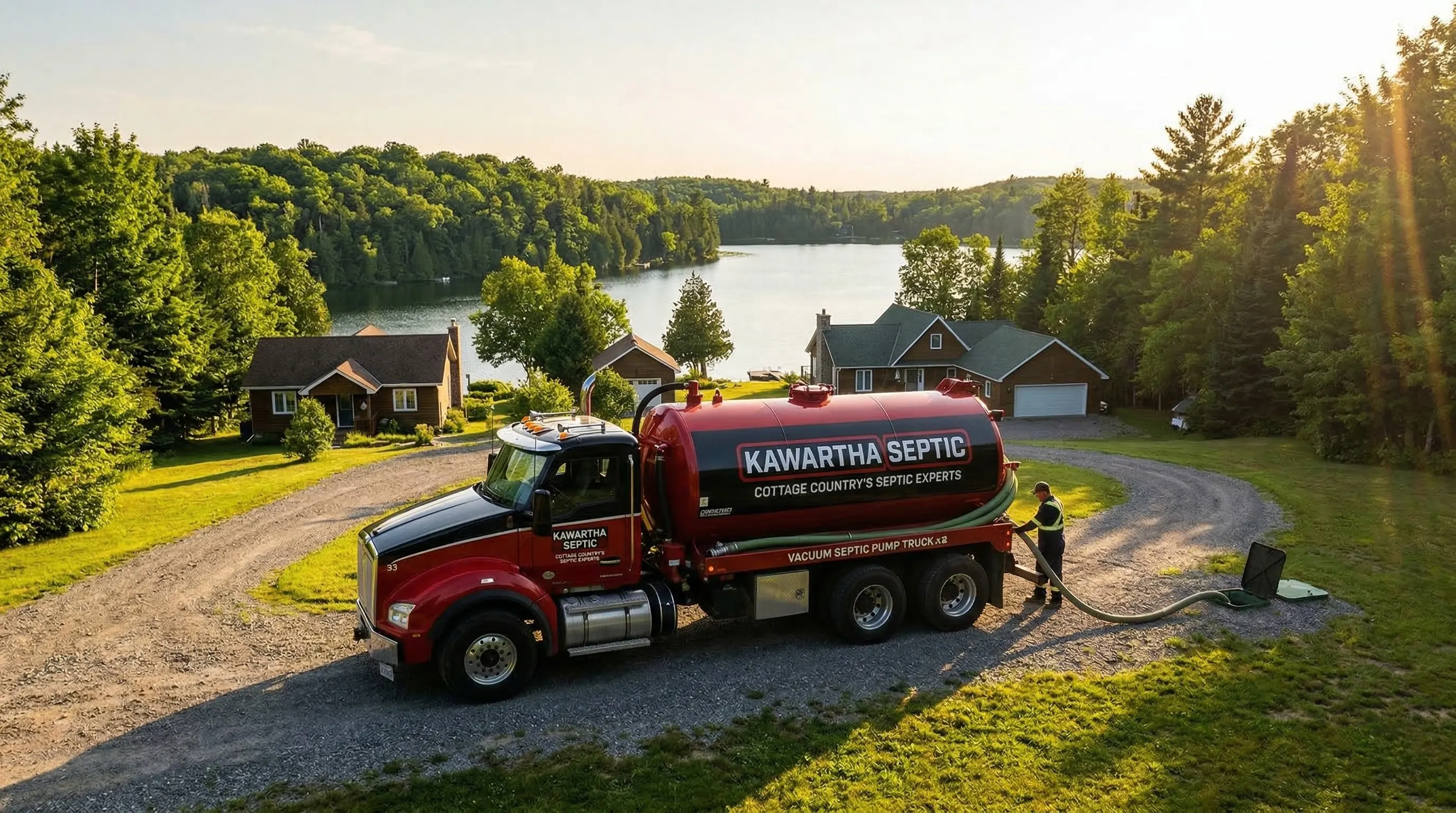
A couple in Bobcaygeon listed their three-bedroom bungalow last spring. They had a solid offer within the first week. Firm price, no conditions on financing, closing in 60 days. Then the buyer’s home inspector flagged the septic system. A follow-up inspection confirmed it: the drain field had failed. The buyer walked. The deal fell apart three weeks before closing.
That’s how most people learn they have a septic problem. Not when the system actually fails, but when they try to sell the house and someone finally takes a close look.
If you’re in this situation, you’re probably wondering whether you can still sell the property. The answer is yes. But how you handle it makes a massive difference in what you walk away with.
Got a failed septic and need to figure out your next move? Call us at (705) 806-0800 or book an assessment.
The Short Answer
Yes, you can sell a house with a failed septic system in Ontario. There’s no law that says a property must have a functioning septic system before it changes hands. But there are rules about what you have to disclose, and the reality of selling with a failed system is a lot more complicated than just listing the property and hoping for the best.
Most buyers in Kawartha Lakes are going to get a septic inspection. It’s standard practice, and most mortgage lenders require it for rural properties. If your system fails that inspection, you’re going to deal with price reductions, conditional offers, or buyers who simply move on to the next listing.
You have options, though. And the one you pick depends on your timeline, your budget, and how much you’re willing to negotiate.
What “Failed” Actually Means in Ontario
“Failed septic” gets thrown around loosely, but it means different things depending on who’s talking.
Under Ontario’s Building Code, a septic system is considered to have failed when it no longer treats and disperses sewage in a way that protects public health and the environment. In practical terms, that usually means one or more of these things:
- Effluent is surfacing on the ground above or near the drain field
- Sewage is backing up into the house
- The system is contaminating nearby wells, ditches, or waterways
- The tank is structurally compromised with cracks, collapsed baffles, or a deteriorated outlet
There’s also a grey area. A system can be old, undersized, or showing early signs of failure without being completely non-functional. An inspector might call it “marginal” or “nearing end of life.” That’s not the same as failed, but it still scares buyers.
A truly failed system is one that poses a health or environmental risk right now. That’s the category that creates the biggest problems when you’re trying to sell.
Seller Disclosure Obligations
This is where a lot of sellers get into trouble. In Ontario, you have a legal obligation to disclose known material defects. A failed septic system is absolutely a material defect. You can’t hide it, minimize it, or hope the buyer doesn’t notice.
The standard Seller Property Information Statement (SPIS) asks directly about the septic system. If you know the system has failed or has been flagged during an inspection, you have to say so. Failing to disclose can expose you to a lawsuit after the sale closes, and courts in Ontario haven’t been kind to sellers who tried to conceal septic problems.
Here’s what that looks like in practice. A homeowner near Fenelon Falls sold a waterfront cottage a few years ago. The seller knew the system had been having issues for two summers. Slow drains, wet spots in the yard, that sulfur smell. He didn’t mention any of it on the disclosure form. The buyer discovered the failed system six months after closing, sued, and won. The seller ended up paying for the full replacement plus the buyer’s legal costs.
Don’t be that person. Disclose everything. It protects you legally and keeps negotiations honest.
The Compliance Letter Process in Kawartha Lakes
If you’re selling property in the City of Kawartha Lakes, you’ll likely encounter the compliance letter process. The municipality requires septic system inspections in certain situations, particularly for waterfront properties and when properties change hands.
Here’s how it works:
- You hire a qualified inspector to evaluate the septic system. They’ll pump and inspect the tank, assess the drain field, check setback distances, and review the age and design of the system.
- The inspector submits a report to the City of Kawartha Lakes.
- The municipality issues a compliance letter based on the findings. This letter indicates whether the system meets current standards, needs minor repairs, or has failed.
If the system passes, you get a compliance letter and the sale moves forward without issues. If it fails, the letter outlines what needs to happen before the system is considered compliant. That could mean repairs, upgrades, or a full replacement.
Getting ahead of this process is smart. If you wait until a buyer’s inspector finds the problem, you’ve lost all control of the timeline. If you get the inspection done before listing, you know exactly what you’re dealing with and can plan accordingly.
Not sure where your system stands? Book a septic inspection before you list. Call (705) 806-0800.
Your 4 Options as a Seller
Once you know the system has failed, you’ve got four paths forward. Each one has trade-offs.
Option 1: Fix It Before Listing
This is usually the strongest move if you can afford it and your timeline allows for it. A brand-new or recently repaired septic system removes the biggest objection a buyer could have. It also lets you list at full market value without the cloud of a failed septic hanging over every negotiation.
The downside is cost and time. A full septic replacement in the Kawartha Lakes area typically runs between $15,000 and $40,000 depending on the system type, soil conditions, and site access. You’ll also need permits from the municipality, and the process from start to finish can take four to eight weeks. If you need to sell fast, this might not work.
But if you’ve got the runway, fixing the system first almost always nets you more money than selling as-is.
Option 2: Offer a Price Reduction
This is the most common approach. You list the property, disclose the septic issue upfront, and price the home to account for the replacement cost. Or you list at a standard price and negotiate a reduction once offers come in.
The challenge is that buyers always overestimate repair costs. If a replacement will actually cost $25,000, the buyer’s going to ask for $35,000 off the price. They’re pricing in the hassle, the risk, and the inconvenience of managing a septic replacement after they move in. You’ll lose more on the price than you’d spend just fixing it yourself.
That said, this works well for sellers who don’t have the cash on hand for repairs but have enough equity in the property to absorb a hit.
Option 3: Sell As-Is
You can absolutely sell the property as-is, failed septic and all. This is common with estate sales, investor purchases, and properties that need work beyond just the septic system. You disclose the problem, price accordingly, and attract buyers who are comfortable taking on the project.
The buyer pool shrinks significantly with this approach. Most families looking for a move-in-ready home aren’t going to touch a property with a failed septic system. Your buyers will be investors, flippers, or people specifically looking for a fixer-upper at a discount.
A couple from Lindsay was selling their parents’ estate property last year. The house needed a new roof, new windows, and the septic had failed. Instead of sinking $60,000 into a property they didn’t want to keep, they listed it as-is for $80,000 below comparable homes. It sold in two weeks to an investor who planned to renovate and flip it. They got less, but they also spent nothing on repairs and closed quickly.
Option 4: Negotiate a Holdback
A holdback is a compromise that works for both sides. You agree on a sale price, and the buyer’s lawyer holds back a portion of the funds in trust until the septic system is repaired or replaced. Once the work is done and the municipality signs off, the holdback is released to you.
This lets the sale close on schedule while giving the buyer confidence that the septic issue will get resolved. The holdback amount is typically 1.5 to 2 times the estimated repair cost, which provides a buffer in case the work runs over budget.
Holdbacks require cooperation between the lawyers on both sides, and the terms need to be clearly spelled out. Who chooses the contractor? What’s the deadline for completion? What happens if the cost exceeds the holdback amount? These details matter.
This option works best when the buyer and seller have a good working relationship and both want the deal to close.
How Buyers and Lenders React to Septic Problems
Understanding the other side of the table helps you plan your approach.
Buyers are scared of septic problems. Most people buying rural property in Ontario don’t fully understand how septic systems work. When an inspector says “failed,” the buyer hears “money pit.” Even reasonable repair costs can feel overwhelming to someone who just stretched their budget to buy a house.
That’s why getting a septic inspection before listing is so valuable. If you can hand the buyer a clear report that says “here’s what’s wrong, here’s what it costs, here’s the plan,” you’ve removed most of the fear.
Lenders are often the bigger problem. Many banks and mortgage companies won’t finance a property with a failed septic system. They see it as a health hazard and a liability. If the buyer can’t get financing, it doesn’t matter how willing they are to buy. This is especially common with CMHC-insured mortgages.
Cash buyers and investors don’t have this problem, but they’re also going to negotiate harder on price.
What It Costs to Fix Before Selling
Here’s a realistic breakdown of septic repair and replacement costs in the Kawartha Lakes area:
- Minor repairs (baffle replacement, riser installation, pump repair): $500 to $3,000
- Tank replacement only: $5,000 to $10,000
- Full conventional system replacement: $15,000 to $25,000
- Tertiary treatment system (required for some waterfront properties): $25,000 to $40,000
- Permit and engineering fees: $2,000 to $5,000
These numbers vary depending on soil conditions, lot size, accessibility, and whether the old system needs to be decommissioned. Properties in Bobcaygeon, Fenelon Falls, and Coboconk often have challenging site conditions that can push costs higher.
For a detailed breakdown of what ongoing upkeep costs look like, check out our guide on septic pumping costs in Ontario.
The point is this: spending $20,000 to fix the system before selling almost always gets you more than $20,000 back in the sale price. A house with a clean septic compliance letter sells faster, attracts more buyers, and avoids the discount that comes with selling a property with known septic problems.
Want a repair estimate before you list? Call (705) 806-0800 or book an assessment.
Frequently Asked Questions
Do I have to fix the septic system before selling my house in Ontario?
No. Ontario doesn’t require a functioning septic system for a property to change hands. However, you must disclose known defects, and a failed system will affect your sale price, buyer pool, and financing options. Most sellers find that fixing the system or negotiating a holdback produces a better outcome than selling with a known failure.
Can a buyer get a mortgage on a house with a failed septic?
It depends on the lender. Many banks won’t finance properties with failed septic systems, especially if the loan requires CMHC insurance. Some lenders will proceed if a holdback arrangement is in place and a clear remediation plan exists. Cash buyers don’t face this limitation.
What is a septic compliance letter in Ontario?
A compliance letter is issued by the local municipality after a septic system inspection. In Kawartha Lakes, a qualified inspector evaluates the system and submits findings to the city. The letter confirms whether the system is compliant, needs repairs, or has failed. Many real estate transactions in rural Ontario require this document. Learn more about the inspection process here.
How long does it take to replace a septic system in Kawartha Lakes?
From initial assessment to final approval, a full septic replacement typically takes four to eight weeks. That includes the site evaluation, permit application, engineering design, installation, and municipal inspection. Rush timelines are sometimes possible, but permit processing at the municipality is the biggest variable.
What happens if I don’t disclose a failed septic system?
You’re exposing yourself to a lawsuit. Ontario courts have consistently ruled in favour of buyers who discovered undisclosed septic failures after closing. You could be on the hook for the full cost of replacement, legal fees, and potentially damages for the buyer’s inconvenience and health risks. Always disclose. It protects you and keeps the transaction honest.
The Bottom Line
Selling a house with a failed septic system in Ontario isn’t ideal, but it’s absolutely doable. The worst thing you can do is ignore it and hope nobody notices. They will.
Your best approach depends on your situation. If you’ve got time and budget, fix it first and sell clean. If you need to move fast, price accordingly or negotiate a holdback. Whatever you choose, be upfront about the problem and have a plan ready.
Regular septic maintenance prevents these situations in the first place. If you’re not in a rush to sell, getting on a proper septic pumping and inspection schedule now could save you tens of thousands down the road.
We help homeowners across Lindsay, Bobcaygeon, Fenelon Falls, and Coboconk figure out exactly where their septic system stands before they list. Whether you need an inspection, a repair, or a full septic replacement in Kawartha Lakes, we’ll give you a straight answer and a clear price.
Call (705) 806-0800 or book online to get your septic assessed before you sell.