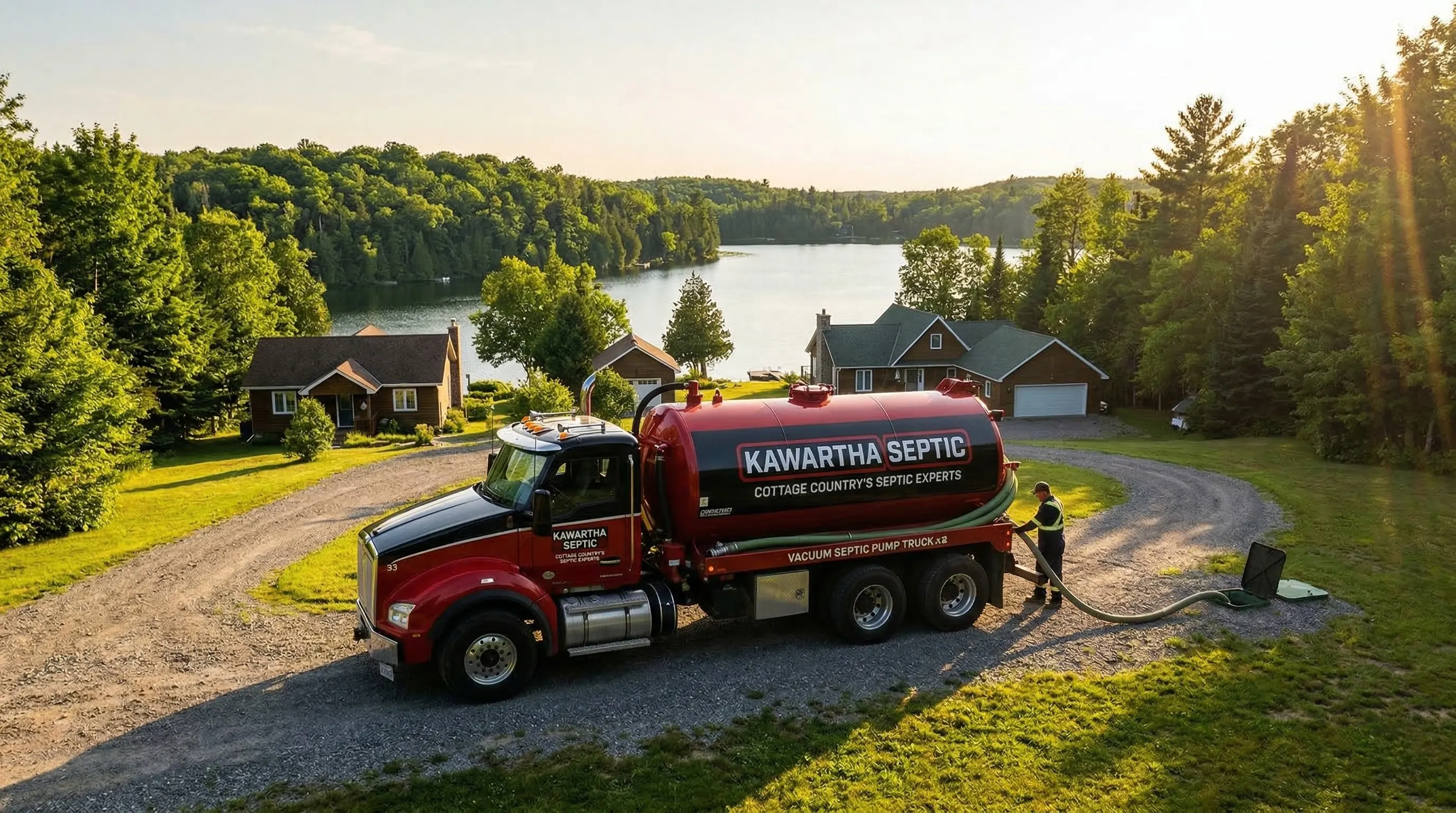
A couple from Toronto fell in love with a lakefront cottage in Kawartha Lakes. The asking price was right. The home inspection came back clean. They waived the septic condition to speed up the offer. Six months later, sewage was pooling in the backyard. The septic system, original to the 1970s build, had a cracked tank and a drain field that was past its lifespan. Replacement cost: $22,000.
That story plays out more often than you’d think. And it’s completely avoidable.
If you’re buying a house or cottage with a septic system in Ontario, a septic inspection before buying is one of the smartest investments you can make. It costs $200 to $500. A failed system costs $15,000 to $30,000 to replace. The math is simple.
This guide walks through everything you need to know about getting a septic inspection before buying a house in Ontario: what it covers, why it’s different from a home inspection, what the results mean for your offer, and how to protect yourself from inheriting someone else’s expensive problem.
Buying property in Kawartha Lakes? Book a pre-sale septic inspection or call (705) 806-0800.
Why a Septic Inspection for Home Buyers Is Essential
A home inspection covers the structure, roof, plumbing, electrical, and HVAC. It does not adequately evaluate your septic system. General home inspectors lack the specialized training to assess tank condition, drain field performance, or code compliance. At best, they’ll note “septic system present” and recommend further evaluation.
That further evaluation is the septic inspection. And skipping it is one of the costliest mistakes a buyer can make.
What’s at Stake
- A full septic system replacement in Ontario costs $15,000 to $30,000, depending on system type, soil conditions, and access
- Drain field repairs run $5,000 to $10,000
- A failing system can contaminate well water, affect neighbouring properties, and create health hazards
- On waterfront properties, a failing septic system can trigger environmental compliance issues with the municipality
- Mortgage lenders sometimes require proof that the system is functional before approving the loan
A $200 to $500 inspection catches these problems before you close. After closing, they’re your responsibility.
Ontario’s Regulatory Context
Ontario regulates private sewage systems under Part 8 of the Ontario Building Code. The Ontario government requires that septic systems be maintained according to their original approval terms. When a property changes hands, there’s no automatic government inspection of the septic system. That responsibility falls to the buyer.
In some municipalities, including the City of Kawartha Lakes, the Building and Septic Division maintains records for systems permitted after 1974. But many older systems, particularly cottages built in the 1960s and 70s, have limited or no documentation. A pre-purchase septic inspection fills that gap.
What a Pre-Purchase Septic Inspection Covers When Buying a House with a Septic System in Ontario
Not all septic inspections are the same. A real estate septic inspection should go well beyond a quick visual check. Here’s what a thorough inspection includes.
Tank Assessment
The inspector will locate and uncover the septic tank (or holding tank), then evaluate:
- Tank material and condition — concrete, fibreglass, or polyethylene, with notes on any cracks, corrosion, or structural deterioration
- Sludge and scum levels — how full the tank is, and whether it’s been pumped recently
- Inlet and outlet baffles — these direct flow through the tank, and corroded baffles are one of the most common problems in older systems
- Tank lid and risers — condition, accessibility, and whether risers have been installed for easier future access
- Effluent quality — the clarity and level of liquid in the tank indicates how well the system is processing waste
Drain Field Evaluation
The drain field (tile bed) is the most expensive component to replace. The inspection evaluates:
- Surface conditions — any wet spots, odour, or unusually lush vegetation over the field
- Soil absorption — whether the field is draining properly or showing signs of saturation
- Distribution system — the condition of distribution pipes, the D-box (distribution box), and weeping lines
- Setback distances — how far the field is from the well, property lines, and the waterfront
System Documentation Review
The inspector should also review:
- As-built drawings — if available, showing the system layout, tank size, and field dimensions
- Permit history — when the system was installed, any repairs or modifications on record
- Pumping records — proof of regular maintenance
- System age — a conventional system has a design life of 20-25 years
Optional: Dye Test or Camera Inspection
Some inspectors offer a dye test, where fluorescent dye is flushed through the system and the inspector checks the drain field and surrounding area for dye surfacing. This can reveal leaks or short-circuiting in the field. Camera inspections of the distribution pipes provide a visual assessment of pipe condition without excavation.
Planning to make an offer? Get the septic inspection done early. Book an inspection or call (705) 806-0800.
Septic Inspection Cost in Ontario: What to Budget
A pre-purchase septic inspection in Ontario typically costs between $200 and $500, depending on the scope.
| Inspection Type | Typical Cost | What’s Included |
|---|---|---|
| Basic visual inspection | $200-$300 | Tank locate, lid check, visual drain field assessment |
| Standard inspection with pump-out | $400-$600 | Full tank evaluation, sludge measurement, baffle check, drain field assessment |
| Comprehensive with dye/camera | $500-$800 | Everything above plus dye test or camera inspection of distribution lines |
For most real estate transactions, a standard inspection with pump-out is the best value. It gives you a complete picture of the system’s condition for roughly the cost of a nice dinner out.
Compare that to what you’ll spend if you skip it:
| Problem Discovered After Purchase | Typical Cost |
|---|---|
| Emergency pump-out | $600-$1,200 |
| Baffle replacement | $200-$600 |
| Drain field repair | $5,000-$10,000 |
| Full system replacement | $15,000-$30,000 |
| Well contamination remediation | $3,000-$8,000 |
Mark and Tanya learned this lesson when they bought a farmhouse outside Lindsay in 2023. The sellers said the septic “worked fine” and provided no records. Mark and Tanya relied on the home inspection, which noted the system as “functional, further evaluation recommended.” They didn’t follow up. Eight months after closing, slow drains led to an inspection that revealed a 35-year-old concrete tank with a failed outlet baffle and a drain field clogged with years of escaped solids. The repair bill was $11,400. A $400 pre-purchase inspection would have caught every one of those issues and given them leverage to negotiate the price or require repairs before closing.
How to Use Septic Inspection Results in Your Offer
A real estate septic inspection doesn’t just protect you from surprises. It’s a negotiation tool.
If the System Is in Good Condition
The inspection confirms the system is working properly, has been maintained, and has remaining useful life. You can proceed with confidence and use the inspection report as a baseline for your own future maintenance schedule.
If Minor Issues Are Found
Common minor findings include a tank that needs pumping, a corroded baffle, or risers that should be added for accessibility. These are routine maintenance items, not deal-breakers. You can:
- Request the seller address them before closing
- Negotiate a credit on the purchase price to cover the cost
- Accept the issues and handle them yourself (budget $200-$800)
If Major Issues Are Found
Major findings include a failing drain field, a cracked or deteriorating tank, non-compliant system design, or evidence of contamination. These are serious and expensive. Your options:
- Negotiate a significant price reduction reflecting the repair cost ($5,000-$30,000)
- Require the seller to replace or repair the system before closing
- Walk away from the deal if the cost is too high or the seller won’t negotiate
- Use the inspection report as documentation if the seller disclosed the system as “functional”
Sandra and Vic were buying a cottage on Cameron Lake near Fenelon Falls in 2024. Their real estate agent insisted on a septic inspection as a condition of the offer. The inspection found that the holding tank had been pumped recently (hiding its true condition) but the underground piping showed root infiltration and the system didn’t meet current setback requirements from the lake. The sellers had to disclose the issue to all future buyers. Sandra and Vic renegotiated a $16,000 reduction in the purchase price to cover the system upgrade. Without the inspection, they’d have inherited a non-compliant system with no recourse.
Septic Inspections for Cottage and Waterfront Properties
If you’re buying a cottage or waterfront property in the Kawarthas, the septic inspection is even more critical. Here’s why.
Older Systems with No Records
Many cottages in the Kawartha Lakes region were built in the 1960s, 70s, and 80s. The septic systems from that era were often installed to standards that wouldn’t pass today. Some were never properly permitted. Others have been modified over the decades without documentation. A septic inspection is often the only way to establish what you’re actually buying.
Proximity to Water
Waterfront properties on Sturgeon Lake, Pigeon Lake, Cameron Lake, Balsam Lake, and Shadow Lake have drain fields that sit close to the shoreline. Shallow soil over bedrock means less natural filtration between the drain field and the lake. A failing system on a lakefront lot can contaminate the water that everyone, including you, swims in and drinks from.
The Ontario Onsite Wastewater Association provides resources for homeowners on maintaining systems near sensitive waterways.
Seasonal Use Complications
A cottage that’s been used seasonally may have a system that appears functional during a single visit but is actually undersized for the intended use. If you plan to convert a three-season cottage to a year-round home, the existing septic system may not handle the increased load. An inspection can tell you whether the current system matches your plans.
Holding Tanks vs. Septic Tanks
Some older cottages have holding tanks rather than septic systems. A holding tank has no drain field. It stores wastewater until it’s pumped, which means more frequent service and higher ongoing costs. Knowing the difference before you buy affects both your budget and your negotiating position.
How to Arrange a Septic Inspection When Buying
Step 1: Include It as a Condition of Your Offer
Work with your real estate agent to include a septic inspection condition in your offer. This gives you a defined period (typically 5-10 business days) to have the system inspected and review the results. If the inspection reveals problems, you can renegotiate or withdraw.
Step 2: Hire a Qualified Septic Inspector
Don’t use your general home inspector for the septic evaluation. Hire a company that specializes in septic systems. In Ontario, look for professionals who are members of the Ontario Onsite Wastewater Association (OOWA) or who hold the relevant designations under the Ontario Building Code.
Step 3: Request Seller Documentation
Before the inspection, ask the seller or their agent for:
- As-built drawings or system diagrams
- Pumping receipts (dates and service provider)
- Repair or modification records
- Permit documentation from the municipality
- Any compliance letters or inspection reports
If the seller has no records, that’s a red flag, not a deal-breaker, but a reason to invest in the most thorough inspection available.
Step 4: Attend the Inspection If Possible
Being present during the inspection lets you ask questions, see the system firsthand, and understand any issues in context. The inspector can show you the tank location, explain the drain field layout, and point out anything that might affect your use of the property.
Step 5: Review the Report Carefully
A good inspection report includes photos, measurements, a system diagram, and clear recommendations. Review it with your real estate lawyer before making decisions about the offer.
Septic Inspection FAQ for Home Buyers
Is a septic inspection legally required when buying a house in Ontario? It’s not legally required by the province, but many mortgage lenders require it, and most real estate lawyers strongly recommend it. Some municipalities may require compliance documentation for certain transactions. In practice, skipping the septic inspection is a risk that rarely pays off.
Who pays for the septic inspection, the buyer or the seller? Typically the buyer arranges and pays for the inspection, since it’s part of their due diligence. However, if the seller has a recent inspection report (within the last 6-12 months), they may provide it. Always verify the report’s date and the inspector’s qualifications.
Can I get a septic inspection in winter? Yes, but with limitations. Snow cover and frozen ground can make it harder to assess the drain field surface and access the tank. Spring and fall are ideal. If you’re buying in winter, the inspector may recommend a follow-up field assessment in warmer months.
How long does a septic inspection take? A standard inspection takes 1 to 3 hours, depending on access, system complexity, and whether a pump-out is included. Schedule it early in your condition period to leave time for follow-up if needed.
What if the seller already had the system pumped before listing? A recently pumped tank makes it harder to assess sludge buildup and true system performance. It’s not uncommon for sellers to pump the tank before listing to make it appear well-maintained. A qualified inspector will note this and look for other indicators of system health, including the drain field, baffle condition, and effluent clarity.
Should I still get a septic inspection if the house has municipal water? Yes. Municipal water means you’re connected to a treated water supply, but it doesn’t affect your wastewater system. If the property has a septic tank, it still needs inspection regardless of the water source.
Don’t Close Without Knowing What’s Underground
A septic inspection before buying a house in Ontario is the cheapest protection you can buy. For home buyers considering any property with a private sewage system, it’s non-negotiable. For $200 to $500, you get a clear picture of a system that could cost $15,000 to $30,000 to replace. You get negotiating leverage if problems exist. And you get peace of mind if the system checks out.
Whether you’re buying a home in Lindsay, a cottage in Bobcaygeon or Fenelon Falls, or a waterfront property near Coboconk, make the septic inspection a non-negotiable part of your buying process.
Book a pre-purchase septic inspection online or call (705) 806-0800 today. We provide detailed inspection reports accepted by real estate lawyers across Kawartha Lakes.
For more on maintaining a system after purchase, read our septic tank maintenance tips. And if you’re seeing warning signs on a property you already own, check our guide to signs your septic system is failing.