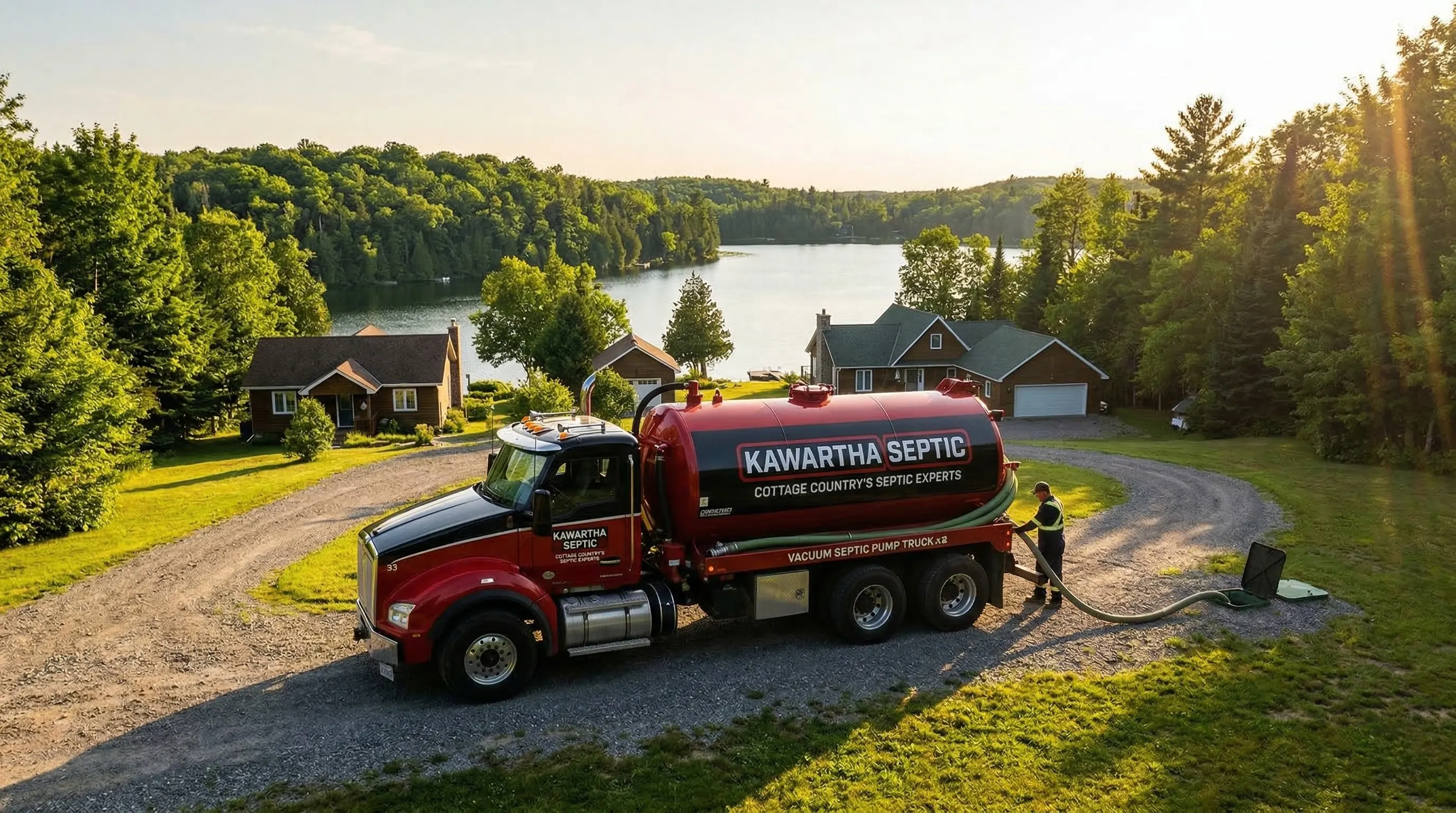
Dave bought a rural property outside Fenelon Falls five years ago. Nice spot. Big yard. Mature trees. At the home inspection, the inspector looked at the septic records and said the system was about 25 years old. “It’s living on borrowed time,” the inspector told him.
Dave’s been anxious about it ever since. Every slow drain, every wet patch in the yard, he wonders if today’s the day.
Sound familiar? If you’ve got an aging septic system, the question keeps you up at night: how long does a septic tank last, and when do you need to start budgeting for a replacement?
Here’s the thing. Dave’s inspector wasn’t wrong, but he wasn’t entirely right either. Some systems last 15 years. Others push past 40. The difference comes down to a handful of variables that most homeowners can actually control.
This guide breaks down septic tank life expectancy by component, what affects it, and how to know when yours is reaching the end.
Quick Answer: Septic System Lifespan by Component
Not every part of your septic system ages at the same rate. The tank and the drain field have very different lifespans, and they fail for different reasons.
| Component | Typical Lifespan | What Kills It Early |
|---|---|---|
| Concrete septic tank | 30-40 years | Acidic conditions, poor-quality concrete, lack of pumping |
| Plastic/fibreglass tank | 20-30 years | Physical damage, UV degradation (if exposed), shifting soil |
| Steel septic tank | 15-20 years | Rust and corrosion (they all fail eventually) |
| Drain field (tile bed) | 15-25 years | Lack of pumping, excess water, soil compaction |
| Distribution box | 20-30 years | Root intrusion, settling, freeze-thaw damage |
| Outlet baffle | 15-20 years | Corrosion (especially older concrete T-baffles) |
| Pump (if applicable) | 7-10 years | Running dry, electrical issues, sediment buildup |
The drain field almost always fails before the tank. When people ask “how long do septic systems last,” they’re usually worried about a catastrophic failure. That failure almost always starts in the leaching bed, not the tank itself.
Worried about your system’s age? Call (705) 806-0800 or book an assessment. We’ll tell you where things actually stand.
What Affects Septic System Lifespan
We’ve seen 35-year-old systems in great shape and 18-year-old systems that are done. Here’s what actually determines how long yours lasts.
Pumping Frequency
This is the biggest one. A septic tank that gets pumped on schedule lasts dramatically longer than one that doesn’t. When sludge builds up past the outlet baffle, solids escape into the drain field and clog the soil. That damage is permanent.
Most households need pumping every 3 to 5 years. If you’re not sure when yours was last done, that’s worth sorting out today.
Soil Conditions
The Kawartha Lakes region has challenging soil. Shallow bedrock from the Canadian Shield, heavy clay pockets, high water tables near the lakes. All of these shorten drain field lifespan.
A conventional tile bed on sandy loam might last 25 years or more. The same design on marginal soil near Coboconk or Bobcaygeon might only make it 15.
Water Usage
Every litre of water that goes down your drains ends up in the septic system. High water usage pushes effluent through the tank faster, giving bacteria less time to break down solids. It also saturates the drain field.
Leaky toilets, long showers, and doing six loads of laundry in one day all take years off your drain field. It’s not dramatic. It’s just slow, steady damage.
What Goes Down the Drain
Bleach, antibacterial soap, paint, grease, and chemical drain cleaners all kill the bacteria your tank relies on. Without healthy bacteria, solids don’t break down properly and the sludge layer grows faster. If you skip those extra pump-outs, solids escape to the drain field.
Check our septic tank maintenance guide for a complete list of what to keep out of your system.
Tank Material
Concrete tanks are the most common in Ontario and the most durable. A well-made concrete tank can last 40 years or more. But concrete quality varies, and acidic wastewater slowly erodes the interior over decades.
Steel tanks are a different story. They rust from the inside out. The baffles go first, then the top, then the walls. We don’t see many steel tanks anymore, but they’re still out there on older properties around Lindsay and throughout rural Kawartha Lakes.
Installation Quality
A system that was properly designed and installed by a qualified contractor will outlast one that was thrown in on the cheap. Proper grading, correct pipe slope, adequate bed sizing, and good fill material all matter. Cutting corners during installation shows up as early failure 10 or 15 years later.
Lifespan by System Type
The type of system you have changes the lifespan equation.
Conventional Systems (Tank + Tile Bed)
This is what most rural Ontario homes have. A concrete tank connected to a leaching bed buried in native soil. These are straightforward systems with no moving parts (unless a pump is involved for dosing).
Expected lifespan: 20-30 years for the overall system. The tank often outlasts the bed by a decade or more.
Conventional systems are reliable, affordable to maintain, and simple. But they need adequate soil and enough space, plus regular pumping to keep the bed from clogging.
Raised Bed Systems
Common throughout the Kawarthas because of our soil. A raised bed uses imported engineered fill to create the treatment area above the natural grade. These systems include a pump to dose effluent to the raised bed.
Expected lifespan: 15-25 years for the bed. The pump shortens the “no-moving-parts” advantage, and the engineered fill can compact over time.
Raised beds work well for tricky sites, but they need more attention. The pump needs monitoring, and the bed needs protection from compaction and root intrusion.
Tertiary Treatment Systems
These advanced systems use mechanical or biological treatment to clean effluent to a higher standard before it reaches the soil. They’re required on some waterfront properties and small lots per the Ontario Building Code.
Expected lifespan: 15-25 years for the treatment unit, with component replacements along the way. Media, UV bulbs, aerators, and pumps all have their own replacement cycles.
They last well when maintained. They fail fast when ignored.
Signs Your System Is Reaching End of Life
A septic system doesn’t just die one day. It gives you warnings, sometimes for months or years before a full failure. Here are the signs that your system’s age is catching up.
Frequent pump-outs needed. If you’re pumping more often than every 2-3 years just to keep things working, your drain field may be partially clogged and unable to keep up.
Persistent wet spots over the drain field. If the ground above your tile bed is spongy or has standing water when it hasn’t rained, your bed is saturated. This is one of the clearest signs your septic system is failing.
Lush green stripes in the yard. Grass that’s noticeably greener over the drain field lines means effluent is reaching the surface.
Slow drains that come back after pumping. If drains improve right after a pump-out but slow down again within weeks, the problem isn’t the tank. It’s the bed.
Sewage odour outside. A working system is odourless above ground. If you can smell it, something isn’t being treated properly.
Inspection results show deterioration. A camera inspection might reveal cracked baffles, eroded walls, or root intrusion. These findings tell you the tank’s structural life is winding down.
If you’re noticing any of these, don’t wait. The earlier you catch it, the more options you have.
Can You Extend Your System’s Lifespan?
Yes. Most of the factors that kill systems early are preventable.
Pump on schedule. This is the single most effective thing you can do. Regular pumping keeps solids out of the drain field. Check our guide on how often to pump your septic tank.
Fix leaks and reduce water waste. A running toilet can dump hundreds of litres a day into your system. Fix it. Spread laundry loads across the week.
Protect the drain field. Don’t park on it. Don’t plant trees near it. Don’t redirect downspouts or sump pump discharge toward it.
Watch what goes down the drain. No grease, no wipes (even “flushable” ones), no harsh chemicals.
Get regular inspections. An inspection every 3 to 5 years catches small problems before they become big ones. Especially important if you’re buying a property with a septic system.
A well-maintained system can exceed its expected lifespan by 5 to 10 years. That’s real money saved.
When to Replace vs. Repair
The system’s showing its age. Do you patch it or start over?
Repair makes sense when:
- The tank is structurally sound but a baffle or lid needs replacing
- The issue is isolated to one component (pump, distribution box, a short section of pipe)
- The drain field is functioning but needs minor work
- The system is under 20 years old and otherwise healthy
Replacement makes sense when:
- The drain field is saturated and has failed
- The concrete tank is cracked, eroded, or structurally compromised
- You’re dealing with repeated failures despite regular maintenance
- The system doesn’t meet current Ontario Building Code requirements
- Repair costs are approaching 50% of replacement cost
A 30-year-old system with a failed drain field isn’t worth $8,000 in repairs when the tank might only have 5 to 10 years left. Replace the whole thing. But a 15-year-old system with a bad pump? Replace the pump and move on.
Not sure which way to go? Call (705) 806-0800 or book an assessment. We’ll walk you through the real numbers for your property.
Kawartha Lakes Systems: What We See
We service septic systems across Kawartha Lakes, from Lindsay to Bobcaygeon to Fenelon Falls to Coboconk and everywhere in between. After years of pumping, inspecting, and seeing what’s underground, here’s what we can tell you about systems in this area.
Most of the systems we see in older cottage country are 20 to 35 years old. A lot of them are conventional concrete tanks with tile beds. The tanks are usually holding up. The beds are the weak point.
Donna and Rick are a good example. They have a cottage south of Bobcaygeon with a system installed in 1998. We’ve been pumping it every three years for the past decade. The tank is in solid shape. The bed showed some early signs of saturation in one section last inspection. They’ve got years left, but they know it’s coming, and they’re budgeting for a new bed.
That’s the kind of outcome regular maintenance produces. No surprises. No emergency calls. Just a clear picture and time to plan.
The Canadian Shield geology around here means we see more raised bed systems than you’d find in southern Ontario. Higher water tables and shallow bedrock make conventional beds impossible in some spots. These raised systems work great, but they’re more sensitive to neglect.
Waterfront properties, especially seasonal cottages that see heavy use for a few months and then sit empty, tend to have shorter system lifespans. Bacteria in the tank die off during long periods without use, and the sudden surge of summer use hits the system hard.
Frequently Asked Questions
How long does a concrete septic tank last?
A well-made concrete tank typically lasts 30 to 40 years. The interior erodes slowly from acidic conditions, and eventually the baffles and walls weaken. Regular pumping and avoiding harsh chemicals both help extend the life.
How do I know how old my septic system is?
Check your property records or contact the City of Kawartha Lakes building department. They keep records of septic permits, which include the installation date. If your system was installed before modern permitting, a professional inspection can estimate its age based on construction methods and materials.
Can a septic system last 50 years?
It’s rare, but possible. We’ve seen concrete tanks still functioning past 40 years. However, it’s extremely unlikely that the drain field lasts that long. Even if the tank is sound at 50, the bed has almost certainly been replaced at least once.
Is a 20-year-old septic system old?
A 20-year-old system is middle-aged. At this point, you should be getting regular inspections and planning ahead. The tank should still have plenty of life. The drain field is where you want to pay attention, especially if maintenance has been inconsistent.
Should I replace my septic system before selling my house?
Not necessarily. If your system passes inspection and is functioning properly, its age alone doesn’t mean you need to replace it. However, a system that’s showing signs of failure will show up on a buyer’s pre-purchase inspection, and it’ll cost you in negotiations. Getting ahead of it is usually smarter than waiting for a buyer to find out.
The Bottom Line
How long does a septic tank last? The tank itself, 20 to 40 years depending on material. The drain field, 15 to 25 years. Maintenance is the single biggest factor in where you land within those ranges.
A well-maintained 30-year-old system can outperform a neglected 15-year-old one. Regular pumping, smart water use, and periodic inspections are what separate the systems that last from the ones that fail early.
If your system is over 20 years old, or you’re not sure where things stand, get an assessment. Don’t wait for the emergency.
Call Kawartha Septic at (705) 806-0800 or book online. We’ll inspect your system, tell you what we find, and give you a straight answer on how much life is left.