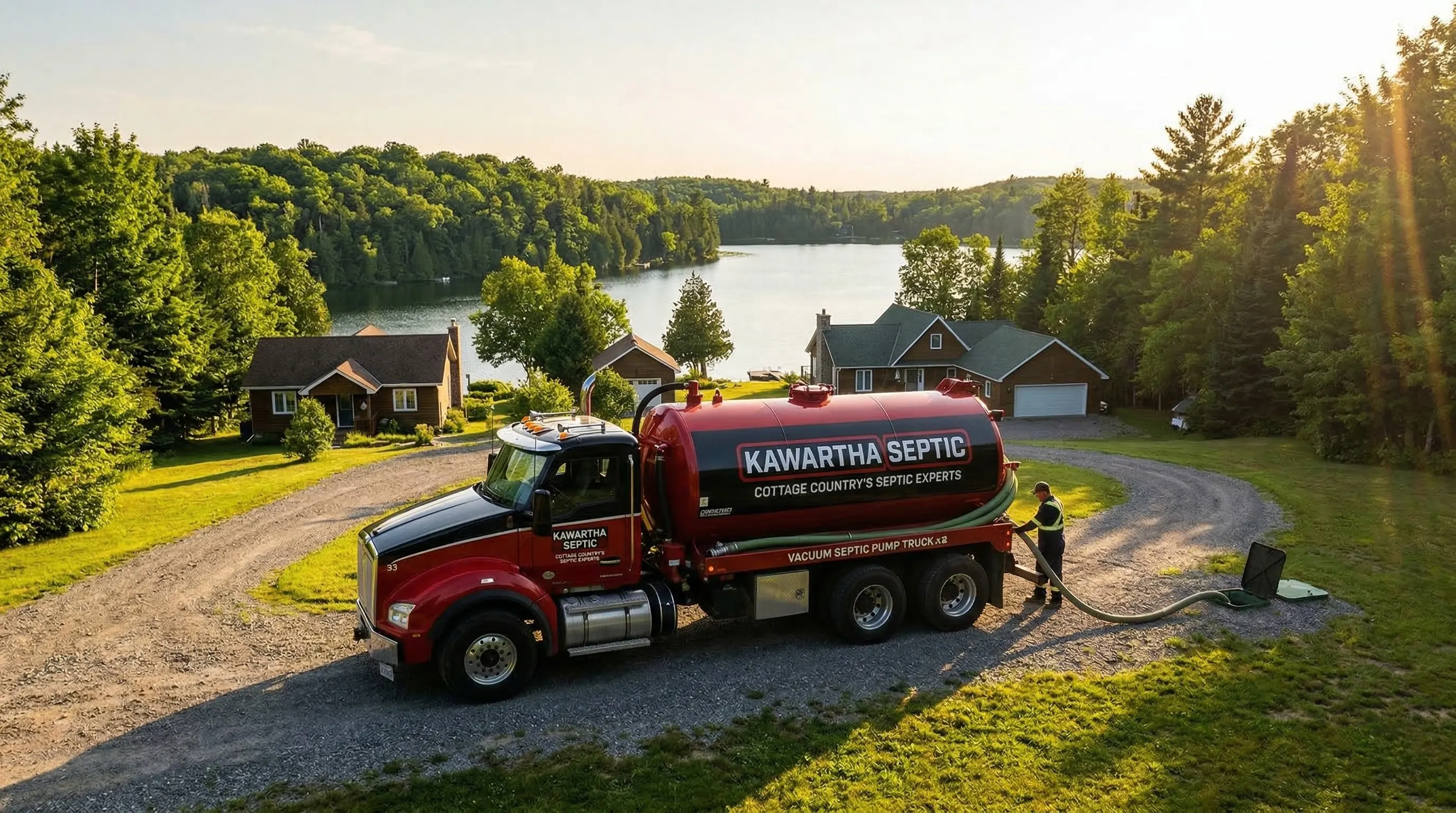
A family near Bobcaygeon bought their forever home three years ago. Nice property, big yard, mature trees. The previous owners said the septic was “fine.” Nobody questioned it. Nobody hired an inspector. Last fall, the toilet wouldn’t flush, the showers backed up, and raw sewage surfaced in the yard. The tank was cracked. The baffles were gone. The drain field was saturated beyond repair. Total cost to fix it all: $32,000.
A single inspection would have told them everything they needed to know before they signed.
If you’re wondering what a septic inspection actually involves, you’re in the right place. This guide breaks down exactly what gets checked, the three types of inspections available, and when you should book one.
What a Septic Inspection Covers
A septic inspection is a systematic evaluation of your entire septic system. It’s not someone lifting a lid, taking a quick peek, and handing you a thumbs up. A proper inspection covers every component from where wastewater leaves your house to where it’s absorbed into the ground.
Here’s your septic inspection checklist:
Tank Condition
The inspector evaluates the physical state of the tank itself. This includes:
- Structural integrity — checking for cracks, corrosion, or shifting in concrete, fibreglass, or polyethylene tanks
- Sludge and scum levels — measuring how full the tank is and whether it needs pumping
- Inlet and outlet baffles — confirming they’re intact and directing flow properly
- Tank lid and risers — checking for damage, proper seal, and safe access
Baffles are a big deal. When they fail, solids flow directly into your drain field. That’s the beginning of a very expensive problem.
Drain Field Performance
The drain field (also called a leaching bed or weeping bed) is where treated effluent disperses into the soil. It’s also the most expensive component to replace. The inspector checks:
- Surface conditions — soggy patches, standing water, or unusually lush grass over the field
- Soil absorption — whether the ground is still accepting effluent at a normal rate
- Distribution box and pipes — the condition of the D-box and lateral lines
If any of these show issues, you’ll want to know sooner rather than later. Here are the signs your septic system may be failing.
Plumbing and Connections
A good inspector also looks at how wastewater gets from your house to the tank:
- Inlet pipe condition — checking for blockages, root intrusion, or damage
- Pipe connections — confirming everything is properly sealed
- Fixture flow testing — running water in the house to observe how quickly it reaches the tank
Documentation and Compliance
The inspector reviews available records to understand the system’s history:
- System age and design — when it was installed and what type it is
- Permit records — whether the system was installed with proper permits under Ontario’s Building Code
- Maintenance history — past pump-outs, repairs, or modifications
After the inspection, you get a written report summarizing all findings. This document is critical if you’re buying, selling, or simply planning maintenance.
Types of Septic Inspections
Not all inspections are the same. There are three types of septic inspections, and the one you need depends on your situation.
Visual Inspection
A visual inspection is the most basic option. The inspector checks what they can see without pumping the tank or using specialized equipment.
What it includes:
- Walking the property to check for surface issues over the tank and drain field
- Inspecting exposed components like cleanouts, risers, and vent pipes
- Running water inside the home to test drainage speed
- Checking for odours, wet spots, or visible damage
Best for: Routine checkups between full inspections or as a quick assessment if you’ve noticed something off.
Limitations: A visual inspection can’t tell you about sludge levels, baffle condition underwater, or problems below the surface. It’s a snapshot, not the full picture.
Full Inspection
A full inspection is the standard for real estate transactions and thorough system evaluations. It gives you a complete understanding of your septic system’s condition.
What it includes:
- Everything in a visual inspection
- Pumping the tank to inspect the interior walls, floor, baffles, and connections
- Measuring sludge and scum layers before pump-out
- Hydraulic load testing on the drain field
- Detailed written report with photos and recommendations
Best for: Pre-purchase inspections, systems you haven’t had inspected in years, or any time you want the complete picture.
A homeowner in Lindsay called us last year because her basement kept getting a faint sewer smell every spring. She’d had two plumbers out. Neither found anything. A full septic inspection revealed the outlet baffle had partially collapsed and solids were migrating into the drain field. The system was still salvageable, but only because she caught it when she did. Another year and she’d have been looking at a full replacement.
Camera Inspection
A camera inspection uses a specialized waterproof camera fed through pipes and into the tank to get a detailed visual of what’s happening underground.
What it includes:
- Video feed of the inlet and outlet pipes
- Interior tank inspection without full excavation
- Identification of root intrusion, cracks, blockages, or collapsed sections
- Recorded footage you can review or share with contractors
Best for: Diagnosing specific problems, inspecting older systems with unknown histories, or when pipe damage is suspected.
Camera inspections are often done as an add-on to a full inspection. They’re especially useful in the Kawartha Lakes area where many properties have older systems that were installed decades ago without detailed records.
Not sure which inspection type you need? Call (705) 806-0800 and we’ll help you figure it out.
The Step-by-Step Septic Inspection Process
Here’s what the septic inspection process looks like from start to finish. No surprises.
1. Pre-Inspection Preparation
Before the inspector arrives, a few things help the process go smoothly:
- Locate your septic tank if possible (look for risers, cleanout caps, or ask for the property’s as-built drawing)
- Make sure the tank access area is clear of vehicles, debris, or heavy objects
- Gather any maintenance records you have — pump-out receipts, past inspection reports, or permits
Don’t worry if you can’t find the tank. A good inspector can locate it. Check out our guide on septic tank maintenance tips for more on staying organized.
2. Locating the System
The inspector confirms the location of the tank, distribution box, and drain field. They may use a probe, electronic locator, or simply follow the sewer line from the house.
3. Tank Access and Opening
The tank lid is uncovered and opened. If risers are installed, this is quick. If the lid is buried, some digging is required. This is one reason risers are worth the investment.
4. Interior Tank Assessment
With the tank open, the inspector examines:
- Liquid, sludge, and scum levels
- Structural condition of walls and floor
- Baffle condition and placement
- Signs of groundwater infiltration
If it’s a full inspection, the tank gets pumped at this stage so the inspector can see everything clearly.
5. Drain Field Evaluation
The inspector walks the drain field area, looking for surface indicators of trouble. They may also perform a hydraulic load test by adding water to the system and monitoring how the field handles it.
6. Report and Recommendations
You receive a written report covering everything that was checked, what was found, and what (if anything) needs attention. Good reports include photos and prioritized recommendations.
How Long Does a Septic Inspection Take?
Most inspections take between 1 and 3 hours depending on the type.
| Inspection Type | Typical Duration |
|---|---|
| Visual inspection | 30-60 minutes |
| Full inspection | 2-3 hours |
| Camera inspection (add-on) | 30-60 minutes |
The biggest variable is access. If the tank lid is buried deep or the property layout is complicated, it takes longer. Systems with multiple tanks or advanced treatment units also add time.
A straightforward full inspection on a single-tank conventional system usually wraps up in about two hours. That includes pump-out time.
For pricing details on each type, check out our breakdown of septic inspection costs in Ontario.
When You Need a Septic Inspection
You don’t need to guess on this one. Here are the situations where a septic inspection isn’t optional.
Before Buying a Property
This is the most common reason people book an inspection. If you’re buying a home with a septic system anywhere in Kawartha Lakes, Fenelon Falls, Coboconk, or the surrounding area, get a full inspection done before you close. Period.
A home inspector won’t catch septic issues. You need a dedicated septic inspection. Read our full guide on getting a septic inspection before buying a house in Ontario.
Before Selling
Sellers who get a pre-listing inspection often sell faster and with fewer surprises during negotiations. It shows buyers you’ve got nothing to hide.
Every 3 to 5 Years
Even if everything seems fine, regular inspections catch small problems before they become big ones. The Ontario Onsite Wastewater Association recommends routine inspections as part of responsible system ownership.
When Something Seems Off
Slow drains, gurgling pipes, sewage odours in the yard, or wet patches over the drain field are all reasons to book an inspection immediately. These are warning signs that something has already gone wrong.
Ready to book your inspection? Call (705) 806-0800 or schedule online.
Frequently Asked Questions
Can I inspect my septic system myself?
You can do a basic visual check. Walk the drain field, look for wet spots, sniff for odours, and check that your drains are flowing normally. But you can’t measure sludge levels, assess baffles underwater, or evaluate the drain field’s absorption rate without professional equipment. A DIY check is good between professional inspections, but it doesn’t replace one.
Is a septic inspection the same as a septic pump-out?
No. A pump-out removes the contents of your tank. An inspection evaluates the condition of your entire system. During a full inspection, the tank is pumped so the inspector can see the interior. But pumping alone doesn’t tell you whether your baffles are intact, your drain field is working, or your tank is cracked.
Do I need a septic inspection if I just had the tank pumped?
It depends on when your last inspection was. If the pump-out company noticed anything unusual, that’s a good reason to follow up with a proper inspection. If your system hasn’t been professionally inspected in 3 to 5 years, it’s time regardless of when you last pumped.
What happens if the inspection reveals problems?
The inspector provides a report with findings and recommendations. Minor issues like high sludge levels or a small baffle crack can often be repaired affordably. Major issues like drain field failure require more significant work, but catching them early always costs less than catching them late.
The Bottom Line
A septic inspection is a thorough check of your tank, pipes, baffles, and drain field. It tells you whether your system is working properly, whether it needs maintenance, and whether any problems are developing underground where you can’t see them.
There’s no mystery to it. An inspector looks at every component, documents what they find, and gives you a clear picture of where things stand. Whether you’re buying a property, selling one, or just keeping up with maintenance, an inspection protects you from the kind of surprise that costs tens of thousands of dollars.
If you’re in the Kawartha Lakes area and need a septic inspection, give us a call at (705) 806-0800 or book online. We’ll tell you exactly what’s going on with your system.