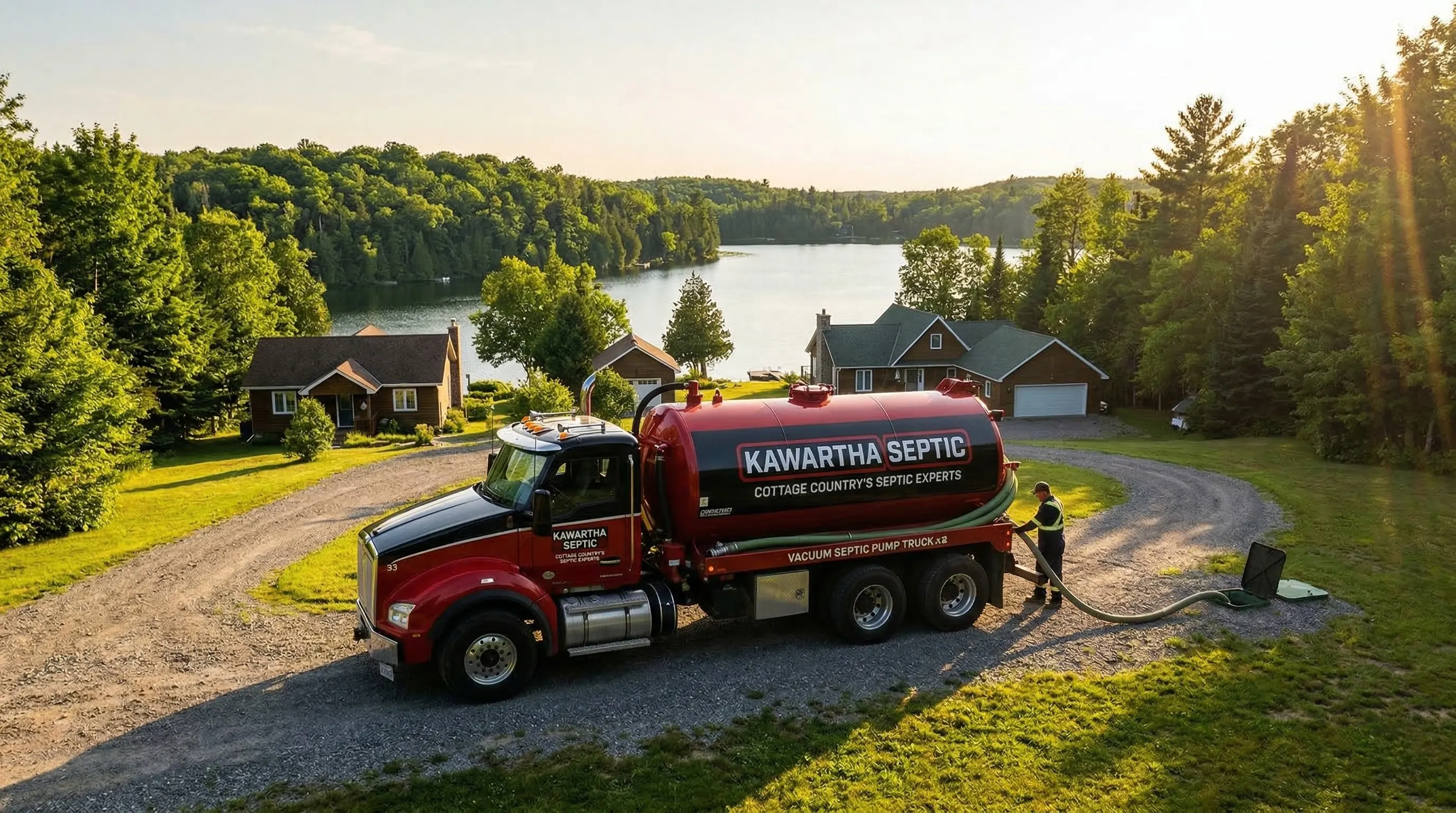
A family in Bobcaygeon called us last summer because their septic system had completely stalled. Slow drains, bad smells, the works. When we pumped the tank, the bacterial activity inside was almost zero. Dead tank.
Turns out, they’d been using a bleach-heavy bathroom cleaner every week for two years straight. Poured it down every drain, scrubbed every toilet with it, and let it sit for 30 minutes before flushing. They thought they were keeping things clean. What they were actually doing was sterilizing the inside of their septic tank and killing the bacteria that make the whole system work.
This happens more than you’d think. The wrong cleaning products can destroy a septic system just as effectively as neglect. And most people have no idea what’s safe and what isn’t.
Here’s the full breakdown of septic safe products, room by room, so you don’t make the same mistake.
Why Products Matter for Your Septic System
Your septic tank isn’t just a holding container. It’s a living system. Billions of bacteria inside the tank break down solid waste, process organic material, and keep things flowing to the drain field. Without those bacteria, solids build up fast, the tank fills quicker, and your drain field takes a beating.
Every drop of water that leaves your house ends up in that tank. That includes whatever cleaning products you’re using in the kitchen, bathroom, and laundry room.
Harsh chemicals kill those bacteria. Antibacterial soaps reduce bacterial populations. Certain detergents introduce compounds that don’t break down and clog the drain field.
The EPA’s septic system guidance is clear on this: what goes down the drain directly affects how well your system functions. It’s one of the most important parts of septic tank maintenance that people overlook.
You don’t need to stop cleaning your house. You just need to pick the right products.
Septic Safe Products by Category
When people ask what cleaning products are safe for septic systems, the answer depends on the room. Here’s a category-by-category guide to septic safe cleaning products that won’t wreck your tank.
Laundry Detergent
Your washing machine pushes a huge volume of water through the septic system. The detergent in that water matters a lot.
What to use:
- Liquid detergents over powdered. Powder detergents often contain fillers and clay that don’t dissolve fully. Those particles settle in your tank and add to sludge buildup.
- Concentrated, low-sudsing formulas. Look for “HE” (high efficiency) detergents even if you don’t have an HE machine. They use less surfactant per load.
- Plant-based or biodegradable brands. Seventh Generation, ECOS, and Arm & Hammer Essentials are all solid choices for a septic safe laundry detergent.
What to avoid:
- Anything with “antibacterial” on the label.
- Powdered detergents with excessive fillers.
- Fabric softener liquids. They contain chemicals called quats (quaternary ammonium compounds) that are toxic to septic bacteria. Use dryer balls instead.
Spread your laundry across the week rather than doing six loads on Saturday. That much water hitting your tank at once overloads the system and pushes solids into the drain field before they’re fully processed.
Dish Soap
Dish soap is generally one of the safer products for septic systems, but there are still some rules.
What to use:
- Phosphate-free liquid dish soaps. Most major brands dropped phosphates years ago, but check the label.
- Biodegradable formulas from brands like Seventh Generation, Method, or Bio-Vert.
- For dishwashers, use gel or pod detergent that’s phosphate-free and chlorine-free.
What to avoid:
- Antibacterial dish soaps. Triclosan and similar antibacterial agents don’t stop working when they reach your tank.
- Powdered dishwasher detergent with phosphates. Phosphates encourage algae growth in drain fields and can contaminate groundwater. That’s a real concern for properties near lakes in the Kawartha Lakes area.
Toilet Cleaners
This is where people do the most damage. The toilet is a direct pipeline to your septic tank, and a septic safe toilet cleaner makes a real difference.
What to use:
- Enzyme-based toilet cleaners. They use natural enzymes to break down stains and buildup without killing bacteria.
- Mild, biodegradable cleaners. A small amount of mild cleaner with a toilet brush handles most jobs.
- Baking soda and vinegar for routine cleaning. It works better than most people expect.
What to avoid:
- Drop-in toilet tablets that turn the water blue. Those leach chemicals with every single flush for weeks. That’s a constant drip of bactericide into your tank.
- Bleach-based toilet bowl cleaners. A small amount of bleach occasionally won’t destroy your system, but regular use will.
- Hydrochloric acid cleaners. Products like Lysol Power Toilet Bowl Cleaner contain hydrochloric acid. That’s brutal on septic bacteria.
Bathroom Cleaners
Tub scrubs, tile sprays, and shower cleaners all end up in your septic system.
What to use:
- Non-chlorine, biodegradable bathroom sprays.
- Cream cleansers like Bon Ami, which is biodegradable and chlorine-free.
- Hydrogen peroxide-based cleaners for mildew. Hydrogen peroxide breaks down into water and oxygen, so it’s much easier on your system than bleach.
What to avoid:
- Bathroom cleaners that advertise “kills 99.9% of bacteria.” That’s exactly the problem. They’ll kill 99.9% of the bacteria in your tank too.
- Bleach sprays for shower mold. Use hydrogen peroxide or a vinegar solution instead.
Drain Cleaners
This one’s straightforward. Chemical drain cleaners are terrible for septic systems. Full stop.
What to use:
- Enzyme-based drain maintainers like Bio-Clean or Green Gobbler. They use bacteria and enzymes to break down organic buildup.
- A drain snake for actual clogs. It’s mechanical, not chemical, and it actually works better.
- Boiling water and baking soda for slow drains.
What to avoid:
- Drano, Liquid-Plumr, and any caustic chemical drain cleaner. These products use sodium hydroxide or sulfuric acid. They’ll clear your clog, but they’ll also devastate the bacterial population in your tank. One bottle of Drano can affect your system for days.
If you’re dealing with persistent slow drains, that might be a sign your septic system is struggling, not just a hair clog.
General Purpose Cleaners
For countertops, floors, and everyday surface cleaning.
What to use:
- Simple Green (diluted as directed).
- Castile soap-based cleaners (like Dr. Bronner’s diluted in water).
- Any plant-based, phosphate-free, chlorine-free all-purpose cleaner.
What to avoid:
- Pine-Sol and similar pine oil-based cleaners in large quantities. Small amounts are fine, but mopping your entire house with full-strength Pine-Sol sends a lot of antimicrobial compounds into the tank.
- Antibacterial everything. The trend of putting antibacterial agents in every cleaning product is the single biggest threat to residential septic systems.
Products to Absolutely Avoid With a Septic System
Some products are bad enough that they deserve their own wall of shame. If you’ve got a septic system, these products to avoid with septic system should never go down your drains:
- Chemical drain cleaners (Drano, Liquid-Plumr, any caustic formula)
- Bleach in large quantities (a cap of bleach in a load of whites occasionally is fine; pouring cups of it down the drain weekly is not)
- Antibacterial soaps and cleaners (anything with triclosan or benzalkonium chloride)
- Paint, paint thinner, or solvents (these kill bacteria instantly and can contaminate groundwater)
- Motor oil, gasoline, or antifreeze (should go without saying, but we’ve seen it)
- Photographic chemicals (still relevant for film photography hobbyists)
- Prescription medications (flushing pills destroys bacterial balance and contaminates water supplies)
- Cat litter (even “flushable” brands add clay and synthetic materials to the tank)
Ontario’s septic system regulations put the responsibility on the homeowner for what enters the system. If something you pour down the drain contaminates the groundwater or causes a failure, that’s on you.
Not sure if your tank is still healthy after using harsh products? Give us a call at (705) 806-0800. We service Lindsay, Bobcaygeon, Fenelon Falls, Coboconk, and surrounding areas.
The “Septic Safe” Label: Can You Trust It?
Here’s the thing. There’s no government regulation or industry standard behind the term “septic safe” on product labels. A manufacturer can slap “septic safe” on just about anything. Nobody’s testing it. Nobody’s certifying it.
That doesn’t mean every product with the label is lying. Many of them genuinely are formulated to be easier on septic systems. But you can’t rely on the label alone.
Here’s what to look for instead:
- Biodegradable. This actually has a defined meaning. The product’s ingredients break down naturally.
- Phosphate-free. Phosphates cause algae growth and can overload drain fields.
- Chlorine-free. Chlorine kills bacteria. Simple as that.
- Plant-based surfactants. These break down faster than synthetic petroleum-based surfactants.
- No antibacterial agents. Check the active ingredients. If you see triclosan, benzalkonium chloride, or any “antibacterial” claims, skip it.
A good rule of thumb: if the product could survive a zombie apocalypse, it’s too harsh for your septic tank.
We had a homeowner in Fenelon Falls who bought a “septic safe” multi-purpose cleaner from a big box store. Used it for everything. Within 18 months, the tank needed an emergency pump because bacterial activity had tanked. The product had chlorine bleach as the third ingredient on the label. “Septic safe” was right on the front of the bottle.
Read the ingredients. Always.
DIY Septic-Safe Cleaning Alternatives
You don’t need to spend more money on specialty products. Some of the best septic safe cleaning products are things you already have in your kitchen.
All-Purpose Cleaner: Mix equal parts white vinegar and water in a spray bottle. Add a few drops of dish soap. Handles countertops, sinks, mirrors, and general surfaces. It’s antibacterial enough for normal household cleaning but won’t affect your septic at all.
Toilet Cleaner: Sprinkle baking soda in the bowl, pour in a cup of vinegar, let it fizz for 10 minutes, scrub with a brush. Handles stains and odor without any chemical residue.
Drain Maintainer: Pour half a cup of baking soda down the drain, follow with half a cup of vinegar, wait 15 minutes, flush with hot water. Do this monthly and you’ll rarely have slow drains.
Tub and Tile Scrub: Make a paste with baking soda and water. Apply, let sit for 15 minutes, scrub. For mildew, spray with straight hydrogen peroxide first, wait 10 minutes, then scrub.
Glass Cleaner: One part white vinegar, one part water. Works as well as Windex and has zero impact on your septic system.
These aren’t just backups. We recommend these to every homeowner we work with in the Kawartha Lakes region. They’re cheap, they work, and your septic tank won’t even notice them.
Frequently Asked Questions
Is bleach safe for septic systems?
In very small amounts and infrequently, bleach won’t destroy your system. A capful in a load of laundry once in a while is fine. But regular use of bleach-based cleaners, especially toilet cleaners and bathroom sprays that get used weekly, will steadily kill off the bacteria your tank depends on. Stick to hydrogen peroxide or vinegar-based alternatives for routine cleaning.
What laundry detergent is best for septic systems?
A septic safe laundry detergent is liquid (not powder), concentrated, phosphate-free, and biodegradable. Brands like Seventh Generation, ECOS, and Arm & Hammer Essentials fit the bill. Avoid anything antibacterial, and skip the liquid fabric softener entirely. Dryer balls are a septic-friendly alternative for softness and static.
Do septic tank additives replace proper maintenance?
No. Septic additives are heavily marketed but largely unnecessary if you’re using the right products and getting your tank pumped on schedule. Some additives can actually cause harm by stirring up sludge that then flows to the drain field. Your tank produces its own bacteria naturally. Focus on not killing that bacteria rather than trying to add more.
Can I use a garbage disposal with a septic system?
You can, but it increases the load on your tank significantly. Food waste adds solids that the bacteria need to break down, which means the tank fills faster and you’ll need more frequent pumping. If you use a garbage disposal, minimize what goes into it and plan to pump your tank every 2 to 3 years instead of every 3 to 5.
How quickly do harsh chemicals damage a septic system?
One big dose of a chemical drain cleaner can knock back bacterial populations for several days. Ongoing use of harsh cleaning products causes a gradual decline that you might not notice for months. By the time you’re seeing warning signs like slow drains, odors, or wet spots in the yard, the damage is already significant. Prevention is far cheaper than recovery.
Keep Your Tank Healthy With the Right Products
Choosing septic safe products isn’t complicated. Go biodegradable, skip the antibacterial, read past the marketing, and use less product overall. Your septic system can handle a lot when the bacteria inside it are healthy and active.
The biggest takeaway: you don’t need industrial-strength cleaners to keep your house clean. The simple stuff works, and your septic tank will thank you for it.
If you’re in Lindsay, Bobcaygeon, Fenelon Falls, or Coboconk and you think your cleaning products may have already done some damage, don’t wait until things back up. A septic tank pumping in Kawartha Lakes with a quick inspection will show exactly where things stand. Call Kawartha Septic at (705) 806-0800 and let’s take a look before it turns into a bigger problem.