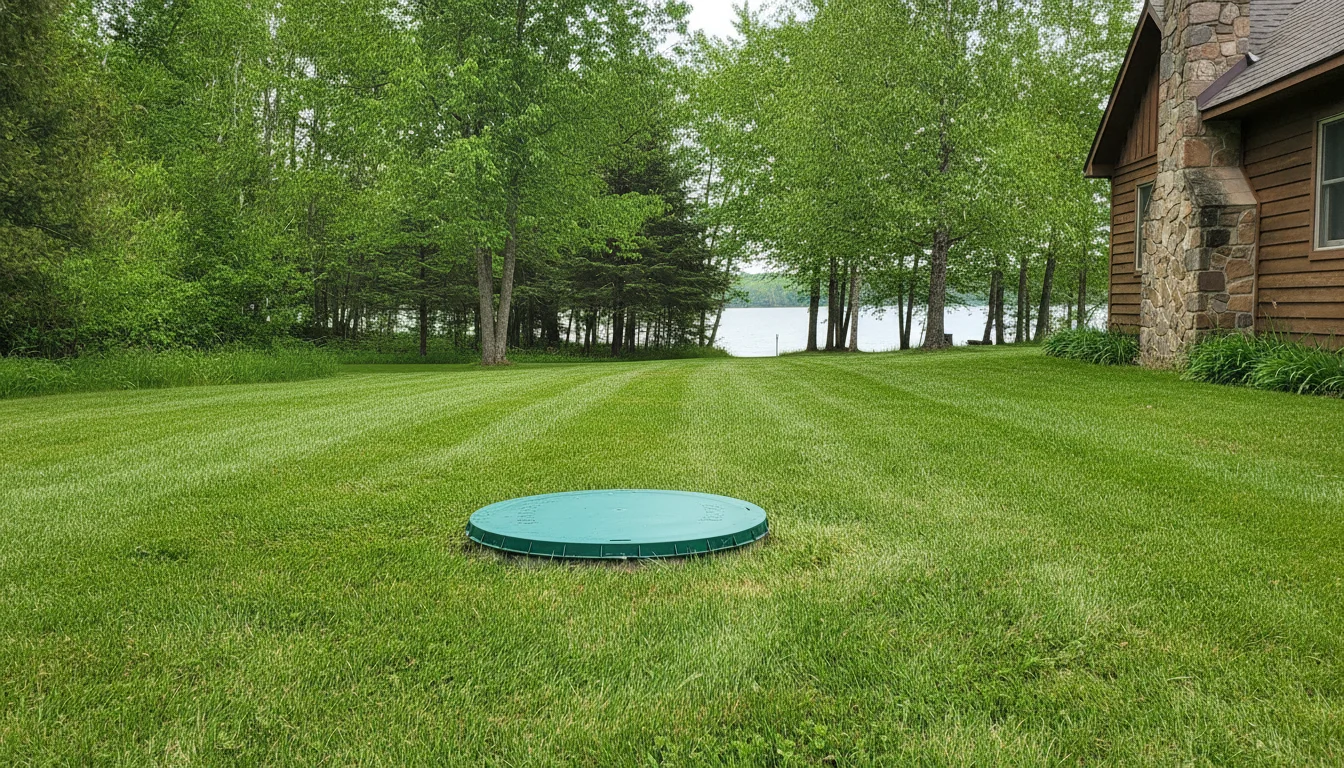
If the listing mentions a “shared septic system,” the price isn’t the only thing you should be negotiating.
Shared septics show up in real estate listings across Kawartha Lakes more often than people expect, especially around lakefront cottage compounds, severed family farms, and small multi-unit rural buildings. The rural lifestyle makes them practical. The legal complexity makes them risky if you’re not paying attention. We’ve seen sale-day surprises that wiped out closing day, and we’ve seen smooth shared-system arrangements that have run for thirty years without conflict. The difference is almost always the paperwork that exists (or doesn’t) before the offer goes firm. A real estate septic inspection tells you what is physically in the ground; the paperwork tells you who is responsible for it.
Here’s what a shared septic actually is, the four ways they end up that way in Ontario, what you need on title, what to ask the seller, and what it costs to live with.
The Quick Answer: What “Shared Septic” Means
A shared septic system is one where two or more separately owned buildings or properties drain to the same tank and leaching bed. The crucial words there are “separately owned.” A single owner with two cottages on one lot using the same septic isn’t really a “shared” arrangement. It becomes shared the moment the properties are split, sold separately, or owned by different parties.
In Ontario, shared systems are legal but not casual. They typically require:
- A registered easement on the title of the property hosting the system
- A maintenance and cost-sharing agreement between owners
- Compliance with OBC Part 8 sizing for the combined load (and any local rules layered on top, see septic system rules in Kawartha Lakes)
- Disclosure on listing and during sale
If any of those four are missing, you’re buying into a problem.
How Properties End Up Sharing a Septic
Four common origins:
1. Cottage compounds. A family bought a lakefront acreage in 1968, put up a main cottage, then a guest cottage, then a bunkie. Single septic served everything. Decades later, the kids inherit, severance happens, and now three legal owners share one system that was sized for one cottage. We see this constantly around Bobcaygeon and Sturgeon Lake. (For the buyer’s-side checklist on inheriting or purchasing into one of these, see what to expect when buying a cottage with a septic system.)
2. Lot severance. The original property had a house and a barn or coach house. The lot got split. The new owner’s home draws from the original septic on the now-neighbouring lot, with an easement registered to allow access. Common in older rural Lindsay-area properties.
3. Multi-unit rural buildings. A small apartment building, duplex, or commercial building on private septic. Tenants don’t share legally, the building owner does, but if the property is condominized later, ownership splits and so does the septic responsibility.
4. Informal arrangements that were never formalized. Two adjacent cottage owners decided years ago to share a septic to save money. There’s no easement, no agreement, no permit reflecting both buildings. This is the dangerous one. It can fail catastrophically at sale or when one owner tries to refinance.
What Has to Be on Title
A properly documented shared septic in Ontario has these elements registered on the title of one or both properties:
- Easement for access and use. The owner of the property where the tank/bed sits grants the other owner(s) a registered right to use it and access it for maintenance. This is permanent and runs with the land.
- Maintenance access easement. A separate or combined right for service vehicles to reach the tank, including a defined path.
- Cost-sharing agreement. Who pays what for routine pumping, emergency service, repairs, and full replacement. May reference a percentage, a per-bedroom split, or a fixed share.
- Trigger clauses for major work. What happens when the system needs replacement. Who decides, who pays, what notice is required.
- Dispute resolution provisions. Arbitration, mediation, or court, specified in advance.
Buyers’ lawyers should pull the title and confirm all of this exists. If the agreement is verbal or “we just shake hands every year,” you’re inheriting a future fight, not a working arrangement.
Capacity: The Hidden Cost Nobody Mentions
The Ontario Building Code sizes a septic system to the number of bedrooms in the building it serves. A standard three-bedroom Class 4 system is sized for that house, full stop. When two or three buildings share one system, the sizing has to reflect the combined bedroom count.
The catch: most informal shared arrangements were never permitted at the combined load. The system was sized for the original building, then a second one got added on without any formal redesign. The system runs fine for a while because actual use is below design capacity. Then someone retires to the cottage full-time, or a renter moves in, or two more bedrooms get finished, and the system starts failing.
Symptoms of an undersized shared system:
- Recurring backups despite regular pumping
- Surfacing effluent or soggy areas over the bed
- Slow drains throughout one or both buildings during high use
- Frequent alarm activations on systems that have them
A shared system that’s failing under combined load is expensive to fix because the upgrade has to satisfy the combined permit requirements. We’ve seen $40,000 to $60,000 replacement projects on shared cottage systems where the original was $8,000 forty years ago.
A buyer recently looked at a Coboconk lakefront with two cottages on one tank. The listing called it a “well-maintained shared system.” The pump records showed normal frequency. The perc test and inspection we ran for them on his behalf showed the leaching bed was already at end-of-life because the design had been undersized from day one. He renegotiated the price by $25,000 to fund the inevitable upgrade.
What to Ask the Seller (and What to Verify Independently)
If you’re considering a property with a shared septic, these are the questions that matter:
- Where is the tank, where is the leaching bed, and which property are they on? Get this in writing with a sketch.
- Who owns the system? One property usually “hosts” it. The other owners have rights to use, but ownership matters for insurance, decisions, and emergency access.
- Is there a registered easement and a written cost-sharing agreement? If yes, get copies. If no, this is a major flag.
- When was it last pumped, who paid, and how was the cost split? Reveals how the practical arrangement actually works.
- Has the system ever been redesigned for the combined load? A “yes” with paperwork is great. A “no” or “we don’t know” needs an inspection and possibly a new sizing review.
- What does the cost-sharing agreement say about replacement? Who pays what when the bed fails. This single answer can mean a $5,000 difference or a $25,000 difference in your bill.
- What happens if one owner won’t pay their share? The agreement should address this. If it doesn’t, you’re heading to court.
Then verify independently with:
- A title search by your lawyer (confirms easements and registered agreements)
- A septic inspection (confirms condition and approximate age)
- Conversations with the other owners (confirms the practical, day-to-day reality)
Selling a Property with a Shared Septic
If you’re on the seller’s side of this question, the pre-listing work pays for itself. Buyers and their lawyers find shared septic arrangements suspicious by default. The way to overcome that suspicion is documentation.
Before listing:
- Pull copies of the easement and cost-sharing agreement.
- Get a current pumping record and recent inspection report.
- Have the listing agent disclose the shared arrangement clearly in the listing, not buried in the Schedule B.
- If the agreement is informal or verbal, formalize it before listing. This typically costs $1,500 to $3,000 in legal fees, including registration, and prevents far more in deal-killing surprises.
A Bobcaygeon family selling a cottage compound last summer spent $2,200 formalizing a 30-year informal arrangement between three siblings who’d inherited adjacent lots. The buyer’s lawyer reviewed the new agreement, was satisfied, and the deal closed without a price negotiation on the septic. Without that paperwork, the same buyer’s lawyer would almost certainly have pushed for a $15,000 holdback.
(The broader playbook for selling a property with septic complications is covered in our can you sell a house with a failed septic in Ontario article.)
Insurance and Banking Implications
Two underwriting issues come up with shared septics:
Mortgages. Some lenders require evidence of a registered easement before they’ll lend on a property whose septic sits on a neighbour’s land. Without that documentation, the deal can fall apart at the bank, not at the lawyer’s office. Confirm this with your mortgage broker early.
Insurance. Insurers underwrite shared infrastructure differently than dedicated systems. Some policies exclude shared-system claims unless the agreement is registered. Some price it higher. Some are fine. Ask before you buy, and have your broker quote with the shared status disclosed.
Title insurance. This is where shared septics with weak documentation tend to surface. The title insurer reviews the easement, the agreement, and the condition. If the documentation is sparse, they may decline coverage or exclude the septic from the policy. That exclusion limits your protection if something goes wrong later.
When a Shared Arrangement Works Well
It’s not all warnings. Shared septics can be excellent value when the documentation is clean and the parties are reasonable. Cost-sharing brings the per-property maintenance cost down. Capacity utilization is more efficient. Cottage compounds with a single well-maintained system can run trouble-free for decades.
What separates the working arrangements from the train wrecks:
- Real paperwork. Registered easements, written agreements, current renewals.
- Active management. Someone (often the host-property owner) coordinates pumping, inspections, and repairs proactively. The other parties pay promptly.
- Adequate capacity. The system is sized for the actual combined use, not the original single-building design.
- Goodwill. Sounds soft, but it matters. Neighbours and family members who are willing to absorb a 60/40 split when one party uses more, or to chip in for an upgrade together, prevent most disputes from escalating.
If the property you’re considering has those four, the shared status is barely an issue. If any of them are missing, that’s where due diligence saves you.
Shared Septic FAQ
Can I be forced to pay for repairs if I’m a co-owner? Yes, if there’s a registered cost-sharing agreement. The agreement is legally binding. If there’s no agreement, common law principles often still allocate cost based on use and benefit, but it’s case-specific and litigious.
Can I sever from a shared system and install my own? Sometimes. Depends on lot size, setbacks, and whether your portion of the property can support its own system. Get a perc test and an opinion from a licensed sewage system designer before assuming this is an option.
What if my neighbour ignores maintenance? Document everything. If there’s an agreement, follow its enforcement provisions. If there isn’t, you’re looking at small claims court or a more formal civil suit. This is exactly why the agreement matters.
Does a shared system count as a “Class 4” or something different? The class is the same, it’s still a Class 4 conventional system, but the permit and design must reflect the combined load.
Is a shared system always a bad sign? No. A clean, documented arrangement on a well-maintained system can be a fine purchase. The risk is in the paperwork (or absence of it), not the concept.
What’s the disclosure rule in Ontario? Sellers have an obligation to disclose known material facts that could affect a buyer’s decision. A shared septic almost always qualifies. Failure to disclose is a basis for legal action after closing.
Should I walk away if there’s no registered agreement? Not automatically. Sometimes the answer is to require the seller to register one as a closing condition. The cost falls on the seller, the buyer gets clean documentation, the deal proceeds. Your lawyer can structure this.
The Two-Hour Conversation That Saves Years of Headaches
Shared septics aren’t deal-killers. They’re due-diligence items. The two hours your lawyer spends pulling title and reviewing the easement, plus the half-day a septic inspection takes, plus a frank conversation with the other owners, that’s the work that determines whether you’re inheriting a working partnership or a slow-motion lawsuit.
We service the Kawartha Lakes region, Lindsay, Bobcaygeon, Fenelon Falls, Coboconk, and surrounding rural and waterfront properties. We inspect shared systems regularly, document their current condition, and can flag whether the system is sized for the combined load it’s actually carrying. We don’t draft easements (that’s your lawyer’s job), but we can give you the technical picture they need.
Buying or selling a property with a shared septic? Call (705) 702-5526 or book online. Use the cost calculator for a 60-second estimate.