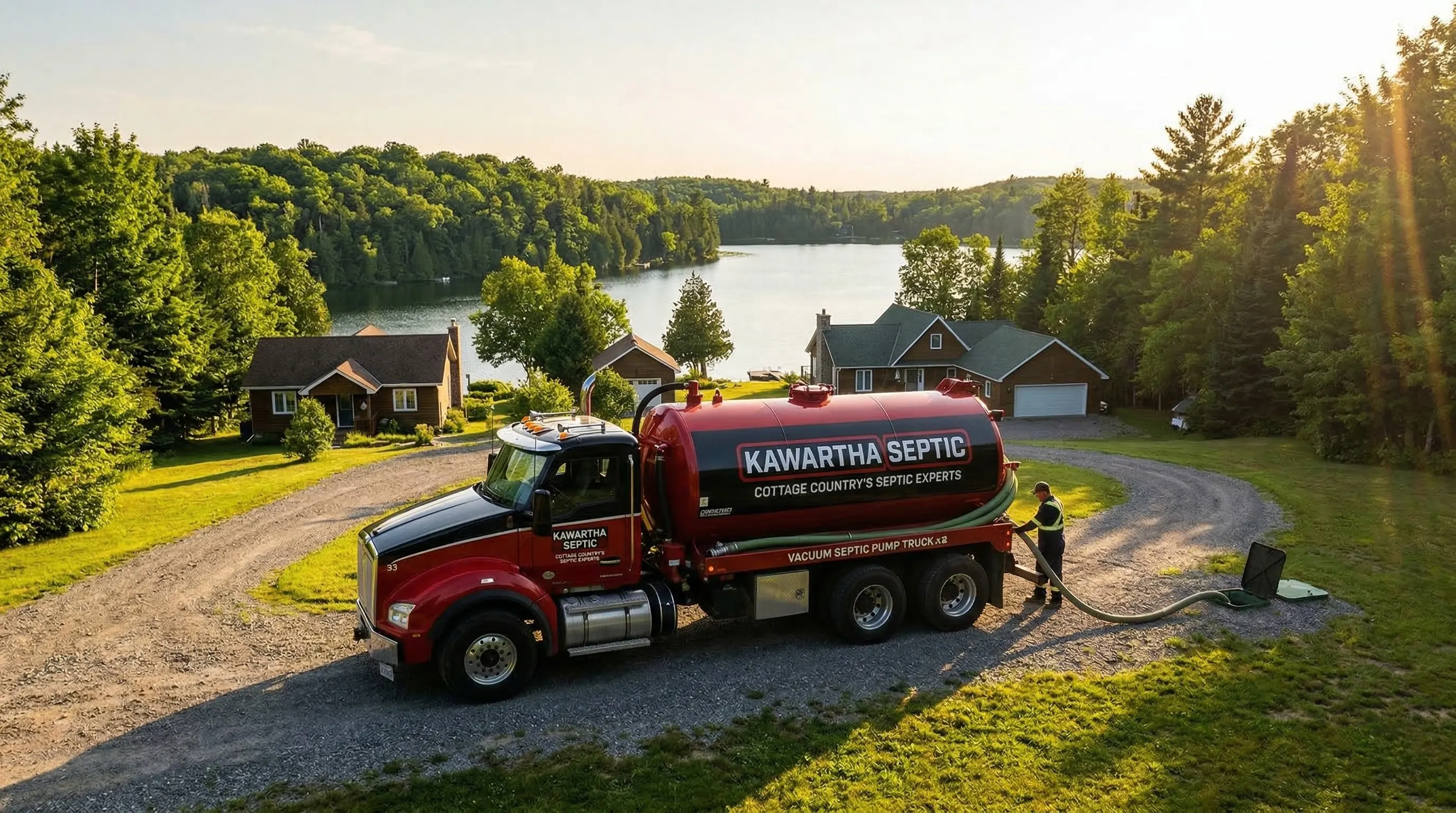
Sarah and James closed on their dream house outside Lindsay on a Friday afternoon. By Friday evening, Sarah had scraped a pan of bacon grease down the kitchen sink, run the garburator, tossed a load of towels in the wash, and given both kids back-to-back baths. Every single one of those habits was perfectly fine in their Scarborough semi. On a septic system? They’d just given their new tank a rough welcome.
If you’re moving from city sewer to septic for the first time, you’re not alone. Hundreds of GTA families make the switch every year, trading gridlock for lake views across Kawartha Lakes. The lifestyle upgrade is real. But so is the learning curve.
Here’s the good news: septic isn’t hard. It just requires a few habit changes that nobody tells you about until something goes wrong. This guide covers everything a first time septic system owner needs to know, so nothing goes wrong.
Welcome to Septic — It’s Not as Scary as You Think
Let’s start by taking the fear out of it.
In the city, you flush the toilet and wastewater travels through municipal sewer pipes to a treatment plant. You pay for it on your water bill, and you never think about it. That’s the whole relationship.
A septic system does the same job, just on your property. Wastewater flows from your house into an underground tank. Heavy solids settle to the bottom (sludge). Lighter stuff like grease floats to the top (scum). The liquid in the middle flows out to a drain field, where soil naturally filters and treats it.
That’s it. No moving parts in most systems. No electricity needed for a conventional setup. It’s simple, proven technology that works reliably for decades when you treat it right.
The Ontario government provides a solid overview of how septic systems work and the regulations around them. Worth bookmarking.
The key difference? In the city, a treatment plant handles your mistakes. On septic, your property handles everything. What goes down the drain matters now. How much water you use matters. But once you adjust a few daily habits, you won’t think about your septic system much at all.
7 Things That Change When You Switch to Septic
Here’s the real, practical stuff. These are the seven habits that change when you go from city to rural septic living.
1. What You Flush
On city sewer, people flush all kinds of things they shouldn’t. Wipes, cotton swabs, dental floss, feminine hygiene products. The municipal system handles it (barely). Your septic tank won’t.
The only things that should go into your septic system: human waste and toilet paper. That’s the complete list.
“Flushable” wipes are the single biggest lie in plumbing. They don’t break down in a septic tank. They tangle together, clog the outlet baffle, and can send solids into your drain field. We pull clumps of them out of tanks across Bobcaygeon and Fenelon Falls every week.
Put a small wastebasket in every bathroom. It solves the problem overnight.
2. Water Usage
In the city, you can run the dishwasher, do three loads of laundry, and take long showers all in the same afternoon. Your sewer connection doesn’t care.
Your septic system cares.
Every drop of water that enters your house exits into your septic tank. Too much water at once overwhelms the tank, stirs up settled solids, and pushes them toward the drain field before they’ve had time to break down. That’s how drain fields fail.
Space out your water usage. Don’t run three appliances at the same time. And fix leaky faucets and running toilets fast. A single running toilet can push 200 litres of extra water into your tank every day.
3. Laundry Habits
This one surprises people. Back-to-back laundry loads are one of the most common ways new septic owners overload their system without realizing it.
Here’s a good rule: one or two loads per day, spread out. Don’t save it all for Saturday morning and blast through six loads before lunch.
Also, switch to liquid laundry detergent. Powdered detergents contain fillers and clays that don’t dissolve fully and contribute to sludge buildup. Use the recommended amount or less. More soap doesn’t mean cleaner clothes, but it does mean a harder-working septic tank.
4. Cleaning Products
This is where being new to septic system living gets a little counterintuitive. You want your home clean, but you also need the bacteria in your septic tank alive. Those bacteria are the engine of the whole system.
Avoid antibacterial cleaners, heavy bleach use, and chemical drain openers. Small amounts of household bleach are fine. But if you’re pouring a cup of bleach down the drain every week, you’re killing the biology your tank depends on.
Look for products labelled “septic-safe.” Or just use simpler alternatives: vinegar and baking soda handle most household cleaning. The Ontario Onsite Wastewater Association has a helpful resource page for homeowners, including product recommendations.
5. Landscaping Around Your System
Mike and Dana moved from Mississauga to a property just outside Coboconk in 2024. They wanted to make the yard their own, so they planted a row of willows along the back fence for privacy. Beautiful trees. Also happened to be 3 metres from the drain field. Within 18 months, roots had infiltrated the weeping bed pipes. The repair was over $6,000.
Know where your septic tank and drain field are. Mark them if you need to. Keep trees and large shrubs at least 10 metres away from the drain field. Don’t park vehicles on it. Don’t build anything over it. Grass is the only thing that belongs on top of a drain field.
6. Pumping Schedule
On city sewer, you’ve never thought about pumping anything. Now you need to.
A septic tank needs to be pumped every 3 to 5 years for a typical household. Larger families or heavier usage might need it every 2 to 3 years. This is your single most important maintenance task.
We go into detail on timing and costs in our guides on how often to pump your septic tank and what septic pumping costs in Ontario. Both are worth reading.
A pump-out runs a few hundred dollars. Replacing a failed drain field runs $15,000 to $30,000. The math makes itself.
7. No More “Out of Sight, Out of Mind”
This is the biggest mindset shift. In the city, you don’t own the infrastructure. On septic, you do. That tank in your backyard is yours. The drain field is yours. The pipes connecting everything are yours.
That means you’re responsible for maintenance, inspections, and repairs. But it also means you’re in control. Homeowners who take basic care of their systems almost never have emergencies. The ones who forget they have a septic system? Those are the emergency calls.
Not sure what shape your system is in? Book an inspection or call us at (705) 806-0800. We service all of Kawartha Lakes, including Lindsay, Bobcaygeon, Fenelon Falls, and Coboconk.
Your First-Month Checklist
You’ve got the keys. You’ve moved in. Here’s what to do in your first 30 days as a first time septic tank owner.
- Find your records. Ask the seller or real estate lawyer for the septic system permit, as-built diagram, and any pump-out receipts. If you got a septic inspection before buying, pull that report out again.
- Locate your tank and drain field. Walk the property and identify where everything is. Mark the tank lid if it’s buried so you can find it later.
- Check when it was last pumped. If the answer is “I don’t know” or more than 3 years ago, schedule a pump-out now.
- Switch your products. Swap out antibacterial soaps, chemical drain cleaners, and powdered detergent. Go septic-safe.
- Put wastebaskets in every bathroom. Stop flushing anything that isn’t toilet paper.
- Brief the family. Everyone in the house needs to know the basics. Kids included. A two-minute conversation now prevents a two-thousand-dollar problem later.
- Install low-flow fixtures. If the home doesn’t already have them, low-flow showerheads and toilets reduce the volume of water hitting your tank every day.
- Set a calendar reminder. Put your next pump-out date in your phone. Three years from now, you’ll thank yourself.
For a deeper dive into ongoing care, our guide on septic tank maintenance tips covers everything you need to keep your system running for years. That’s your next read after this one.
Common Mistakes New Septic Owners Make
We’ve been servicing septic systems across Kawartha Lakes long enough to see the same patterns. Here are the mistakes that come up over and over again with people who are new to septic systems.
Using a garburator (garbage disposal). Ground food waste goes straight into your tank and dramatically increases sludge buildup. If your new home has one, stop using it. Compost your food scraps instead.
Ignoring slow drains. In the city, a slow drain usually means a simple clog. On septic, slow drains throughout the house can signal a full tank or a failing drain field. Don’t ignore it. Check our guide on signs your septic system is failing if you notice anything off.
Pouring grease down the sink. Grease hardens in your tank, forms a thick scum layer, and can clog the outlet baffle. Keep a grease jar by the stove. Every kitchen should have one.
Running too much water. Marathon showers, back-to-back laundry, and a running toilet can flood your system. Space things out.
Skipping the first pump-out. Many buyers trust the seller’s word that the tank was “recently pumped.” Get your own baseline. A pump-out in the first year lets you and your septic provider see the condition of the tank, baffles, and components with your own eyes.
Not winterizing properly. If you’re buying a cottage or seasonal property near Fenelon Falls or anywhere in the Kawarthas, winterization matters. Frozen pipes and tanks are a real risk. Our guide on septic winterization for Ontario cottages walks through the steps.
Septic vs. What You’re Used To
Here’s a side-by-side look at what changes when you go from city sewer to septic.
| City Sewer | Septic System | |
|---|---|---|
| Who treats the wastewater? | Municipal treatment plant | Your on-site tank and drain field |
| Monthly cost | Included in water bill | None (you pay for pump-outs every 3-5 years) |
| Maintenance | City’s responsibility | Your responsibility |
| What you can flush | Anything (though you shouldn’t) | Human waste and toilet paper only |
| Water usage | No practical limit | Spread it out to avoid overloading |
| Cleaning products | No restrictions | Avoid harsh chemicals and antibacterials |
| Garburator | Fine to use | Avoid — adds to sludge buildup |
| Pumping | Never | Every 3-5 years |
| Inspections | Not your concern | Recommended every 3-5 years, required at sale |
| Landscaping | No restrictions near sewer line | Keep trees and structures away from drain field |
| If something fails | Call the city | Call a septic professional — you pay for repairs |
Frequently Asked Questions
Is it expensive to maintain a septic system?
No. The main ongoing cost is pumping, which runs $300 to $800 in Ontario depending on tank size and access. Every 3 to 5 years. There’s no monthly sewer fee on your water bill, so many rural homeowners actually spend less overall than they did in the city.
Can I use regular toilet paper with a septic system?
Yes. Standard toilet paper breaks down fine. You don’t need to buy expensive “septic-safe” toilet paper, though it won’t hurt. Just avoid ultra-thick, quilted brands, and never flush wipes of any kind.
Do I need to add bacteria or additives to my tank?
Generally, no. A healthy septic tank produces its own bacteria from normal household waste. Most additives are unnecessary and some can actually harm your system. Save your money and focus on regular pumping and good habits instead.
What do I do if I smell sewage in my yard?
That’s a sign something’s not right. It could be a full tank, a failing drain field, or a damaged component. Don’t ignore it. Check our guide on signs your septic system is failing and call a professional. The sooner you catch it, the cheaper the fix.
Should I get the septic system inspected before buying a rural property?
Absolutely. A septic inspection should be part of every rural home purchase in Ontario. The system is a major piece of infrastructure, and a failed one can cost tens of thousands to replace. We cover this in detail in our guide to septic inspections before buying a house in Ontario.
You’ve Got This
Moving from city sewer to septic sounds like a big deal. And on day one, it can feel that way. But the Taylors, who moved from Brampton to a lakefront place near Bobcaygeon last spring, put it best when we saw them for their first pump-out: “We spent the first month terrified we’d break something. Turns out, you just have to pay a little attention.”
That’s really what it comes down to. Pay attention to what goes down the drain. Don’t flood the system with water. Get it pumped on schedule. The rest takes care of itself.
Thousands of families across Kawartha Lakes live on septic systems without any drama. You will too.
New to septic and want a professional to walk you through your specific system? Book a service call or give us a ring at (705) 806-0800. We’ll inspect your setup, answer your questions, and make sure you’re starting off on the right foot. We’re local to Lindsay, Bobcaygeon, Fenelon Falls, and Coboconk, and we’ve helped hundreds of first-time septic owners settle in.
Your next read: Septic Tank Maintenance Tips — the complete guide to keeping your system healthy year after year.