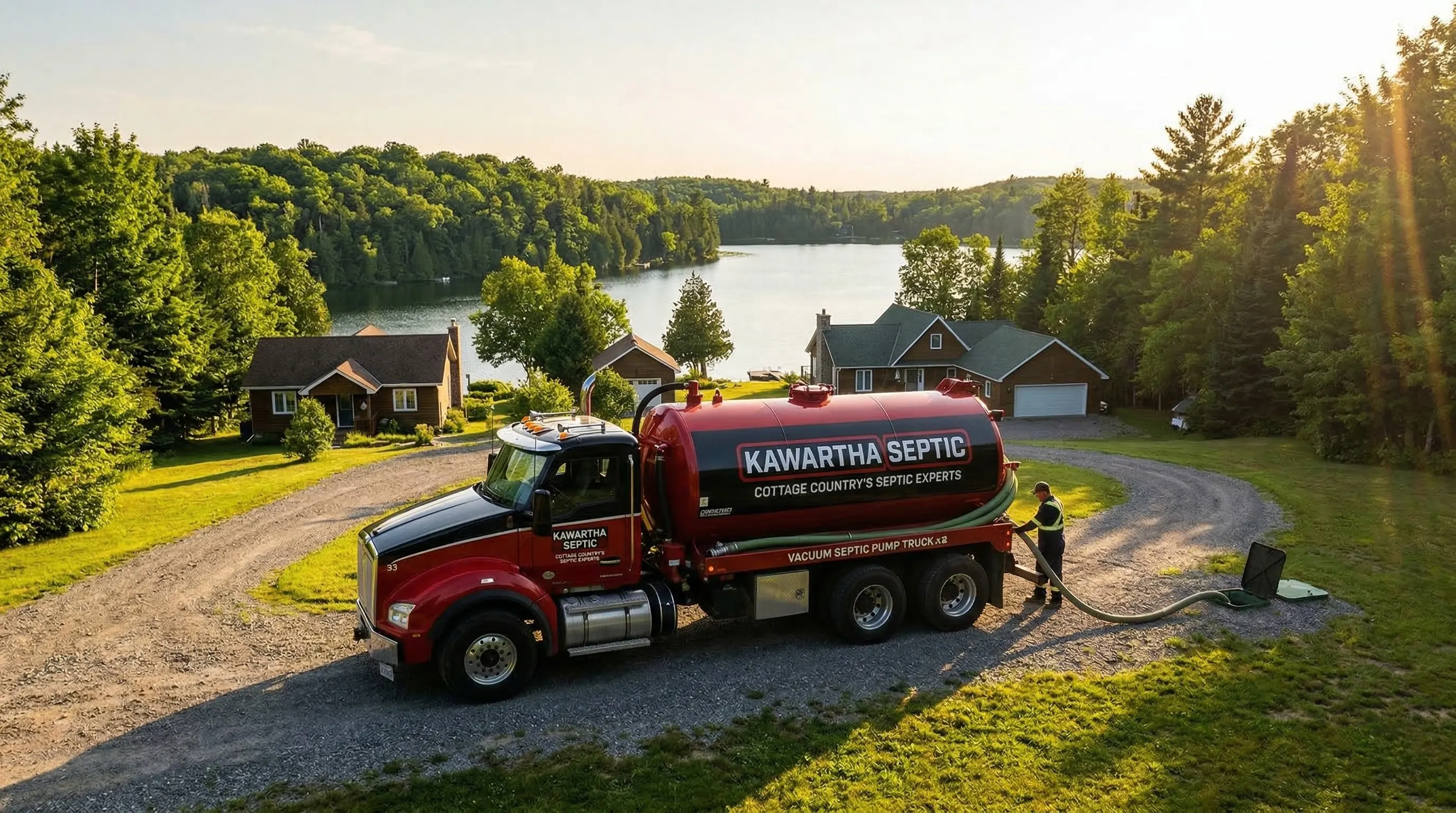
Can your septic system legally support a second household? For a lot of rural properties around Kawartha Lakes, the honest answer is no, not without spending money first. A family near Fenelon Falls got a garden suite quote back from a contractor, then discovered during their permit application that the existing 1980s system had zero spare capacity for a second kitchen and bathroom. Adding a small separate septic system for the suite ended up costing them close to $19,000, more than the suite’s framing budget.
That’s garden suite septic ontario planning in short: provincial policy has made it easier to add a garden suite or secondary unit on a rural lot, but the septic system doesn’t care what the zoning policy says. If your existing tank and leaching bed were sized for one household, adding a second doesn’t happen just because zoning allows it. The system either has spare capacity or it doesn’t, and that’s a separate question the building department will check before it approves anything. If you’re at the early planning stage, book a site evaluation before you commit to a suite design, so the septic number isn’t a surprise partway through.
This is the piece a lot of homeowners miss when they start pricing out a garden suite. They’ve looked at setback rules for the structure itself, maybe checked with the municipality about zoning, and assumed the septic is a detail to sort out later. It’s usually the thing that decides whether the project is affordable at all.
Here’s how septic capacity actually factors into adding a second unit, and when a shared system makes sense versus a separate one.
What Counts as a Secondary or Garden Suite
For septic purposes, what matters isn’t the label, garden suite, secondary suite, in-law suite, additional residential unit, it’s whether the new space has its own kitchen and bathroom, and whether it’s occupied independently of the main house. A guest bedroom with a shared bathroom down the hall doesn’t add household capacity the way a self-contained unit with its own kitchen and full bath does. The building department will assess it on function, not on what you call it on the application.
Can Your Existing Septic Handle a Second Unit?
Rarely, without some kind of upgrade. Ontario sizes septic tanks and leaching beds by bedroom count, on the assumption of one household’s worth of maximum occupancy. Adding a second, independently occupied unit is functionally the same as adding bedrooms for sizing purposes, sometimes more, since a second kitchen and full bathroom generates its own daily flow on top of the main house’s. We cover how that bedroom-based math works in our septic tank size guide and how it applies to additions generally in our home addition and septic capacity guide.
The honest starting point is a site evaluation. Someone needs to look at your current tank size, bed condition, and remaining capacity before anyone can say whether a garden suite is a straightforward tank upgrade or a full system redesign. Don’t rely on old permit records alone; a system on file as “adequate” from decades ago may not reflect what’s actually left in the ground today. Call (705) 702-5526 and we can check the existing system’s real condition before you finalize any suite plans.
Shared System vs. Separate System
| Approach | How it works | Best fit |
|---|---|---|
| Shared system, upsized | One tank and leaching bed sized for both units combined | Lots with enough room to expand the existing bed, main house septic isn’t already maxed out |
| Separate system for the suite | New, independent septic system just for the garden suite | Lots where the main system has no spare capacity, or where the suite sits far enough from the main house that a shared system isn’t practical |
| Shared system, no upgrade | Both units run off the existing system as-is | Rarely approved; only realistic if the existing system was built with meaningful excess capacity, which is uncommon on older systems |
A separate system sounds like the more expensive option, and it usually is a bigger upfront cost, but it comes with an advantage: it isolates the two households’ plumbing entirely, which matters if the suite is ever rented out and you don’t want a tenant’s water use directly affecting the main house’s system performance. A shared, upsized system is usually cheaper overall but ties both units’ septic health together.
The Capacity Math for Two Households
Think of it in terms of maximum design flow, not current headcount. A three-bedroom main house plus a one-bedroom garden suite isn’t treated as three bedrooms with occasional extra guests, it’s treated as four bedrooms’ worth of potential occupancy, because that’s what the system has to be able to handle if both units are fully occupied at once. This is the same logic that governs two cottages sharing one septic system, which is worth reading if you’re considering the shared-system route, since the practical issues (who’s responsible for pumping, what happens if one household uses far more water than the other) are the same.
This math isn’t something to eyeball yourself with a tape measure and a guess at the tank size. Get a licensed designer or septic contractor to run the actual numbers against your lot before you present a suite design to the municipality; a DIY estimate that’s off by even one bedroom-equivalent can send the whole application back for revision.
Permits: Building Department and Health Unit
Two separate approvals are usually in play. The zoning and building permit for the suite itself goes through the municipality’s planning and building departments. The septic side, whether it’s a capacity upgrade to the existing system or a brand new system for the suite, goes through the same permit process as any other septic modification. See our septic permit guide for new systems and our permit guide for modifications if you’re upgrading an existing one.
These two processes often move on separate tracks with separate reviewers, and a building permit for the suite can stall if the septic side hasn’t been resolved. Start the septic evaluation early rather than treating it as a formality to handle once the suite design is finalized.
Cost Reality of Adding Capacity
Costs range widely depending on whether the answer is a tank upgrade, a bed expansion, or a full second system. A modest tank upgrade on a lot with an already-adequate bed can run a few thousand dollars. A full separate system for the suite is closer to a standalone septic install, budget in the same range as a full system replacement, $15,000 to $30,000 or more, depending on site conditions. On tight or difficult lots, an advanced treatment unit may be needed to fit a second system’s footprint into the available space, which pushes costs higher still.
This is often the number that determines whether a garden suite project pencils out. A suite that seemed like an affordable way to add rental income or house a family member can look very different once the septic upgrade is priced in, which is exactly why getting that number early matters.
Renting the Suite Out
If the plan includes renting the unit, size the system for full-time, independent occupancy, not for how you expect the space to be used initially. A tenant’s water use pattern, laundry frequency, and household size can differ substantially from what an owner assumes when planning the suite, and undersizing based on optimistic assumptions is a common way these systems end up overloaded within a few years.
When a Garden Suite Isn’t Feasible
Some lots simply don’t have room. If the existing system already occupies most of the usable, code-compliant area on the property, and there’s no space left for a bed expansion or a second system once setbacks from the well, property lines, and any water body are applied, a garden suite may not be feasible without significant compromise elsewhere, like relocating the main system or looking at tiny home style minimal-footprint options instead of a full suite. A designer who’s assessed the lot can tell you definitively whether there’s a workable path; it’s not always obvious from a site plan alone.
A Second Scenario: When Shared Actually Works
Not every story ends in a five-figure surprise. A property near Bobcaygeon had a three-bedroom main house on a system installed in 2011, well within code and with real spare capacity because the original owners had built for a larger family than they ended up having. When their adult daughter wanted to build a small garden suite for herself, the site evaluation confirmed the existing tank and bed had enough headroom to absorb a one-bedroom unit without a full redesign. The upgrade was limited to a larger effluent filter and some bed monitoring, running under $2,000 total.
The difference between that outcome and the $19,000 separate-system scenario above usually comes down to two things: how much spare capacity the original system was built with, and how much usable, code-compliant land is left on the lot for expansion if it’s needed. Neither of those is something you can know without an actual site evaluation, which is why guessing based on a neighbour’s experience, good or bad, isn’t a reliable way to budget your own project.
Garden Suite Septic FAQ
Can I add a garden suite without upgrading my septic system? Rarely. Ontario sizes systems by potential occupancy, and an independently occupied suite with its own kitchen and bathroom almost always adds to that calculation.
Does the suite need its own septic system, or can it share with the house? Either can work, depending on whether the existing system has enough spare capacity and room to expand the bed. A shared, upsized system is usually cheaper; a separate system isolates the two households’ plumbing.
How much does it cost to add septic capacity for a garden suite? It ranges from a few thousand dollars for a straightforward tank upgrade to $15,000-$30,000 or more for a full separate system, depending on site conditions and what the lot can accommodate.
Do I need a permit for the septic side of a garden suite, separate from the building permit? Yes, generally. The septic modification or new system goes through its own permit process, alongside the zoning and building permit for the suite itself.
What if my lot doesn’t have room for a bigger system? Options include an advanced treatment unit to shrink the required footprint, relocating the existing system, or scaling back the project. A site evaluation will tell you what’s actually possible.
Does it matter if the suite will be rented out versus used by family? For septic sizing, size for full independent occupancy either way. Rental use tends to bring less predictable water habits, so err toward adequate capacity rather than the minimum.
Who do I talk to first, the municipality or a septic contractor? Both, roughly in parallel. Confirm the suite is permitted under zoning, and get a septic site evaluation done early so you know what capacity work is realistic before finalizing the suite’s design.
Considering a Garden Suite in Kawartha Lakes?
We evaluate existing septic systems for homeowners across Lindsay, Bobcaygeon, Fenelon Falls, Coboconk, and the rest of Kawartha Lakes who are exploring a secondary or garden suite, and we can tell you early whether your current system has room to grow or whether you’re looking at a separate system.
Thinking about a garden suite and not sure what your septic can handle? Call (705) 702-5526 or book online. Use the cost calculator for a 60-second estimate.