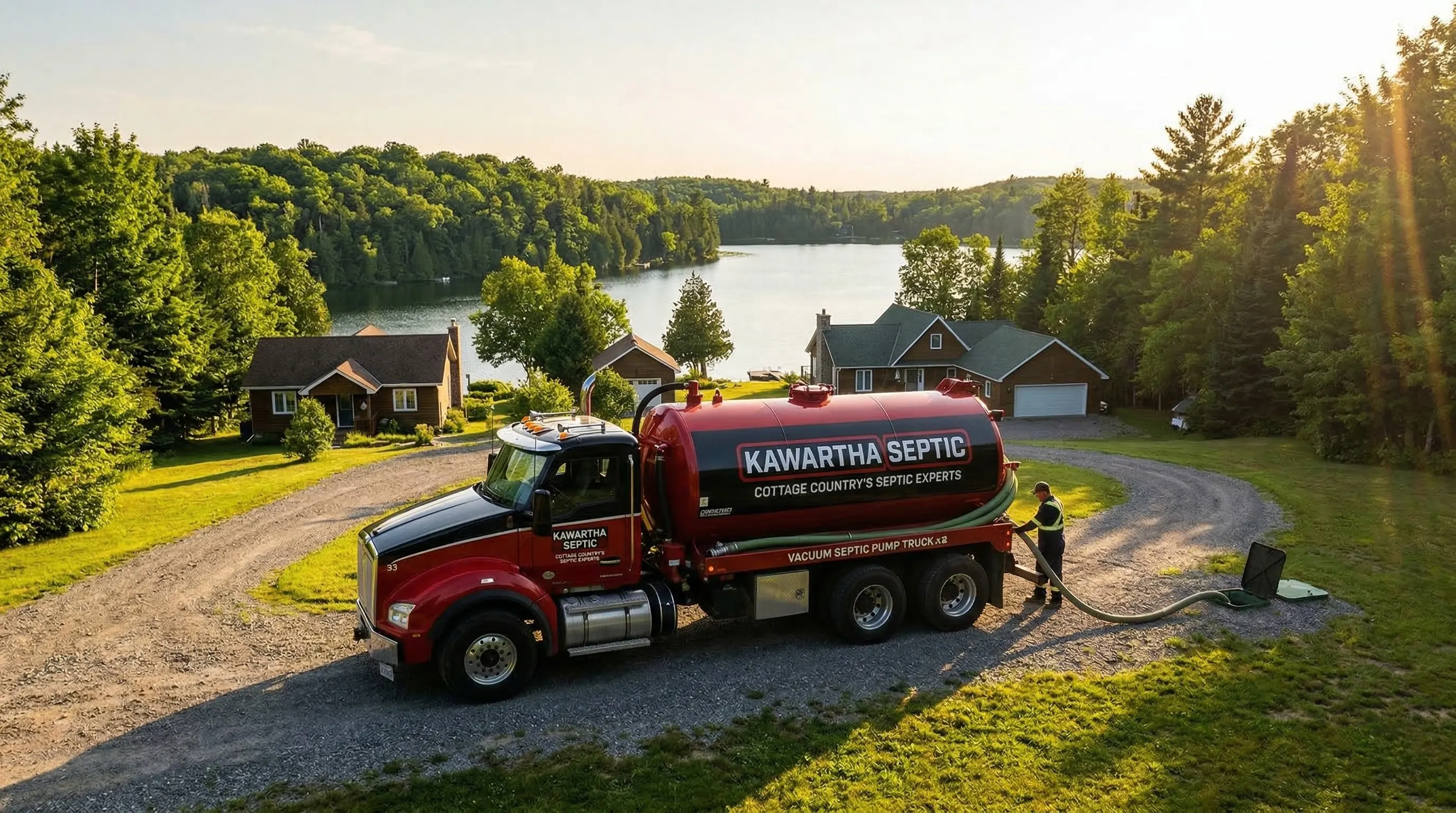
Every pump-out on a tank with a buried lid comes with an access charge, usually $50 to $100 for moderate digging and $75 to $150 if the lid is genuinely hard to reach. A riser removes that charge for good, for a one-time installation cost of $200 to $500. Whether septic risers are worth it on your property comes down to a small piece of arithmetic: how many more pump-outs you’re paying that access charge on before the math tips your way.
For what a riser actually is and how it attaches to the tank, our septic tank riser guide covers the basics already. This one skips ahead, straight to the decision: does a riser pay for itself, what reasons settle it anyway, and when is skipping one the smarter move.
Does a Septic Riser Pay for Itself?
Start with the numbers, because on a lot of properties they answer the question on their own.
A professionally installed riser runs $200 to $500 for most residential tanks, more if the tank sits especially deep or the ground is rocky. That’s a one-time cost. Once it’s in, there’s nothing left to dig for on any future visit.
Without a riser, the crew has to locate the lid and dig down to it every single time. That shows up on the invoice as an access charge on top of the standard pump-out price, typically $50 to $100 for moderate access, $75 to $150 if the lid is buried deep, overgrown, or the ground is frozen or rocky. Our septic pumping cost guide breaks down the full price range by tank size if you want the base numbers before adding this on.
Put those two figures side by side and the break-even point on most properties lands at two to four pump-outs, not fifteen or twenty.
If digging fees on your last invoice caught you off guard, call (705) 702-5526 or book a pump-out online and ask to have a riser quoted at the same visit.
Field scenario: a year-round property outside Fenelon Falls has a 1,250 gallon tank with a lid buried under roughly 30 cm of lawn. Every pump-out there has added $75 to $150 in digging time on top of the standard $350 to $550 pump-out for that tank size. After three visits, the owner had paid $225 to $450 in access charges alone, more than a riser installed on the first visit would have cost.
Here’s the honest way to work it out for your own property: take your pumping interval (most homeowners here run every three to five years) and multiply it by how many more years you plan to own the place. Three or more pump-outs left, and a riser almost always pays for itself before you sell or move. One more pump-out and then a sale is a closer call, and that’s what the next section is really about.
| Pump-outs with a buried lid | Access charges paid | Riser cost (paid once) | Where you land |
|---|---|---|---|
| 1 | $50 to $150 | $200 to $500 | Riser probably not paid off yet |
| 2 | $100 to $300 | $200 to $500 | Close to even |
| 3 | $150 to $450 | $200 to $500 | Usually ahead |
| 5 | $250 to $750 | $200 to $500 | Clearly ahead |
When a Riser Is the Right Call Even If the Math Is Close
Money isn’t the only reason people install a riser. For some households, it isn’t even the main one.
Physical ability to dig matters. An older owner living alone, or anyone with a bad back or knees, isn’t going to be the one uncovering a buried lid between visits, and paying someone else to dig it every time is a cost the arithmetic above understates. A riser turns a physical task into a lid you can lift by hand.
Landscaping sometimes buries the lid on purpose. A lid stuck under a deck, a garden bed, or a paving stone patio built after the system went in can mean real demolition just to reach the tank. A riser installed before the deck or garden goes in avoids that entirely. One added afterward at least gives the crew a fixed, known point to work around.
Field scenario: a rural property near Little Britain went up for sale last spring. The buyer’s real estate septic inspection was booked for a Friday morning, and nobody in the household could say exactly where the tank lid was. A $300 to $450 inspection turned into a half day of digging before the inspector could even start, and it pushed the closing date. A riser installed the week before listing would have let the inspector open the lid in minutes.
There’s a second common case: cottages pumped while the owners are away. If a property manager or neighbour is letting the crew in while you’re back in the city, a visible, findable riser means the job gets done right without anyone standing over it, giving directions from memory. A buried lid that only you have ever located is a bad thing to depend on someone else describing over the phone.
When to Skip a Septic Riser
A riser isn’t automatically the right call. There are a few situations where the honest answer is to leave it alone.
A tank whose lid already sits at or near grade gets none of the benefit. If a previous owner or installer already brought it close to the surface, you’d be paying to fix a problem you don’t have.
A tank being replaced within the next year or two is the clearest skip. Full system replacement runs $15,000 to $35,000, and that price includes a brand new tank with its own lid, positioned wherever the new design puts it. Spending on a riser for a tank about to be dug out and removed is money that doesn’t carry forward.
A lid location that would sit in a driveway, a parking pad, or a path where vehicles or heavy foot traffic cross it needs a different answer, not necessarily no riser, but not a standard one either. A standard residential riser and lid aren’t built for vehicle weight, so putting one in a spot cars or trucks cross regularly turns a convenience into a hazard. The better fix there is usually relocating the access point or fitting a traffic-rated cover, which is worth a conversation on site rather than a decision made from a blog post.
What Septic Riser Installation Actually Involves
Once you’ve decided, the job itself is short. Most installs take one to two hours, and we often do them during a scheduled pump-out since the tank is already exposed and empty at that point, which saves booking a separate visit.
The crew locates the existing lid, cleans the opening, and seals a riser to it with a gasket or sealant so groundwater can’t get in. If the tank sits deep, extension rings stack on top until the assembly reaches ground level. A secured lid goes on last, and the area gets backfilled and graded so water sheds away from it instead of pooling.
Total installed cost sits at $200 to $500 for most residential tanks, and it’s often lower when it rides along with an already-scheduled septic pumping visit rather than a separate trip. If a riser is one of several things an older system needs, our septic tank repair service covers riser installation alongside baffle, filter, and lid work in the same visit.
Ready to bundle a riser install with your next pump-out? Call (705) 702-5526 or book online and mention it when you schedule.
A Riser Lid Has to Be Secured, Not Just Sitting There
Bringing the tank opening up to ground level only helps if the lid on top of it is locked down properly. An unsecured lid sitting at grade is the exact hazard that has hurt and killed children and livestock on rural properties, because it turns a few feet of open tank into something that looks, to a toddler or a dog, like solid ground.
A riser lid needs to be rated for whatever crosses over it and secured with bolts, a locking mechanism, or enough weight that it can’t be lifted off by accident or curiosity. This matters more, not less, once a riser makes the lid visible and easy to find, since visible also means easy for a curious kid or a visiting grandchild to notice. Our guide to septic lid safety and replacement covers how lids fail and what a properly secured lid needs to hold up to.
Field scenario: a hobby farm outside Kirkfield keeps livestock on a rotational fence line that runs within a few metres of the tank. A standard residential riser lid wasn’t enough there. The job needed a heavier, load-rated cover to handle occasional hoof traffic and the weight of a farm vehicle crossing that corner of the field, which added to the base $200 to $500 riser cost but wasn’t optional given how the property is used.
Ontario’s requirements for sewage systems sit in Part 8 of the Building Code under O. Reg. 332/12, which sets out the framework these systems are designed and inspected against, including expectations for access points and tank openings.
Frequently Asked Questions
Is a septic riser worth it if I plan to sell in the next year or two?
Usually yes for the inspection alone, even if the digging-fee math hasn’t fully paid off yet. A findable, easy-to-open lid speeds up a real estate septic inspection and avoids a scramble in the days before a scheduled closing. If the tank itself is also due for replacement soon, skip the riser and let the new system’s lid handle it instead.
Can a riser be added to a tank that already has a buried lid?
Yes, this is the most common way risers get installed. The crew locates and digs down to the existing lid once, seals a riser to that opening, and brings it up to grade. After that single dig, there’s no access charge on that lid again.
Does every tank need a riser?
No. A tank with a lid already at or near grade gets no benefit from one. A system already slated for replacement is better served putting that money toward the new system instead.
How long does a riser last once it is installed?
A properly installed plastic riser with a good seal typically lasts as long as the tank itself, decades, with no maintenance beyond keeping the lid clear of debris and confirming the seal is still tight at each pump-out. Concrete risers last a long time too, but they’re more prone to cracking over the years from Ontario’s freeze-thaw cycles.