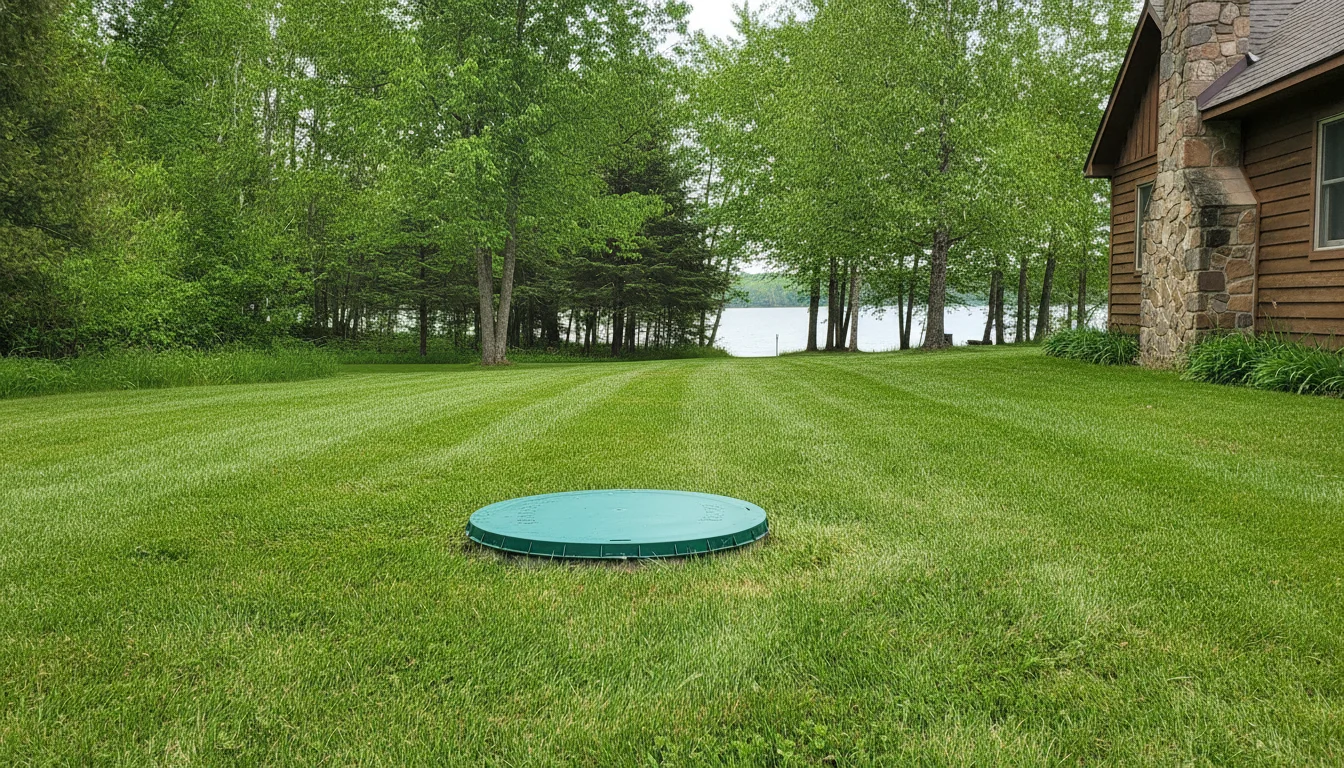
Between a routine pump-out and a full system replacement sits everything else that goes wrong with a septic system — and most of it is small. A baffle that rotted through. A pump that quit. A lid that cracked. A buried access point that costs you a digging fee every single visit. This is the page for that work across the City of Kawartha Lakes.
Most septic repairs run $200 to $800. That range is doing a lot of honest work in a trade where the scary quote is a sales tactic: the majority of "failing septic" calls we see end in a component repair, not a replacement. We diagnose before we replace — if a $200–$500 baffle is the fix, that is the quote, not a new system.
What We Repair
- Inlet and outlet baffles — $200 to $500. The tank's most failure-prone part, especially in older concrete tanks where original concrete baffles erode away. A failed outlet baffle lets solids reach the leaching bed, which is how a $300 repair deferred becomes a $10,000-plus bed problem. The warning signs are visible at every pump-out — which is one more reason to be there when the tank is open.
- Effluent and lift pumps — $600 to $1,500. Any system that pumps uphill has one, they last 7 to 10 years, and they announce their death by alarm — usually on a long weekend. What replacement involves, including why the float switch matters as much as the pump.
- Effluent filters — $50 to $150 to replace, routinely cleaned as part of a pump-out. The cheapest insurance the bed has. Systems permitted before filters were standard can often have one retrofitted — worth asking about while the tank is open.
- Tank lids — $100 to $300. A cracked, spalling, or improvised lid is not a cosmetic problem; lid collapses are how people and pets end up in tanks. If yours is a sheet of plywood or a patio stone, replace it this season. Why this is the one repair not to defer.
- Risers — $200 to $500 installed. The upgrade that ends digging forever: the access point comes to grade, the $100–$200 digging fee disappears from every future pump-out, and winter service stops requiring an excavation through frozen ground. How risers work.
- Lines and distribution box. Root intrusion, a crushed section between tank and bed, a d-box distributing to one run instead of all of them — mechanical problems with mechanical fixes, diagnosed by camera where it helps and quoted once we can see what we are dealing with.
Tank Side or Bed Side?
Everything above is hardware — parts that can be reached, replaced, and priced. The other half of the system is the leaching bed, and it plays by different rules: beds are not repaired part-by-part, they are diagnosed, rehabilitated, or replaced. If your symptoms live in the yard — soggy ground over the bed, a stripe of suspiciously green grass, effluent surfacing — start at drain field and leaching bed repair instead. If the whole system is at the end of its life, that conversation is installation and replacement.
Not sure which side your problem is on? That is normal — slow drains and smells can come from either. Call (705) 702-5526 and describe it, or book a septic inspection and get the whole system looked at once, properly.
Repair or Replace? Age Does the Math
The part is rarely the whole question. A new baffle in a 12-year-old tank is easy money well spent. The same baffle in a tank pushing 40 is a harder conversation, because concrete tanks last 30 to 40 years — and a new part bolted to a nearly-done tank is rent, not a fix. Steel tanks are the extreme case: 15 to 20 years of lifespan means nearly every steel tank still in the ground around here is past due, and corrosion holes are not repairable. If your place is an older farmhouse or cottage and nobody knows what is down there, old farmhouse septic is worth ten minutes.
Our rule runs both directions. We will not quote you a system when a part fixes it — and we will not sell you a part when the component it attaches to is finished. Either way you hear the reasoning, the numbers for both paths, and the honest recommendation before anything is decided.
Repairs Rarely Need a Permit. Modifications Do.
Restoring an existing component to its designed function — baffle, lid, filter, pump swap, riser — generally requires no permit. Changing the system does: replacing the tank, replacing the bed, adding a treatment unit, or adding capacity to the house all trigger a sewage system permit under Part 8 of the Ontario Building Code. A few jobs sit in a genuine gray zone, and near the lakes a Conservation Authority layer can apply — where it is ambiguous, we ask the City first rather than guessing with your property. The full decision table is in do I need a permit to repair or modify my septic system.
When It Cannot Wait
Sewage backing up into the house, an alarm you cannot silence, or septic smell indoors is not a book-a-repair situation — that is emergency septic service, with same-day or next-morning response. Run as little water as possible and call. Repairs that surface during an emergency call get stabilized first and quoted properly in daylight, not priced under pressure.
Start With the Symptom
Call (705) 702-5526 and tell us what you are seeing — the smell, the sound, the alarm, the wet patch — and roughly how old the system is if you know. Most of the time we can tell you the likely culprit and the realistic cost range before the truck leaves the yard. And if the answer is "your tank is just overdue," you will hear that too: a pump-out with eyes on the baffles and filter is the cheapest diagnosis in the business.
Frequently Asked Questions
01 How much does septic repair cost?
Most septic repairs run $200 to $800. Inside that: baffle replacement $200 to $500, riser installation $200 to $500, tank lid replacement $100 to $300, effluent filter replacement $50 to $150. The big-ticket component is an effluent or lift pump at $600 to $1,500 installed. Anything quoted well beyond that range has stopped being a repair and become a replacement conversation — which is a different page and a different decision.
02 Do septic repairs need a permit in Ontario?
Usually not, and that is the practical difference between repairing and modifying. Restoring an existing component to its designed function — a baffle, a lid, a filter, a pump swap, a riser — generally needs no permit. Changing the system does: replacing the tank, replacing the bed, adding treatment technology, or increasing capacity all require a sewage system permit. A few jobs sit in a gray zone where municipalities differ, and for those we ask the City of Kawartha Lakes first rather than guessing on your behalf.
03 Should I repair or replace?
Age decides more than the part does. A failed baffle in a 12-year-old concrete tank is an easy repair — the tank has decades left. The same baffle in a 38-year-old tank deserves a harder look, because concrete tanks last 30 to 40 years and you may be bolting a new part onto a component that is nearly done. Steel tanks are the clearest case: at 15 to 20 years of lifespan, a corroded steel tank is a replacement, not a repair, almost every time. We tell you which side of that line you are on before quoting.
04 My septic alarm is going off. Is that a repair call?
Often, yes. On systems with a pump chamber the alarm usually means the effluent pump has failed or a float switch is stuck — pumps last 7 to 10 years, and replacement runs $600 to $1,500. But an alarm can also mean the tank is at capacity with nowhere to send effluent. Either way, treat it as urgent: run minimal water and call. A screaming alarm or sewage backing up gets same-day or next-morning response.
05 Can a cracked concrete tank be repaired?
Depends entirely on the crack. Hairline surface cracks above the waterline in an otherwise sound tank can often be sealed and monitored. Structural cracks, active leaks, a shifting or collapsing tank, or corrosion holes in a steel tank cannot be meaningfully repaired — the tank is done, and patching it buys months, not years. An assessment with the tank pumped and visible is how you find out which one you have.
06 What is a riser, and is it worth adding one?
A riser brings the tank access lid up to ground level so nobody digs to service the tank again. Installation runs $200 to $500, and it eliminates the $100 to $200 digging fee that otherwise applies at every pump-out where the lid is buried — so it typically pays for itself by the second visit, and makes winter service dramatically easier. It is the single most cost-effective upgrade on this page.
Where We Do This Work
Septic Tank & System Repair is available across the whole City of Kawartha Lakes — Lindsay, Bobcaygeon, Fenelon Falls, Coboconk, and every concession road and shoreline in between. There is no travel surcharge and no minimum distance anywhere in the municipality: a Coboconk cottage costs the same as a house in downtown Lindsay. See our full septic services in Kawartha Lakes, or check the town page nearest you.