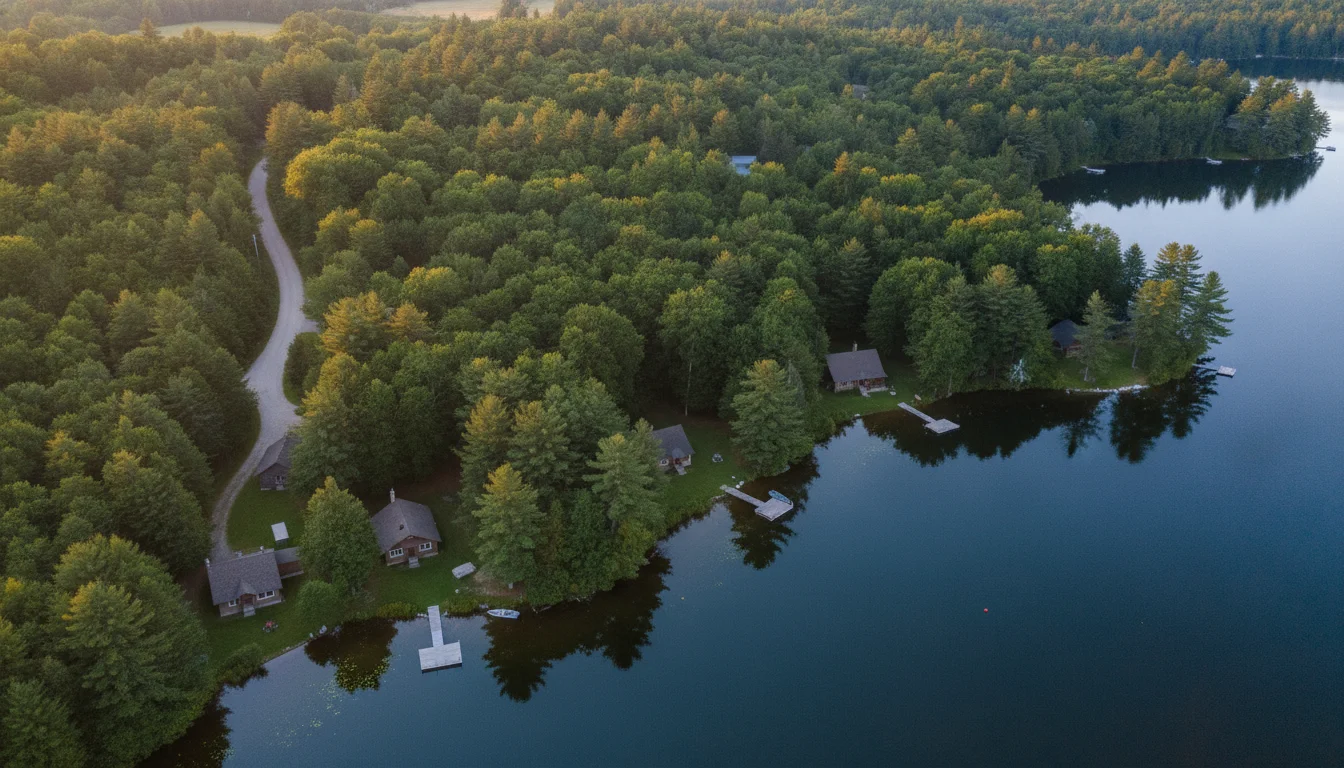
A septic system is the most expensive thing on a rural property that nobody can see. When it is time for a new one — because the old system failed, because you are building, or because the cottage just became a full-time house — you are buying a design, a permit, an excavation, and an inspection, in that order. We handle the whole chain across the City of Kawartha Lakes.
The honest number first: a full septic system replacement runs $15,000 to $35,000 in Ontario, with most jobs landing between $15,000 and $30,000. Where the site forces a raised mound, it is $25,000 to $45,000. Nobody should hear those numbers for the first time from an invoice, which is why every job here starts with a site visit and ends with a written, itemized quote — and the price only changes if the scope changes, which we tell you before any extra work happens, not after.
Repair, Rehabilitate, or Replace?
Replacement is the last answer, not the first. Before anyone quotes you a system, three cheaper outcomes have to be ruled out:
- It was the tank all along. A cracked baffle, a failed effluent filter, or a tank overdue for a pump-out can produce every symptom of a dying system. These are $200 to $800 problems — see septic tank repair.
- The bed can be rehabilitated. A leaching bed with life left in it can sometimes be brought back for $3,000 to $10,000 instead of replaced. The cases where that works — and the cases where it is money down a hole — are covered under drain field repair.
- Only one component is done. A collapsing tank on a healthy bed, or a finished bed behind a sound tank, can be replaced on its own. Bed replacement alone runs $10,000 to $25,000.
We diagnose before we replace. If a $200–$500 baffle is the fix, that is the quote — not a new system. And when the system genuinely is finished, we say that plainly too, because limping a dead system along has its own price: sewage backups, contaminated ground, and on waterfront lots, effluent heading toward the lake you drink from and swim in.
What the Job Costs
Every price below is the same one we publish everywhere on this site, because a number that changes depending on who answers the phone is not a price.
- Full system replacement: $15,000–$35,000, most jobs $15,000–$30,000
- Raised mound system (where site conditions require it): $25,000–$45,000
- Leaching bed replacement alone: $10,000–$25,000
- Permitting and design for a full Class 4 replacement, before any digging: $3,000–$7,000 — that is the designer's fee ($1,500–$3,500), the City of Kawartha Lakes permit ($975 for a standard Class 4 system), and the soil work behind the application
- Perc test: $500–$1,500 · Soil profile / deep test pit: $500–$1,000
What moves the number inside those ranges is the site, not the sales pitch: soil depth and quality, access for the excavator, how far the bed sits from the house, and which system type the design lands on. A replacement can also come at a bad moment financially — how to pay for a septic replacement covers the realistic options, including what exists in the way of grants. The replacement cost estimator walks through those same factors and returns an itemized range before you call.
The Process, Start to Finish
- Site visit. We walk the property, look at the existing system if there is one, and pull whatever records the City has. Paid work starts at step 2, and we say so before it does.
- Soil work. Test pits and a perc test establish what the soil can actually absorb — this is what decides the system type and most of the price.
- Design. A licensed sewage system designer stamps a design sized to the house — bedrooms and fixtures, not just current occupants. We coordinate this; you do not need to find your own designer.
- Permit. The application goes to the City of Kawartha Lakes Building and Septic Division under Part 8 of the Ontario Building Code. Review typically runs 2 to 4 weeks here for straightforward applications. On many properties near water, Kawartha Conservation reviews the application too — we build that into the timeline rather than discovering it late.
- Installation. The part everyone pictures is the short part: 2 to 5 days of excavation, tank setting, bed construction, and grading for most residential systems.
- Final inspection and paperwork. The City inspects before backfill and signs off the finished system. You get the documentation — which future-you needs at resale, and which the City keeps on file from then on.
End to end: replacing an existing system typically runs 4 to 8 weeks from first call to finished system. A new-construction system runs 5 to 10 weeks from first site visit to approved installation, because design starts from a blank page. If you are planning a build, bring the septic design in early — it can decide where the house goes, not the other way around. Septic for new construction in Ontario walks through the full sequence.
What We Install
Conventional Class 4 systems — a two-compartment tank feeding a leaching bed — remain the default where the soil allows, and the cheapest to build and maintain. Ontario's five system classes explains where Class 4 sits and why almost every home system is one.
Filter and raised beds take over where soil runs out. Much of the northern half of the municipality sits on shallow soil over bedrock, and waterfront lots add high water tables on top. A raised bed system imports the sand the site does not have. It costs more and stands taller than anyone wants, but it is what makes a compliant system possible on a lot that would otherwise have none.
Tertiary treatment units — Ecoflo, Waterloo Biofilter, and similar Level IV systems — treat effluent to a higher standard before dispersal, which shrinks the bed footprint they need. On tight waterfront lots where a conventional bed cannot meet setbacks, a tertiary unit is often what makes the lot workable at all. They carry a mandatory maintenance contract, and we service them after we install them.
Holding tanks are the fallback where no bed of any kind fits — storage, no treatment, pumped on a schedule. If that is genuinely where your lot lands, holding tank service is its own page, and we will tell you honestly whether you are a holding-tank property before you spend design money finding out.
Cottage Country Is the Hard Case
Most of what makes a septic install difficult is concentrated in exactly the properties this region is made of. Shallow soil over Shield bedrock. Small waterfront lots platted decades before modern setbacks, where the well, the lake, and the property lines box the bed into one possible location — or none. Wells that impose their own distances: a leaching bed must sit 15 metres from a drilled well with a watertight casing at least 6 metres deep, and 30 metres from a dug well. And seasonal cottages converting to full-time use, where a system sized for July weekends meets a family living there year-round.
None of that is a reason to panic; it is a reason to design properly. The systems above exist precisely because this terrain does. What the hard sites punish is guesswork — a bed placed where the excavator could reach rather than where the soil works, a system sized to the current owners instead of the house. That is the difference between a system that quietly works for 25 years and one that greets the next buyer's real-estate inspection with a five-figure surprise.
Cottage and Waterfront Installations
A large share of the systems we replace sit on the water. Waterfront lots in Kawartha Lakes bring every constraint at once: a shoreline setback, a well setback, property lines drawn for a 1960s cabin, and often a water table that sits within a metre of grade in spring. The answer is rarely a conventional bed in the obvious spot. More often it is a raised bed that lifts the leaching surface above the water table, or a tertiary unit that cuts the bed footprint down to what the lot actually has. Where the property is inside a regulated area, Kawartha Conservation reviews the application alongside the City — we plan for that review instead of finding it at the permit desk. Waterfront septic rules in Ontario covers the setbacks and approvals in detail.
The other common waterfront job is the three-season cottage that has quietly become a house. A system sized for July weekends does not survive a family living on it through the winter; cottage-to-full-time capacity explains how the design flow changes and what that means for the replacement. If you are buying, the pre-purchase inspection is where this gets caught — and if it is caught after closing, the site visit is still the first step, not the quote.
Where We Install
Everywhere in the City of Kawartha Lakes, with no travel surcharge: Lindsay and the clay-soil farmland around it; Bobcaygeon and the Pigeon Lake shoreline; Fenelon Falls on Cameron and Sturgeon Lakes; Coboconk, Balsam Lake, and Shadow Lake at the edge of the Shield; Burnt River and Four Mile Lake; Norland and the Gull River; Kirkfield and Canal Lake; Dunsford; Little Britain and Lake Scugog; Omemee, Woodville, and Janetville. Soil, rock, and water table change from one lake to the next — the town pages describe what each area's ground usually means for a septic system, and the Kawartha Lakes overview covers the municipality as a whole.
We also install and replace systems east of the municipal boundary, in Peterborough and Peterborough County — Buckhorn, Lakefield, Bridgenorth, Ennismore, Apsley, Trent Lakes, and the lake properties around them. The work is the same; the permit goes to the township building department rather than to the City, and the fee is set by a different by-law.
Start With the Site Visit
Call (705) 702-5526 and describe the property — where it is, what the system is doing (or that there isn't one yet), and what the plan is for the building. We will tell you what the realistic path looks like before anyone commits to anything. If the current system is actively backing up, that is emergency septic service — stabilize first, plan second.
And if you are not sure the system is actually dead, good — start with a septic inspection instead. The cheapest system replacement is the one the assessment proves you do not need.
Frequently Asked Questions
01 How much does a new septic system cost in Ontario?
A full septic system replacement runs $15,000 to $35,000 in Ontario, with most jobs landing between $15,000 and $30,000. A raised mound system, where site conditions force one, runs $25,000 to $45,000. Before any digging, permitting and design for a full Class 4 replacement typically add $3,000 to $7,000. The spread is soil, site access, and system type — which is why we quote from a site visit, in writing, not over the phone.
02 How long does a septic installation take?
Replacing an existing system typically takes 4 to 8 weeks from first call to finished system, depending on season and permit turnaround. A system for new construction takes 5 to 10 weeks from first site visit to approved installation, because design starts from scratch. The excavation itself is the short part — 2 to 5 days on site for most residential systems. The calendar time is design and permit review, which runs 2 to 4 weeks in Kawartha Lakes for straightforward applications.
03 Do I need a permit to install or replace a septic system?
Yes, always. Any new septic installation or replacement requires a sewage system permit under Part 8 of the Ontario Building Code — in this municipality, from the City of Kawartha Lakes Building and Septic Division. The permit fee here is $975 for a standard Class 4 system up to 4,500 litres per day, $461 for a tank replacement or bed repair, and $433 for a Class 2 greywater system. The design behind the application is prepared by a licensed sewage system designer. We coordinate that whole chain — design, application, inspections — as part of the job. A system installed without a permit is a problem you will meet again when you sell the property.
04 Can you install a septic system in winter?
Sometimes, but plan around it rather than for it. Winter installs are possible and happen, but frozen ground adds cost and slows the work. The harder constraint is testing: perc tests and soil assessments give unreliable readings in frozen ground, and most designers will not test in deep winter at all. If your system is limping in the fall, start the process then — design and permits can run through the winter so excavation starts as soon as the ground allows.
05 What is a raised mound system, and will I need one?
A raised bed (mound) system builds the leaching bed above natural grade in imported sand, because the site does not have enough usable soil depth — bedrock near the surface, a high water table, or soil that fails a perc test. That describes a lot of cottage country, especially north of Fenelon Falls and around the lakes. Nobody chooses a mound for looks; the site chooses it, and the design work proves whether yours does. Expect $25,000 to $45,000 where one is required.
06 Can you replace just the tank and keep the existing bed?
Sometimes, and it is worth finding out before anyone quotes a full system. A cracked or collapsing tank on a healthy leaching bed can be replaced on its own — the deciding factor is the condition of the bed, which is the expensive half. That is why our first step is an assessment, not a quote. If the bed is sound, you buy a tank, not a system. If the bed is done, a new tank alone would be money buried in front of a failure.
Where We Do This Work
Septic System Installation in Kawartha Lakes is available across the whole City of Kawartha Lakes — Lindsay, Bobcaygeon, Fenelon Falls, Coboconk, and every concession road and shoreline in between. There is no travel surcharge and no minimum distance anywhere in the municipality: a Coboconk cottage costs the same as a house in downtown Lindsay. See our full septic services in Kawartha Lakes, or check the town page nearest you.