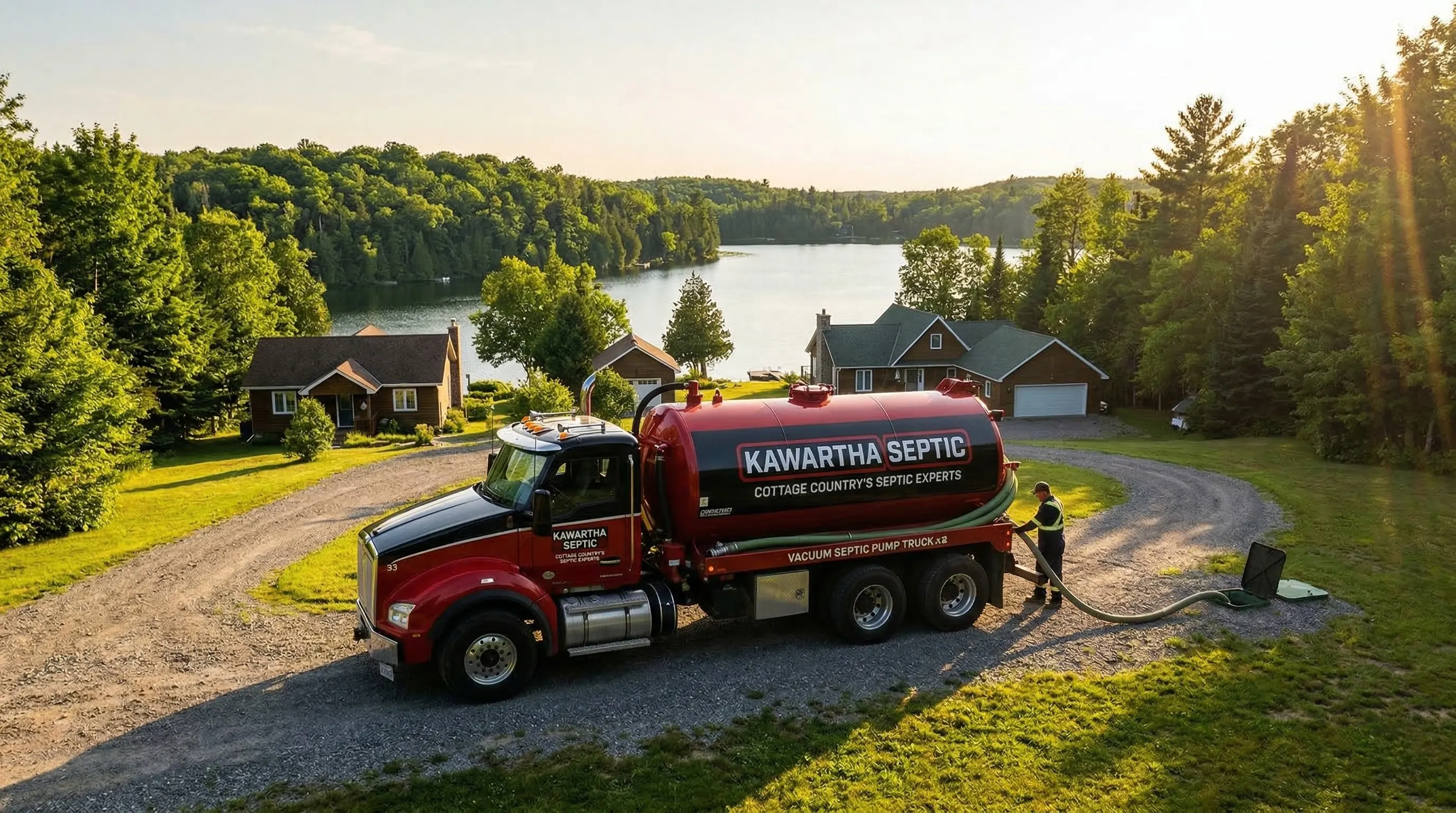
You have the keys to a place nobody has lived in for a while. An estate that took four years to settle, a cottage the previous owners stopped opening after 2019, a farmhouse that has been empty since the last tenant left. Somewhere out in the yard is a septic system, and nobody alive can tell you much about it.
The two instincts here are both wrong. The optimistic one is that a system that has been resting must be in good shape, since nothing has been running through it. The pessimistic one is that a system left this long is automatically finished and should be budgeted as a replacement.
The truth is that dormancy preserves some parts, destroys others, and hides the answer to the question that actually matters until you put water through it. There is a sensible order to find out, and it starts before anyone moves in.
The Quick Answer
| Stage | What to do |
|---|---|
| Before you use it at all | Locate the tank and lids; pull any records from the City |
| First service | Pump and inspect with the tank empty, $300 to $600 plus assessment |
| What survives dormancy | The tank shell, usually. Bacteria return on their own |
| What does not | Seized pumps, dried gaskets, cracked lids, rodent-occupied pipes |
| The unknown | The leaching bed, which cannot be judged dry |
| Second stage | Live loading for a few weeks, then reassess the bed |
| The real risk | An old system that was never legal or was a cesspool |
| If it fails | Replacement $15,000 to $35,000; permit path 4 to 12 weeks |
| Do not | Move a family in and find out by watching the lawn |
The system will tell you the truth once it is carrying load. The point of the staged approach is to be watching when it does.
What Actually Happens to a Dormant System
The bacteria die back, and it does not matter. This is the concern people raise first and the least important one on the list. Tank bacteria arrive continuously with wastewater. Put a household back on the system and the population re-establishes within weeks without help. No additive is required, and additives do not resolve anything that dormancy caused.
The sludge and scum stay exactly where they were. Whatever was in the tank when the property went quiet is still there, minus slow decomposition. A tank that was three years overdue in 2019 is still three years overdue, and the scum crust has had years to harden. This is the strongest argument for pumping before first use rather than after.
The tank shell usually survives. Concrete tanks last 30 to 40 years and dormancy does not age them faster. Steel is different: a steel tank has a 15 to 20 year life and corrodes regardless of use, so a steel tank that was old when the property emptied is a serious concern, including the risk of a top that will no longer bear weight. If the property is an older farmstead, old farmhouse septic tanks and cesspools is the relevant read.
Mechanical parts do not survive well. Effluent and lift pumps seize when they sit, float switches stick, control panels corrode. An effluent pump has a 7 to 10 year life in service and being idle does not extend it. Replacement runs $600 to $1,500.
Seals, gaskets and lids degrade. Lids crack, gaskets dry out, risers separate. Lid replacement is $100 to $300.
Wildlife moves in. Vent lines, unsealed risers and outlet lines are attractive to rodents, wasps and snakes, and roots take advantage of years without interference. Trees also grew during those years, which changes the root situation over the bed from what any old drawing shows.
The leaching bed becomes an open question. A bed that has been dry for years may have partially recovered as the biological mat starved and broke down, which is genuinely a positive. It may equally have been failing when the property emptied, or have been damaged by roots, or have collapsed. Nothing about a dry bed tells you which.
Stage One: Before Any Water Goes Down a Drain
Find the system and its paperwork. Start with the City. Records of a permitted system, including the as-built drawing, may be on file, and septic records in Kawartha Lakes covers how to request them. The City of Kawartha Lakes Building and Septic Division can be reached at 705-324-9411 for permit and records enquiries. Where nothing exists on file, that itself is information: the system may predate permitting.
Locate the tank and every lid. How to find your septic tank covers the methods. Find all of them, because a second compartment lid buried under years of growth is easy to miss.
Pump and inspect before first use. This is the step that pays for itself. With the tank empty, the assessment covers walls, baffles, the dividing wall on two-compartment tanks, the outlet, the filter and the line to the bed. A pump-out on a 1,000 to 1,500 gallon tank runs $300 to $600, and a bundled inspection adds $75 to $150 rather than the $300 to $500 standalone price. A tank with a hardened scum crust may need a full tank cleaning at $400 to $700.
Do not open lids alone, and never enter a tank. Hydrogen sulphide and methane in the headspace can incapacitate an adult in seconds, and a years-old tank has had no ventilation. Most septic tank deaths are people who went in after someone else. Looking from above is the homeowner’s limit.
Check what the well is doing too. On a property this quiet, the well has been stagnant as well, and its condition affects the whole plan. Ontario’s septic systems overview is a good orientation to how the two are regulated together.
Stage Two: Load It and Watch
Here is the part nobody wants to hear: a leaching bed cannot be assessed while it is dry. Its only meaningful property is how much water it will accept, and that is not measurable without water going in.
So the second stage is deliberate, gradual loading with someone paying attention.
- Start with modest use rather than a full household on day one where you can
- Walk the bed area every few days, in the same pattern, looking for soft ground, ponding, or a distinct green stripe
- Watch drains indoors for slowing or gurgling
- Note odour outdoors near the bed
- Check the tank level after two or three weeks. Water should sit at the bottom of the outlet pipe, not above it
- Reassess with a professional after roughly a month of normal use
Leaching bed failure signs covers what you are watching for in detail. The reason for the delay before reassessment is that a bed can accept the first few days of flow into dry soil and look fine, then saturate. A month of real loading is a far better test than any single-day inspection of a dormant system.
If you are buying rather than inheriting, this is exactly why an inspection on a long-vacant property carries a caveat that an inspection on an occupied one does not. The report can confirm the tank’s condition honestly. It cannot promise you the bed, and a good inspector will say so in writing. Buying a property under power of sale with an unknown septic covers the transaction side, and septic for estate executors covers the estate version.
The Scenario Worth Planning For
Sometimes the answer is that there is no usable system.
Properties that emptied decades ago, or that were seasonal from the start, sometimes turn out to have a cesspool, a dry well, a direct discharge, or nothing recognizable as a modern system at all. Sewage systems in Ontario fall under Part 8 of the Building Code through O. Reg. 332/12, and an arrangement that predates that framework is not grandfathered into acceptability if it is failing or if the use of the property changes.
If that is where you land, the numbers and the timeline both matter:
| Item | Cost or timeline |
|---|---|
| Full system replacement in Ontario | $15,000 to $35,000, most $15,000 to $30,000 |
| Leaching bed replacement alone | $10,000 to $25,000 |
| Raised mound system | $25,000 to $45,000 |
| Perc test | $500 to $1,500 |
| Sewage system designer | $1,500 to $3,500 |
| Permit fee, City of Kawartha Lakes | $500 to $800 |
| Permitting and design, total before digging | $3,000 to $7,000 |
| Replacement, first call to finished system | 4 to 8 weeks |
| Excavation on site | 2 to 5 days |
One seasonal constraint deserves emphasis on a property you are trying to bring back: perc and soil testing are effectively a late-spring-to-fall activity, because designers will not test frozen ground. A system you discover is unusable in November is a system you may not be able to design until spring. Winter installs are possible but can cost more because of frozen ground. If you take possession of a long-vacant property in autumn, get the tank opened early rather than in December.
The old system also has to be dealt with properly rather than abandoned in place, which septic tank decommissioning in Ontario covers.
The Kawartha Lakes Version
Long-dormant systems are not unusual in the City of Kawartha Lakes, and the reasons are local.
Estates take time. Cottages held in estates through multi-year settlements are common in this region, and the property sits unused throughout.
Seasonal properties get abandoned quietly. Owners stop opening a cottage a year or two before they ever list it. A property marketed as “used until recently” often has a system whose last real load was several seasons ago.
Waterfront constrains the replacement plan. A system that turns out to be unusable on a narrow lot on Balsam, Sturgeon or Cameron Lake has fewer places to go, with the tank required 15 metres from any well and the bed 15 metres from a drilled well with watertight casing at least 6 metres deep, or 30 metres from a dug well. A conservation authority interest can add roughly four weeks to a permit timeline.
Trees grew. Fifteen years of unmanaged growth over a bed changes the root picture entirely, and the willows and maples that establish in that window are the worst offenders.
Frequently Asked Questions
Can a septic system that has not been used in years still work?
Often, yes. The tank shell usually survives dormancy, and the bacteria re-establish on their own within weeks of normal use. What dormancy does not fix is the sludge already in the tank, seized pumps, deteriorated lids, or a leaching bed that was failing before the property emptied. Pump and inspect first, then load it gradually and watch.
Do I need to add bacteria to restart an old septic tank?
No. Bacteria arrive continuously with household wastewater and re-establish without help. Additives do not address anything dormancy caused, and they do not restore a leaching bed.
Should I pump a septic tank before moving into a vacant house?
Yes, before first use rather than after. Whatever was in the tank when the property emptied is still there, with the scum crust hardened by years of sitting. Pumping also creates the only opportunity to inspect the tank interior, baffles and outlet, which is the information you need before committing to the system.
How do I know if the leaching bed still works?
You cannot know while it is dry. The bed has to carry real flow for a few weeks before its capacity is visible, which is why the sensible approach is gradual loading with the bed area monitored, then a professional reassessment after about a month. Any inspection of a dormant system should say plainly that the bed was not tested under load.
What if the property has no septic records at all?
That is common on older rural and cottage properties and is not automatically a problem, though it can mean the system predates permitting. Start with the City of Kawartha Lakes Building and Septic Division at 705-324-9411, then locate and open the tank, since the physical evidence is more reliable than the paperwork anyway.
Start With What Is in the Tank
Before anyone moves in, get the lids open and find out what you actually inherited.
Call (705) 702-5526 or book a visit. We will locate the tank, pump it, and assess the interior, baffles and outlet while it is empty, then tell you honestly what can be judged now and what has to wait until the system carries load. A pump-out on a 1,000 to 1,500 gallon tank runs $300 to $600, with a full inspection at $300 to $500 or $75 to $150 bundled.
Most routine visits are scheduled within 48 hours. We serve the whole City of Kawartha Lakes, Lindsay to Coboconk and every lake between, with no travel surcharge and no minimum distance.